Is a Dishwasher More Water Efficient in 2026? A Practical Guide
Is a dishwasher more water efficient than hand washing? This in-depth guide examines model differences, cycle choices, and loading practices to help homeowners save water in 2026 with Dishwasher Tips.


Is a dishwasher more water efficient than hand washing? In most cases, yes. Modern dishwashers typically use far less water per load than hand washing, especially when run with energy-saving cycles and proper loading. The Dishwasher Tips Team notes that efficiency has improved markedly over the last decade, making dishwashers a strong option for households aiming to reduce water use.
Why Water Efficiency in Dishwashers Matters
The question of whether a dishwasher is more water efficient than hand washing hinges on several factors, including the model, cycle selection, soil level, and how you load the rack. The phrase is dishwasher more water efficient captures a broader trend: modern machines are engineered to minimize water use while maintaining cleaning performance. According to Dishwasher Tips, efficiency gains have been driven by improved spray patterns, tighter pressure control, sensor-based cycles, and better filtration. For households aiming to reduce water bills or environmental impact, selecting a higher-efficiency model and adopting eco modes can translate to meaningful savings over time. The key takeaway is that water efficiency is a collective outcome of equipment, behavior, and maintenance, not a single feature.
How Modern Dishwashers Reduce Water Use
Newer dishwashers optimize water use through sensor-driven cycles, targeted spray jets, and more efficient pumps. The most water-conscious models adjust fill level based on soil load and whether the unit is full or partial. In practical terms, this means you should avoid running partial cycles on older devices and instead wait to fill the load. The Dishwasher Tips Team highlights that the biggest gains come from using eco or energy-saving cycles, keeping seals and filters clean, and ensuring the door seal is intact. When all parts work together, a load can achieve cleaning with a fraction of the water required by manual washing.
The Impact of Loading and Racking on Water Efficiency
Space utilization inside the dishwasher dramatically affects water efficiency. Overcrowding can prevent jets from reaching soiled pieces, leading to rewash or longer cycles that consume more water. Conversely, underloading wastes energy and water by running a cycle with less than optimal capacity. The discipline of proper loading—placing plates facing the spray, aligning bowls, and avoiding blocking spray arms—helps maintain efficient water use. Dishwasher Tips emphasizes that a well-loaded machine often operates at peak efficiency, delivering clean results with less water per dish.
Cycle Selection, Detergents, and Water Use
Choosing the right cycle is a direct lever on water consumption. Eco or auto cycles typically use less water than heavy-duty sequences, especially for lightly or moderately soiled loads. Detergent choice matters too; a high-quality, low-foaming formula reduces rinse water needs and improves soil suspension, which can shorten cycles and conserve water. The interplay between cycle type and detergent choice means that small changes can compound into significant water savings over the life of the appliance. For best results, consult the user manual and use the recommended detergent and rinse aids.
Real-World Scenarios: Families, Singles, and Rentals
A single-person apartment using eco cycles may see less water per week than a multi-person household running full loads. Nevertheless, higher-efficiency models typically show consistent savings across different household sizes, provided cycles are chosen judiciously and loads are optimized. In rental units or shared homes, establishing a few baseline habits—always running full loads, skipping pre-rinse, and using eco modes—can produce noticeable reductions in water use across the month. The practical upshot is that water efficiency is achievable in varied living situations with consistent best practices.
Debunking Myths About Dishwasher Water Use
A common myth is that dishwashers waste more water than hand washing if you rinse dishes beforehand. In reality, pre-rinsing is often unnecessary and can waste water. Modern machines rely on robust rinse sequences to remove stuck-on residues, reducing the need for extra rinses. Another misconception is that older models are always more water-efficient; while some early units were bulky, modern high-efficiency machines outperform most older designs. The broader truth is that water efficiency is a moving target driven by technology, usage patterns, and maintenance.
Practical Tips to Maximize Water Efficiency at Home
- Run full loads and choose eco cycles whenever possible.
- Keep filters clean and check door seals; leaks cost water and energy.
- Use the correct amount of detergent and avoid pre-rinsing unless necessary.
- If you have hard water, consider additives or rinse agents compatible with your model to reduce the need for extra rinsing.
- Consider upgrading to a new ENERGY STAR-rated model if your current unit is old or inefficient.
- Periodically review detergent and rinse aid usage to maintain optimal water efficiency.
Conclusion (Integrated with Practicality)
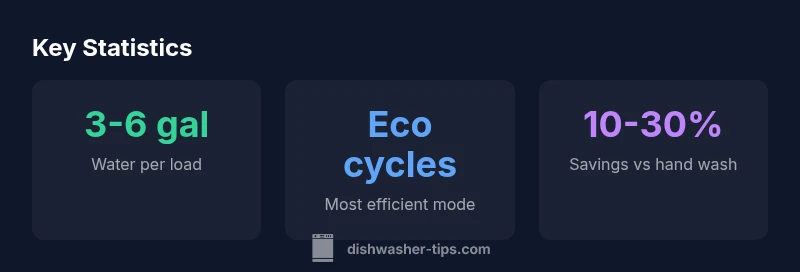
Is dishwasher more water efficient? The evidence shows that modern dishwashers, especially when paired with eco cycles and proper loading, use significantly less water per load than hand washing and long-cycle pre-rinses. Through a combination of advanced technology, consumer habits, and regular maintenance, households can achieve meaningful water savings without sacrificing cleanliness. The Dishwasher Tips Team recommends prioritizing ENERGY STAR models, correct loading, and the eco mode as foundational steps toward water-efficient dishwashing.
Water use and energy per load by dishwasher type
| Dishwasher Type | Water per Load | Typical Energy per Load (kWh) |
|---|---|---|
| Full-size HE | 3-6 gallons | 0.9-1.4 |
| Compact/Apartment | 4-6 gallons | 0.7-1.2 |
| Hand-wash (manual) | 20+ gallons | N/A |
People Also Ask
Is hand washing always worse for water use than a dishwasher?
Generally, yes—modern dishwashers use less water per load. The exact difference depends on your routines and the model you own. Eco cycles are designed to minimize water use while keeping dishes clean.
Usually a dishwasher saves water per load, especially with eco cycles.
Do newer dishwashers always save more water than older models?
Older models often consume more water, but the efficiency gain depends on the specific unit. Most new, ENERGY STAR rated models use noticeably less water per cycle.
Newer models tend to use less water per cycle.
Which cycle is best for reducing water usage?
Eco or auto cycles typically use the least water. Reserve heavy cycles for heavily soiled loads when necessary.
Choose eco cycles to save water.
Can pre-rinsing impact water use?
Pre-rinsing wastes water. Modern dishwashers are designed to handle soil efficiently without pre-rinsing.
Skip pre-rinsing to save water.
What maintenance steps boost water efficiency?
Keep filters clean, check seals for leaks, and ensure spray arms aren’t blocked. Regular checks help maintain efficient water use.
Clean filters and seals to keep water use low.
Are there costs associated with upgrading for water efficiency?
Upgrading to a modern, ENERGY STAR-rated model may involve upfront costs but typically yields long-term savings in water and energy bills.
Upfront cost, but long-term water and energy savings.
Do detergents affect water usage?
Detergent quality influences rinse efficiency but not the water volume. Use the recommended detergent for optimal results.
Choose the right detergent for better rinsing.
“Efficient water use comes from a combination of smart design and smart habits. Load well, choose eco cycles, and keep the machine well maintained.”
What to Remember
- Prioritize eco cycles for maximum savings
- Load dishes correctly to optimize water use
- Eco mode reduces water with minimal impact on cleanliness
- Regular maintenance boosts efficiency
- Upgrade to ENERGY STAR to improve overall water use
- Avoid pre-rinsing unless necessary