What is Better: Dishwasher vs Hand Washing? A Practical Guide
Understand what is better dishwasher or hand washing for your kitchen. This objective guide weighs water use, energy, time, and hygiene for homeowners and renters.


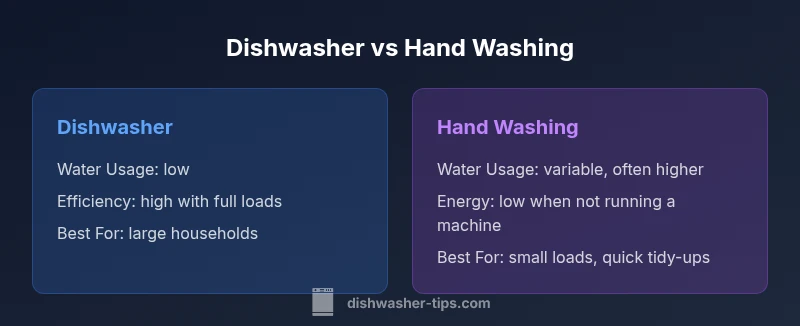
What is better dishwasher or hand washing? The answer depends on your habits, load size, and goals for water, energy, and time. In most homes, a dishwasher saves water and energy when run with full loads, while hand washing remains practical for small loads and quick tidying. This quick comparison helps you decide with confidence.
The Core Question: what is better dishwasher or hand washing
When you ask what is better dishwasher or hand washing, you’re weighing efficiency, convenience, and hygiene across daily routines. This guide uses a balanced, evidence-informed lens to compare the two methods under typical kitchen conditions. The goal is to help homeowners and renters optimize dish care without sacrificing cleanliness or wallet health. In many households, the decision hinges on load volume, time availability, and willingness to adapt routines to maximize efficiency. Throughout this article, you’ll see how small changes can tilt the balance toward one method or the other, depending on your priorities. For reference, this discussion aligns with insights from Dishwasher Tips analysis and practical kitchen testing researchers.
When the Dishwasher Shines: Load Efficiency and Consistency
A dishwasher excels when you routinely run full or near-full loads. It standardizes cleaning results, minimizes hand scrubbing, and leverages heated drying and high-temperature sanitizing cycles to reduce surface bacteria on dishes and utensils. For households with predictable meal rhythms, a dishwasher can dramatically cut repetitive hand-washing time while delivering consistent sanitation. The key is loading correctly: items should have space for water circulation, and you should avoid blockers that prevent spray arms from reaching all surfaces. For busy families, the time saved per week compounds into meaningful convenience. From a hygienic standpoint, modern dishwashers with sanitize cycles can offer a dependable level of cleanliness when used as intended.
When Hand Washing Makes Sense: Small Loads and Quick Turnarounds
Hand washing shines for small loads or delicate pieces that aren’t dishwasher-safe. It’s often faster for a couple of plates after a light meal, and it gives you direct control over water temperature and scrub intensity. Hand washing can be gentler on certain cookware, glassware, and heirloom items when done with a non-abrasive sponge and mild detergent. For renters or spaces with limited plumbing or electrical access, hand washing remains a practical necessity. The trick is to optimize the method: use warm water, pre-rinse only when needed, and avoid running sink taps longer than necessary. The goal is to minimize wasted water while maintaining dish hygiene.
Environmental and Cost Considerations: Short-term vs Long-term
From an environmental perspective, dishwashers typically offer efficiency advantages when used correctly, especially if you run full loads and select eco modes. Hand washing can use more water per dish when performed with a running faucet, but it may incur lower energy costs if you avoid hot-water heating for long periods. Over time, the total cost of ownership for a dishwasher includes upfront purchase, installation, and occasional maintenance, while hand washing costs are largely time-based and tied to water heating and soap usage. The Dishwasher Tips team observes that households optimize outcomes by aligning routines with load patterns, food-wiberage, and daily schedules.
Practical Habits to Maximize Efficiency with Either Method
No matter which method you choose, adopting disciplined habits yields big gains. For dishwashers, run full loads, scrap excess food, and use recommended detergents and rinse aids. Pre-rinse only when necessary, avoid pre-washing all items, and periodically check spray arms for clogs. For hand washing, scrape plates promptly, wash in batches, and avoid keeping water running between steps. Consider task batching, such as washing, then drying and stacking, to reduce idle time. Small changes—like using a bowl of rinse water for soaking and pre-scrubbing—can significantly cut water and energy use over a week.
Detergents, Rinse Aids, and Hygiene: What Works Best
Detergent choice matters more in dishwashers than in hand washing. Dishwasher detergents are formulated for high-temperature cycles and may include enzymes that break down proteins and starches efficiently. Rinse aids help with drying and reduce spotting on glassware. For hand washing, choose mild dish soap and consider separating delicate items from sturdier pieces to prevent wear and damage. Temperature matters: hot water is more effective for disinfection, but it also increases energy consumption. Strive for a balance that preserves cleanliness without wasting resources.
Common Misconceptions About Dishwashers
Many people assume dishwashers always use less water than hand washing. In reality, efficiency depends on load size, cycle selection, and how well you load items. Another myth is that dishwashers can sanitize every item; some materials require air-drying or hand cleaning to maintain finish and prevent damage. It’s also common to overestimate the energy savings of an older unit. Upgrading to a newer, efficient model and using eco modes can yield noticeable gains, though the results vary by household patterns.
Special Scenarios: Families, Small Kitchens, and Renters
In multi-person households with busy schedules, a dishwasher often pays for itself through time savings and improved sanitation. Small kitchens or rental spaces may benefit from compact or countertop models, which offer a flexible compromise between full-size convenience and space restrictions. Renters should consider energy and water connections, as well as potential restrictions from building management. In some cases, interim solutions—such as a portable dishwasher—combine the best of both worlds: compact footprint and better hygiene for frequent messes.
How to Decide: A Quick Framework
Use a simple decision framework to determine what is better dishwasher or hand washing in your home. Start with your load size: if you routinely fill a dishwasher to near capacity, a machine tends to win on efficiency and consistency. If loads are small or highly variable, hand washing may be more practical and quicker. Consider your access to hot water, electricity, and cabinetry. Finally, weigh your time budget: if you have more time to invest in cleaning during the day, hand washing becomes more viable; if you value free time, a dishwasher is attractive. The framework helps you tailor the method to your actual habits.
Real-World Scenarios: Examples and Nuances
A family of four who cooks at home most evenings typically benefits from a dishwasher with back-to-back cycles, particularly if the family uses many pots and pans. A solo renter who cooks infrequently may rely on hand washing for rapid, small loads and occasional leftovers. A home with heavy water usage features, like soft water or mineral-rich supply, may need to adjust detergents and rinse aids to optimize results. By considering these patterns, readers can select a routine that aligns with their daily rhythm and kitchen layout.
Putting It All Together: Final Considerations
Ultimately, the choice between a dishwasher and hand washing is not an either/or decision. It’s a practical balance that reflects your household size, schedule, and values. The Dishwasher Tips analysis emphasizes that the best approach often combines both methods: use the dishwasher for everyday, larger loads, and reserve hand washing for special items, quick turnarounds, or situations when you’re between cycles. Keeping a clean, well-organized kitchen and choosing the right detergents can sustain cleanliness and efficiency over time. The final takeaway is to align your routine with your goals for water use, energy, and time savings.
Comparison
| Feature | Dishwasher | Hand Washing |
|---|---|---|
| Water Usage | low | high |
| Energy Efficiency | high | variable |
| Time Required | longer per cycle (full loads) | shorter for small tasks |
| Cost (Upfront) | higher | lower |
| Maintenance | low | moderate |
| Detergent/Soap | dishwasher detergent | standard dish soap |
| Drying/Residue | built-in drying | air-dried or towel-dried |
| Best For | large households with full loads | small loads/quick tidying |
The Good
- Dishwasher saves time for daily routines
- Generally more water- and energy-efficient per dish when used with full loads
- Better hygiene through high-heat cycles and sanitization options
- Convenient for busy households and entertaining
- Predictable results and less scrubbing
Disadvantages
- Higher upfront cost and installation requirements
- Not ideal for very small households or limited space
- Some items are not dishwasher-safe, increasing hand-washing needs
- Cycle times can delay when dishes are needed immediately
- Requires regular maintenance and occasional repairs
Dishwasher is the winner for most households with regular full-load cycles; hand washing remains superior for small loads and delicate items
If you routinely run full loads, the dishwasher saves time, water, and energy while delivering consistent cleanliness. Hand washing remains valuable for tiny loads, delicate pieces, and quick tidying without waiting on a cycle.
People Also Ask
Is hand washing always worse for water usage than a dishwasher?
Not always. Proper hand washing can use less water for very small loads, but typically a dishwasher uses less water per dish when loads are full. Load efficiency matters.
Hand washing can be efficient for tiny loads, but for regular full loads, a dishwasher usually saves water.
Do dishwashers sanitize dishes?
Most modern dishwashers include a sanitize or high-heat cycle that reduces bacteria on dishes. However, always follow manufacturer guidelines for item compatibility and sanitize expectations.
Yes, many dishwashers have a sanitize option, but check your model’s capabilities.
What items should never go in a dishwasher?
Items like certain plastics, cast iron, and delicate crystal may be damaged in a dishwasher. Always consult care instructions and use manual washing when in doubt.
Some things aren’t dishwasher-safe; when in doubt, wash by hand.
Can hand washing be more energy-efficient than a dishwasher?
It depends. If you avoid long hot-water runs, hand washing can use less energy, but the heat used for washing may power up your water heater. Efficiency depends on technique.
Hand washing can save energy if you’re careful with hot water.
How do I maximize dishwasher efficiency?
Load dishes properly, skip pre-rinsing when you can, use eco modes, and regularly clean filters and spray arms to maintain performance.
Load right, use eco mode, and keep it clean for best results.
Is it better to run a dishwasher every day or only full loads?
Full loads maximize efficiency, but daily runs can be justified if you generate frequent dishes. Aim for a full load whenever possible to maximize water and energy savings.
If you can fill it, run it; otherwise, hand wash smaller loads to save resources.
What to Remember
- Run full dishwasher loads to maximize efficiency
- Reserve hand washing for small or delicate items
- Choose detergents and rinse aids tailored to your method
- Balance water use, energy, and time based on your schedule
- Upgrade to an eco-mode dishwasher if possible