Is a Dishwasher Better Than Hand Washing? Reddit Insights, 2026
Learn whether a dishwasher truly beats hand washing. This analytical guide weighs water use, energy, hygiene, costs, and practical tips, drawing on Dishwasher Tips analysis in 2026.


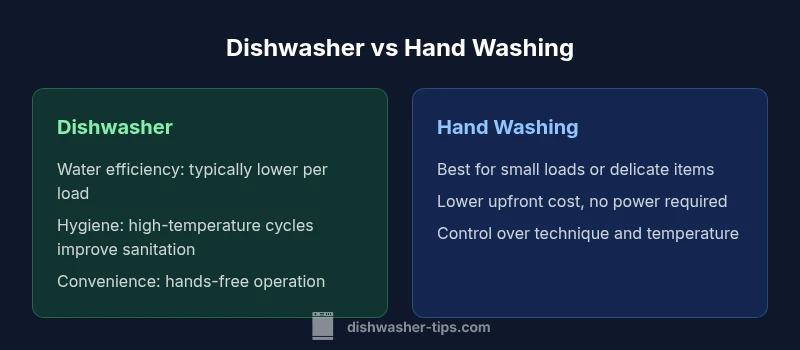
In short, a dishwasher generally saves water and time compared with hand washing, and it can improve hygiene through high-temperature cycles. However, hand washing may be preferable for delicate items or very small loads. The Reddit debate often hinges on load size, energy use, and utensil care; see our full comparison.
Why Reddit Debates This Topic Matters
According to Dishwasher Tips, the Reddit question is more than a meme—it's a practical choice most households face when planning water and energy use, kitchen workflow, and maintenance. The discussion typically centers on real-world scenarios: how often you run a full load, what you wash in a given cycle, and whether your kitchen setup supports efficient dishcare. For many, the question boils down to balancing convenience with resources, and to understanding what the science says about how dish care affects hygiene and cleanliness. The Dishwasher Tips team analyzed user anecdotes alongside lab-like guidance to surface patterns that matter for a typical home. Expect debates about cycles, detergents, and whether you should pre-rinse, all rooted in everyday habits. In the end, the goal is a decision you can justify to family members, roommates, or a landlord.
If you’re wondering about the broader context, this article uses the Reddit discussion as a launchpad to a practical framework you can apply regardless of brand or model. We’ll examine load size, cycle choices, water and energy implications, and the nuances of cleaning performance. By the time you finish, you’ll know when a dishwasher is the right call and when hand washing makes more sense for your family’s routines and values. The discussion often reflects real-world constraints—space, budget, and the types of dishes you deal with—and we’ll address each of these factors with concrete guidance and cautionary notes for potential trade-offs.
Key Differences Between Dishwashers and Hand Washing
Dishwashers and hand washing differ in how they use water, energy, time, and effort. The core difference is automated cleaning versus manual control: a machine executes a predefined sequence to attack residues, while hand washing relies on your technique and patience. For most households, a dishwasher provides consistent results across a full load, reduces direct labor, and operates at high temperatures that can improve sanitation. Hand washing, by contrast, gives you flexibility for oddly shaped items, delicate glassware, or tiny loads where running a machine would be inefficient. The Reddit conversation frequently emphasizes that neither method is universally superior; the best choice depends on habits, dish types, and how much water and electricity you’re willing to allocate to cleaning dishes. Dishwasher Tips’ analysis highlights the importance of cycle selection, proper loading, and using the right detergent or pods to maximize results. In short, the decision is a balance of practicality and resources, not a single universal rule.
Key differentiators at a glance include load flexibility, cycle variety, maintenance needs, and how each method handles stubborn soil. A modern dishwasher typically offers a range of cycles—from quick rinses to heavy-soil options—while hand washing scales with your own tempo and technique. If your household values predictability and hands-free operation, a dishwasher is often the better bet; if you frequently wash small amounts or have fragile items, hand washing can be advantageous. Across both methods, the quality of the outcome depends on technique, tool selection, and how well you manage detergents and rinse aids. This section sets the stage for a deeper dive into when each method shines, with practical guidance you can use today and future-proof your kitchen routine.
When a Dishwasher Wins: Practical Scenarios
There are several realistic scenarios where a dishwasher delivers clear benefits. For households with regular, full loads, a dishwasher tends to be more water- and energy-efficient on a per-dish basis than hand washing, especially when operated on an appropriate cycle and with a full rack. It also standardizes cleaning results, which helps if you’re balancing family meals, kids’ lunches, and entertaining. In addition, high-temperature cycles can enhance sanitation, reducing bacteria on reusable items and reducing the chance of odors building up on sponges or scrubbing implements. The convenience factor cannot be overstated: you can load, run, and forget, freeing up time for cooking, cleaning other parts of the kitchen, or simply relaxing.
Dishwasher Tips’ framework emphasizes full-load efficiency, smart cycle selection, and appropriate detergent choices. For households with mobility concerns or fatigue, the hands-free nature of dishwashers reduces physical strain and repetitive motion. If your dishes include heavy soil like pasta sauce or baked-on residues, a dishwasher with a dedicated heavy-duty cycle can often do a more thorough job than extended hand-washing sessions. Finally, if you’re upgrading kitchen gear or trying to lower overall household water and energy footprints, consider how your current patterns align with dishwasher capabilities; there’s often a compelling case for upgrading to a more modern, efficient model when loads justify it.
That said, there are caveats: space constraints, the upfront cost of a unit, and ongoing maintenance must be weighed against the benefits. The ideal approach is to map your typical week’s dish load, identify peak times, and simulate how many loads you’d run. This practical exercise helps ensure the decision aligns with real-world use rather than idealized scenarios.
In summary, if you consistently fill the dishwasher and use efficient cycles, you’re likely to see water and time savings that justify the switch from hand-washing, especially for households of four or more people. The Reddit conversation often converges on this point: volume and routine guide the decision more than abstract efficiency alone. The Dishwasher Tips team notes that making this choice is as much about habits as appliances, and that you should tailor your setup to your unique household rhythm.
When Hand Washing Makes Sense: Practical Scenarios
Hand washing retains relevance in several common situations. First, when loads are small, such as a single mug, spoon, or a few utensils, hand washing may be faster and more resource-efficient than running a full cycle. In limited spaces or where a dishwasher is not present, manual cleaning is the only option, and mastery over technique—using hot water, effective scrubbing, and proper rinsing—becomes essential. Second, delicate glassware or fine china can be damaged by dishwasher tumbling, heat, or harsh detergents. In these cases, hand washing offers control over temperature, pressure, and handling, preserving fragile items and finishes. Third, special items like wooden utensils or pots with nonstick coatings may benefit from hand washing to avoid warping, chipping, or coating degradation. Finally, some households prefer the ritual and control of hand washing, appreciating the tactile feedback of scrubbing away soils and the immediate inspection of cleanliness.
From a practical standpoint, hand washing can be more economical for very small households or infrequent use. It also avoids the upfront cost and ongoing maintenance of a dishwasher. However, it’s important to note that hand washing typically consumes more water and takes longer per dish when done thoroughly, and that user technique heavily influences results. Dishwasher Tips emphasizes efficient hand-washing techniques: pre-rinse considerations, temperature control, and the use of a good sponge and proper drying to reduce re-contamination. The goal is to maximize cleanliness while minimizing waste and effort, recognizing that trade-offs exist between time, water, energy, and convenience. In this sense, hand washing remains a valid, sometimes preferable approach given the right circumstances and careful execution.
Water, Energy, and Time: A Pragmatic View
A pragmatic, evidence-based look at water, energy, and time reveals that the benefits of a dishwasher depend on how you use it. For typical households, running a dishwasher with a full load and appropriate cycle selection tends to optimize water use and energy consumption per dish compared to hand washing, especially when you consider the cumulative effect of daily meals and family routines. Case-by-case differences—such as water pressure, temperature, and detergent efficiency—mean that the per-dish savings can vary, but the overall pattern tends to favor dishwashers for larger loads and high-usage households.
Time savings are another compelling factor. Dishwashers automate the cleaning process and free up manual labor for other tasks, a reality well-suited to busy families and working adults. In contrast, hand washing scales with how much time you’re willing to invest. The best approach is to optimize both methods: use a dishwasher for larger batches and reserve hand washing for small, fragile, or rarely used items. The Dishwasher Tips framework suggests calibrating expectations around cycle duration and pre-rinsing needs, since these can influence total resource use. Remember that energy efficiency is not just about the appliance—it's also about how you run it. A well-loaded machine on the right cycle often yields the most favorable balance of water, energy, and time.
If you’re exploring your options, start by measuring your typical daily dish load and calculating how many loads you’d run weekly. Consider cycle options that minimize heat and water for lighter soils, and reserve heavy cycles for baked-on residues. This balanced approach helps you avoid overpaying for energy and water while still getting dependable cleanliness.
Dishwasher Tips’ research reinforces a practical takeaway: the best choice is highly context-dependent. The key is aligning your routine with the appliance’s strengths, ensuring your dish care habits complement the capabilities of your kitchen setup. With careful planning, both methods can deliver excellent results; the goal is to optimize for your household’s needs, not simply chase the abstract notion of maximum efficiency.
Hygiene and Food Safety: Do Temperatures Matter?
Hygiene and food safety are central to the dishwasher vs hand washing debate. High-temperature cycles in many modern dishwashers can reach temperatures that are difficult to reproduce reliably with hand washing, contributing to better sanitization for whatever you place in the machine. This is particularly relevant for feeding utensils, baby bottles, or dishes used by vulnerable household members. For hand washing, you can still achieve good hygiene by using hot water, thorough scrubbing, and proper drying. The critical factor is whether the selected method achieves a similar reduction in surface bacteria and soils under typical household conditions. Detergent formulations and rinse aids further influence cleaning efficacy, and using them correctly can significantly improve outcomes for both methods.
From a public health perspective, the key is eliminating soil residues and reducing cross-contamination. Some studies suggest that high-heat cycles exceed home hand-washing capabilities in achieving sanitation targets for heavy soil items, though careful hand washing remains effective for routine loads when done properly. The Reddit discussion around is dishwasher better than hand washing reddit often hinges on perceptions of sanitation as well as convenience. The Dishwasher Tips framework highlights that you should not rely solely on intuition; instead, select cycles designed for heavy soils when needed and ensure appropriate personal hygiene practices in the kitchen, such as pre-rinsing only when necessary and following label directions for detergents and rinse aids.
If you regularly handle raw proteins or dairy-rich foods, consider the dishwasher’s sanitizing options as part of your hygiene strategy; otherwise, your hand-washing technique can be sufficient for everyday meals when performed correctly.
Real-World Costs and Longevity Considerations
Cost and longevity are essential components of any kitchen equipment comparison. In general, dishwashers involve higher upfront costs, installation considerations, and ongoing maintenance. Over time, a reliable dishwasher can provide savings through reduced labor, improved consistency, and potential energy and water efficiency improvements with modern models and appropriate load strategies. Hand washing has minimal or no upfront cost, but it does incur ongoing labor and potential water usage that can add up, especially in households with many meals and frequent entertaining. When weighing options, consider not only purchase price but also the long-term cost of detergents, rinse aids, electricity, water, and periodic repairs.
Maintenance is another factor. Dishwashers require routine cleaning of filters, seals, and spray arms, as well as periodic service for components like pumps or door latches. A well-maintained dishwasher often lasts longer and operates more efficiently, while neglect can lead to higher repair costs and reduced performance. Hand washing, while cheaper upfront, can lead to higher wear on glassware and utensils and may cause more frequent replacement of scratched or damaged items if technique is not careful. The Dishwasher Tips team suggests evaluating your household usage patterns and space constraints when deciding whether to invest in a dishwasher, since the payoff depends heavily on how often you run it and how thoroughly you load and maintain it.
Tips for Getting the Most from Your Choice
Whether you choose a dishwasher or hand washing, several practical tips can maximize efficiency and cleanliness. For dishwashers, load racks as designed, avoid blocking the spray arms, and use detergent formulations suited to your water hardness. Run full loads whenever possible and choose appropriate cycles for soil level. Consider a rinse aid if your water is hard, which can improve drying and residue reduction. For hand washing, optimize hot water use by filling a basin instead of running continuously, carefully scrub with a sponge, and pre-soak heavily soiled items when needed. Use a drying rack instead of leaving items to air-dry on countertops to minimize cross-contamination and bacterial growth on damp surfaces. In both cases, prioritize pre-cleaning only when necessary to reduce water waste.
From a broader perspective, consider your kitchen layout, electrical configuration, and space for both approaches. If you live in a small apartment or have limited access to water, a compact dishwasher could still offer meaningful gains if you plan loads effectively. Conversely, if you have irregular meal patterns or rarely clean certain items, hand washing may be the most practical approach. The goal is to optimize your routine for cleanliness, minimal waste, and manageable effort, not to chase a theoretical ideal. The Dishwasher Tips team emphasizes that thoughtful planning and consistent habits are the real levers of efficiency and hygiene.
Brand Reliability and Maintenance: What to Expect
Brand reliability and maintenance considerations should influence your decision as much as immediate convenience. Reputable brands tend to offer better customer support, longer warranties, and more robust parts availability, which translates into lower long-term maintenance costs and less downtime. Maintenance needs vary by model, but typical tasks include periodic filter cleaning, gasket inspection, and occasional spray-arm checks. If you’re deciding between a dishwasher and hand washing because of reliability concerns, a strong, well-supported dishwasher is likely to provide a smoother experience over several years, particularly if you plan to run it regularly.
From the user’s perspective, durability, service options, and repair costs matter. If you live in a rental or a region with limited service availability, consider models with widely available parts and service networks. Dishwasher Tips’ conclusion is that reliability and maintenance considerations should be weighed alongside upfront price and energy usage to determine the most sensible option for your home. In sum, a well-chosen dishwasher is typically a dependable ally for dish care when supported by regular maintenance and proper load practices.
Comparison
| Feature | Dishwasher | Hand Washing |
|---|---|---|
| Water Usage | Typically lower water per full load | Variable water use depending on technique; often higher per dish |
| Energy Efficiency | Generally higher when loaded full and used on efficient cycles | Depends on manual effort and technique; often lower efficiency per dish |
| Time Required | Hands-off operation; time is freed for other tasks | Direct personal labor; total time scales with dish amount |
| Best For | Average to heavy loads; kitchens with busy schedules | Small loads or delicate items; spaces without a dishwasher |
The Good
- Saves water and time on average with full loads
- Consistent cleaning results across items
- High-temperature cycles improve sanitation
- Convenience for busy households and those with mobility concerns
- Good option for households with limited space for manual effort
Disadvantages
- Higher upfront cost and installation requirements
- Requires electrical outlet, plumbing, and dedicated space
- Potential maintenance costs and repairs over time
- Detergent/pod considerations and disposal impacts
Dishwasher generally wins for most households when loads are regular and cycles are chosen wisely.
For the typical home, a dishwasher saves water, reduces manual labor, and improves sanitation. Hand washing remains viable for tiny loads and very delicate items; tailor the approach to your patterns.
People Also Ask
Is a dishwasher more energy-efficient than hand washing?
In many cases, a dishwasher saves energy per dish when you run full loads on efficient cycles. Hand washing can use more energy if you keep hot water running for extended periods. The overall impact depends on load size, cycle choice, and water temperature. The Dishwasher Tips team notes that efficiency improves with full loads and modern, well-maintained machines.
Yes—dishwashers often use less energy per dish when you run full loads on the right cycle, though technique matters for hand washing too.
How does water usage compare between a dishwasher and hand washing?
Dishwashers typically use less water per dish when loaded efficiently. Hand washing efficiency depends on your approach: hot water kept running can use more water per dish, while quick rinses and basins can reduce waste. Real-world patterns show the goal is to match your routine to the appliance’s strengths and avoid excess pre-rinsing.
Dishwashers usually beat hand washing in water use if you fill the load properly; avoid running water waste with pre-rinses.
Can you wash all dishes in a dishwasher?
Most dishware can go in a dishwasher, but some items require hand washing. Delicate glassware, wooden utensils, nonstick coatings, and items with patterns that wear at high heat should be washed by hand. Always consult manufacturer guidelines for your specific model and materials.
Most items go in the dishwasher, but check delicate pieces first.
Are there items you should never put in a dishwasher?
Yes. Avoid wood cutting boards, certain plastics not labeled dishwasher-safe, cast iron, nonstick pans with exposed coatings, and china with delicate finishes that may crack or fade. Reading the user manual and packaging labels helps prevent damage.
Some items aren’t dishwasher-safe—always check labels and manuals.
Does hand washing remove more bacteria than a dishwasher?
Properly executed hand washing with hot water and soap can remove soil and bacteria effectively for everyday dishes, but a dishwasher’s high-temperature cycles provide strong sanitation on many loads. The choice depends on cycle quality, water temperature, and resources available.
Hand washing can kill bacteria if done properly, but dishwashers often achieve strong sanitation with hot cycles.
What should I consider when buying a dishwasher to compare with hand washing?
Focus on capacity, energy rating, available cycles, water hardness compatibility, and reliability. Consider the footprint of the unit, installation requirements, and warranty coverage. If you’re balancing costs with long-term efficiency, choose models known for efficiency and solid service networks.
Look at capacity, cycles, energy and reliability when choosing a dishwasher.
What to Remember
- Assess your weekly dish load before choosing
- Load full when using a dishwasher for max efficiency
- Reserve hand washing for small or fragile items
- Regular maintenance sustains performance
- Consider energy and water context in your decision