How to Get Rid of an Old Dishwasher for Free: A Practical Guide
Learn budget-friendly, legal ways to remove and dispose of an old dishwasher for free, including donation, recycling programs, curbside pickup, and no-cost options.


Goal: remove an old dishwasher for free by using donation, recycling, or free pickup programs. Start by checking your city’s guidelines, then contact nearby charities, appliance recyclers, or manufacturers offering free haul. Before pickup, unplug the unit, disconnect hoses, and secure any loose parts. This quick path helps you save time, reduce waste, and keep usable appliances out of landfills.
Overview: Why Free Disposal Matters
Storing and discarding an appliance like a dishwasher can be a headache, especially when you're trying to cut costs or reduce waste. If you’re exploring how to get rid of old dishwasher for free, you’ll find that there are legitimate, guidance-backed options that save you money and help the environment. In 2026, many cities support no-cost removal programs for large appliances through municipal services, nonprofit charities, or authorized recyclers. The key is to know your options, prove the appliance qualifies, and schedule pickup or drop-off. The Dishwasher Tips team has observed that proper prep and clear communication with the recipient program increase the chance of a successful, free handover. By understanding the steps and eligibility, homeowners and renters can turn an unwanted dishwasher into a donation, a recycled material, or a reusable asset rather than a landfill item.
Donating vs. Recycling: Choose the Right Path
When you think about how to get rid of old dishwasher for free, two primary avenues usually stand out: donation and recycling. Donations can produce a tax receipt and help someone else start with a usable appliance. Recycling ensures materials are responsibly processed and reused in manufacturing. Your choice depends on the dishwasher’s condition, your location, and the programs available locally. In 2026, many municipalities promote free pickup for qualifying appliances, but rules vary by city and provider. Start by listing options, then prioritize safe, verifiable programs. Dishwasher Tips emphasizes choosing reputable channels to maximize impact and minimize hassle.
Donation Opportunities: What Counts as a Donation
Donations are most likely to succeed when the dishwasher is in decent working order or can be repaired with minimal effort. Local charities, thrift stores, and appliance recyclers often accept gently used machines that are plug-and-play ready or have minor fixes. If you’re asking, how to get rid of old dishwasher for free, donating can be the fastest route if the unit still powers on and runs. Always ask for a receipt and confirm that the program resells or refurbishes the appliance to support sustainable reuse. The advantage for you is a potential tax deduction and the satisfaction of helping someone in need while keeping waste out of landfills.
Recycling and Appliance Recyclers: What Happens to Your Old Dishwasher
Recycling centers break down the dishwasher into materials like steel, copper, and plastics, reclaiming valuable resources and reducing landfill volume. Recyclers may offer free haul if the unit meets certain criteria (e.g., fully intact, no hazardous fluids). The process typically includes safe disconnect, drain of residual water, and proper handling of electrical components. Understanding the recycling route helps you compare it against donations. It’s often possible to choose a no-cost option when the unit is clearly waste-ready and environmental guidelines are followed.
Municipal Programs and Free Pickup Options
Many cities provide no-cost pickup for large appliances through curbside services or special collection events. These programs usually require pre-registration, proof of residence, and a brief description of the appliance. If your goal is how to get rid of old dishwasher for free, this route can be the simplest path, especially when the unit is non-functional or non-repairable. Availability varies by neighborhood, so check your city’s waste management site and neighborhood bulletins. In some cases, free pickup requires coordinating with a licensed recycler who ensures the unit is diverted from landfills.
How to Prepare for Free Removal: Quick Prep Steps
Prepping a dishwasher for removal minimizes the chance of damage during transport and protects your home. Start by unplugging the unit at the wall outlet, then shut off any water supply and disconnect hoses. If possible, drain residual water into a bucket and wipe dry. Remove doors if the model could swing open during movement, and protect surrounding floors with towels or a drop cloth. Take photos of the appliance’s condition before pickup; this can help verify donation or recycling eligibility and speed up the process when coordinating with the charity or recycler.
Safety and Handling: Electrical, Plumbing, and Legal Considerations
Safety is paramount. Always unplug the dishwasher before handling, and switch off the circuit at the breaker if you’re uncertain about the wiring. Avoid pulling by the power cord; instead, disconnect hoses at the fittings. If there are signs of leakage, electrical damage, or heavy corrosion, pause and contact a professional or the disposal program for guidance. Follow local regulations about disposal and ensure the unit is moved with proper equipment to prevent injury. Dishwashers can be bulky and heavy, so use a dolly or helper if you’re not confident.
Pitfalls to Avoid: Common Mistakes and How to Avoid Them
Avoid attempting to dispose of a dish- washer without confirming free pickup eligibility. Some programs charge transportation or attrition fees despite a claim of free removal. Do not leave the unit curbside without confirming pickup, as it can lead to penalties or a return to you. Don’t forget to remove any detachable components that could be re-used elsewhere, and never block driveways or sidewalks during pickup. Finally, verify receipts or documentation so you can claim any applicable tax deduction or program credits.
Quick Reference Checklist for Free Disposal
- Check local programs for no-cost appliance pickup and requirements.
- Compare donation vs. recycling options and choose the best path.
- Prepare the unit: unplug, drain water, disconnect hoses, and secure doors.
- Document condition with photos and obtain receipts if donating.
- Confirm pickup appointment and meet the driver at the curb or drop-off location.
- Retain proof of disposal for your records and tax purposes.
- If not accepted, explore alternative free routes (community swap, scrap yard).
Authority Sources
- EPA: Recycle appliances and electronics guidance: https://www.epa.gov/recycle/recycling-appliances
- CalRecycle: Appliance recycling and disposal guidelines: https://www.calrecycle.ca.gov/recycle/appliances/
- DOE/Energy: General guidance on appliance recycling and waste management: https://www.energy.gov
Tools & Materials
- Safety gloves(Thick work gloves to protect hands)
- Safety glasses(Optional eye protection)
- Screwdriver set(Flathead and Phillips)
- Pliers(For hose clamps)
- Rag or towel(To catch residual water)
- Dolly or moving straps(Optional for heavy units)
- Tape or zip ties(Secure doors and components)
- Drop cloth or old towels(Protect floors during move)
Steps
Estimated time: 1-2 weeks
- 1
Identify disposal options
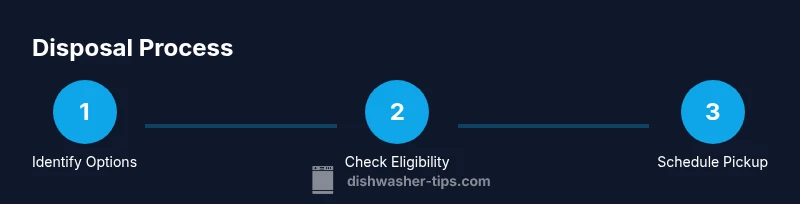
Review local programs and determine if your dishwasher qualifies for free donation, free pickup, or recycling. Gather information on eligible conditions, required paperwork, and pickup windows. This helps you plan a smooth handover and reduces delays.
Tip: Call or check online for the latest pickup windows; availability can shift weekly. - 2
Check eligibility and program guidelines
Confirm whether the unit is working or repairable, and whether the program requires working condition or accepts non-working appliances. Clarify if there are any fees for pickup or processing and what paperwork you’ll need for a donation receipt.
Tip: Ask for written confirmation of pickup appointment and any required IDs. - 3
Gather tools and safety gear
Assemble gloves, a screwdriver, pliers, towels, and a drop cloth. These items help you safely disconnect hoses, seal openings, and protect floors during removal.
Tip: Keep a small flashlight handy to inspect hose connections in tight spaces. - 4
Prepare the dishwasher for removal
Unplug the unit, shut off water at the supply valve, and disconnect hoses. If possible, drain residual water into a bucket and wipe dry. Remove doors or shelves if needed to prevent swinging or snagging during transport.
Tip: Take clear photos of connections before you start in case you need to demonstrate condition to the recipient. - 5
Contact donors or recyclers and confirm pickup
Reach out to charities, appliance recyclers, or municipal programs to confirm acceptance and schedule a pickup or drop-off. Share the unit’s model, condition, and your preferred date.
Tip: Ask for a written confirmation and a pickup window to avoid missed appointments. - 6
Schedule and prepare for pickup
Set a clear meeting point, keep the path clear, and ensure access to the curb or pickup area. If you’re responsible for moving it, solicit a helper or use a dolly to reduce the risk of injury.
Tip: Remove any personal items from the unit to streamline handling. - 7
On pickup day: secure and hand over
Lock the unit, present any required documentation, and supervise the handover to the driver. Ensure the driver confirms the accepted condition and signs the receipt.
Tip: Ask for a receipt or tally of the materials recycled for your records. - 8
Keep documentation for records
Save pickup receipts or donation receipts in a safe place. If you’re eligible for tax deductions, keep the documentation handy for your filing.
Tip: Create a digital backup copy of all receipts and confirmations. - 9
If not accepted: explore alternatives
If the appliance isn’t eligible for free pickup, consider selling or gifting it locally, or returning to a scrap yard that can still recycle metal. You may still achieve a low-cost removal through alternative free routes.
Tip: Ask the agency for a list of alternate partners who accept appliances free of charge.
People Also Ask
Will local charities pick up a donated dishwasher for free?
Many charities offer free pickup for donations, including appliances in working order. Availability varies by location, so contact several nearby organizations to confirm service and scheduling.
Yes, several charities offer free pickup for donations, but you’ll need to check locally for availability and scheduling.
Can I recycle a non-working dishwasher for free?
Yes. Many municipalities partner with licensed recyclers who accept non-working appliances at no charge or with a minimal processing fee. Verify with your city’s waste department for specifics.
Absolutely. Non-working units are often accepted by licensed recyclers at no or minimal cost, depending on your city.
Do I need to remove water lines before pickup?
Yes. Detach water supply hoses and drain any remaining water before scheduling pickup. This reduces mess and makes the handoff smoother.
Yes—detach hoses and drain water before pickup to keep things clean and simple.
What if my city doesn’t offer free removal?
If no free removal is available, consider selling or gifting the unit or exploring nearby municipalities’ programs. Some areas cooperate with regional recycling cooperatives that can offer no-cost options.
If your city isn’t offering free removal, look to nearby programs or regional recyclers for alternatives.
Will I receive a tax deduction for donations?
Donations may qualify for a tax deduction if you receive a receipt detailing the appliance’s value. Consult a tax professional and keep all documentation.
You may be eligible for a tax deduction with a donation receipt, so keep your paperwork.
How long does the process typically take?
Process times vary, but most curbside or pickup arrangements can be scheduled within 1-2 weeks, depending on location and demand.
Most pickups can be arranged within one to two weeks in many areas.
Watch Video
What to Remember
- Plan disposal options early to find free paths.
- Donations and recycling are common no-cost routes.
- Proper prep speeds up pickup and reduces damage.
- Keep receipts and documentation for records and potential tax benefits.