What to Do with Your Old Dishwasher: A Practical Guide
Learn practical, AI-informed steps for what to do with an old dishwasher: repair, repurpose, recycle, or safely remove. A comprehensive guide from Dishwasher Tips.


Getting rid of an old dishwasher can be straightforward with three solid options: repair or upgrade if feasible, repurpose for a new use, or recycle through your local program. Start by unplugging the unit, shutting off water, and checking for easy removal. For most homeowners, safety, space, and environmental impact should guide the choice.
What to do with old dishwasher: overview and options
If you’re wondering what to do with old dishwasher, you’re not alone. According to Dishwasher Tips, most households choose between keeping the appliance as a backup by repairing or upgrading, repurposing it for a new use, or recycling it through municipal programs. Start by assessing its condition: does it turn on, drain properly, or rust badly? Size and location matter—dishwashers come in standard or compact sizes, and the surrounding cabinet cutout determines whether a move is feasible without major remodeling. Environmental impact also matters: disposal options range from responsible recycling to responsible donation if the unit still runs. This guide outlines practical paths, how to decide among them, and the steps to execute safely. You’ll gain clarity on timing, costs, and the effort required, so you can make a decision that fits your space and budget while keeping your home safe and organized.
Safety first: unplug, drain, and protect yourself
Before touching any wiring or hoses, unplug the unit and shut off the water supply to the valve under the sink. If you smell burning or see sparking, stop and call a professional. Drain the residual water by removing the bottom access panel and locating the drain hose; place towels and a shallow pan to catch any spills. Wear sturdy gloves and safety glasses throughout; metal edges and sharp hoses can cause injuries. If you plan to move the dishwasher through doorways, measure the appliance and door frames ahead of time to avoid jamming. These basics keep you safe and make the rest of the process smoother. Dishwasher Tips analysis shows safety incidents often occur when power and water are not isolated before handling.
Repair or upgrade first: when it’s worth it
If the unit still runs, is relatively quiet, and has only minor issues (like a slow drain or occasional leaks), repairing or upgrading components can be cost-effective and extend its life. Consider the age of the machine, the availability of replacement parts, and the expected remaining lifespan. A professional diagnosis usually reveals whether a repair is simple (like replacing a seal) or more involved (like motor or control board). Compare the repair cost to the price of a new unit and factor in energy efficiency gains. This approach helps you avoid unnecessary waste while keeping your kitchen functional. The Dishwasher Tips Team recommends getting at least two quotes before deciding.
Repurposing ideas that actually work
Repurposing an old dishwasher can be a creative way to reclaim space without throwing away functionality entirely. Remove the inner rack and use the cavity as a storage bin for gardening tools, pots, or cleaning supplies. The door can serve as a shallow work surface in a garage or laundry room after adding a simple top shelf. If you’re handy, you can convert the shell into a small rainwater reservoir or a compact outdoor sink cabinet, ensuring any electrical components are removed or safely sealed. Always disconnect power and water completely before any modification, and keep sharp metal edges protected.
How to recycle: find the right program
Recycling is a responsible path for an old dishwasher that no longer runs. Start by checking your city or county’s household hazardous waste and e-waste programs for appliance disposal. Many municipalities offer curbside pickup for large appliances or require a drop-off at a designated recycling facility. Appliance retailers often provide take-back programs when replacing a unit, and some scrap yards accept metal and copper components for recycling. Prepare the dishwasher by draining fluids, removing plastic bits, and separating any hazardous materials you might encounter. By choosing a certified recycler, you ensure metals and plastics are recovered with minimal environmental impact.
Donation and resale options
If the dishwasher still operates, donating to a charity or household goods reuse center can be a practical option. Call local organizations to confirm acceptance criteria, drop-off schedules, and whether delivery is possible. If the unit is not functional but repairable, some nonprofits accept non-working appliances for repair and resale; they typically salvage usable parts and dispose of the rest responsibly. For working units, keep the original model number and energy rating handy to help charities determine suitability. Always obtain a receipt for tax purposes where eligible.
When disposal requires professionals
Some kitchens require professional removal due to built-in alignments, cabinetry integration, or limited access. If the dishwasher is jammed behind cabinets, or if removing plumbing risks leaks, contact a licensed contractor or appliance technician. They can safely disconnect power, water lines, and drainage, and they may offer disposal or recycling services themselves. This prevents water damage and cabinet damage, protects you from injury, and ensures compliance with local codes. If you rent, check with your landlord or management company about approved service providers and any required permissions.
What to do with the space after removal
After the dishwasher is removed, inspect the opening for any gaps or damage to the surrounding cabinetry. Patch any holes, fill in with matching panels, and re-create a clean, finished look. Consider adding a filler panel or new cabinet door to restore a seamless kitchen line. If you’re replacing the dishwasher with a new appliance, measure for the updated dimensions and ensure electrical outlets and drainage align with the new model. A tidy opening will help with resale value or appraisals and makes the kitchen feel complete again.
Common mistakes to avoid
Avoid skipping the safety steps and working with live wires or water lines. Don’t force the appliance through spaces that are too small, as this can damage walls, floors, or cabinets. Never discard refrigerants, solvents, or household chemicals with the dishwasher components; separate and dispose of hazardous materials according to local guidelines. Finally, don’t assume a non-working unit has no value—donating or recycling it can still benefit others and the environment, while reducing landfill waste.
Tools & Materials
- Work gloves(Cut-resistant preferred)
- Safety glasses(Protect eyes from sharp edges)
- Screwdriver set(Phillips and flathead)
- Adjustable wrench(For hose clamps and fittings)
- Pliers(Grip and remove clamps)
- Utility knife(Trim seals if needed)
- Dolly or appliance cart(For safe moving)
- Old towels and shallow pan(Catch residual water)
- Tarp or plastic sheeting(Protect floors)
- Flashlight(Illuminate dim areas)
- Measuring tape(Check doorway clearance)
Steps
Estimated time: 2-3 hours
- 1
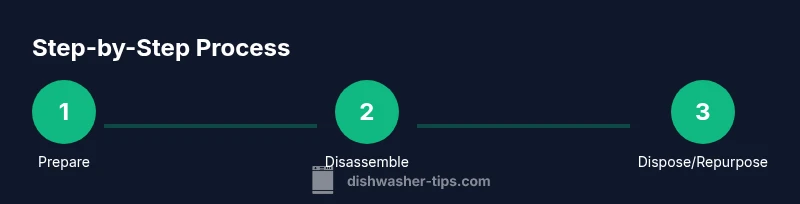
Prepare and assess disposal options
Survey the space and options: repair, repurpose, donate, or recycle. Assess the unit’s weight, age, and condition to gauge feasibility. Decide on the primary path before you begin disassembly to avoid rework.
Tip: Have a clear plan and a second person to help with lifting. - 2
Shut off power and water supply
Unplug the dishwasher at the wall or circuit breaker. Turn off the water valve under the sink to stop any leaks. Confirm there is no power before touching electrical components.
Tip: If you’re unsure about the electrical, hire a licensed electrician. - 3
Disconnect water inlet and drain hoses
Loosen clamps on the inlet and drain hoses with pliers. Detach them from the water supply and drain fitting. Have towels ready for any residual water.
Tip: Label hoses for future reference if you’re replacing with a new unit. - 4
Unfasten mounting screws and remove the unit
Remove the mounting screws securing the dishwasher to the cabinet. Use a helper to keep the unit balanced as you slide it out of the opening. Keep a careful grip to prevent it from tipping.
Tip: Slide it forward just enough to access the power cord and hoses, then disconnect them carefully. - 5
Move the dishwasher safely to the disposal path
Place a dolly under the unit and secure it before lifting. Move slowly, avoiding doorways that are too narrow. Protect floors with mats or cardboard to prevent damage.
Tip: Ask a friend to help guide and steady the load through tight spaces. - 6
Transport to recycling, donation, or disposal
Take the unit to the chosen facility or arrange for curbside pickup if offered. If donating, bring proof of ownership and any maintenance records. If recycling, remove any removable parts and recycle as instructed.
Tip: Call ahead to confirm accepted conditions and scheduling. - 7
Inspect for hazards and separate materials
Check for capacitors or refrigerants or any hazardous components and follow local guidelines for disposal. Separate metal, plastic, and any insulated parts as required by the recycler. Keep hazardous materials out of general waste.
Tip: Do not tamper with sealed capacitors; treat as hazardous. - 8
Clean up the space and seal the gap
Sweep and wipe the opening to remove debris. If you are not replacing immediately, install a temporary filler panel to create a neat, finished look. Restore flooring and seal any exposed gaps.
Tip: Take a photo of the opening for future reference when installing a new unit.
People Also Ask
What should I do with old dishwasher?
Options include repair, repurpose, donation, or recycling. Choose based on condition and space. Always follow safety guidelines.
Options include repair, repurpose, donation, or recycling. Choose based on condition and space, and always follow safety guidelines.
Can I donate a non-working dishwasher?
Some charities accept non-working appliances if they can salvage usable parts or repair them for resale. Call ahead to confirm acceptance and transportation.
Some charities accept non-working appliances if parts can be salvaged; call ahead to confirm.
Is it safe to remove a dishwasher myself?
Yes, if you shut off power and water, disconnect hoses, and use proper lifting technique with a helper. If unsure, hire a professional.
Yes, safely unplug, turn off water, and disconnect hoses. If unsure, hire a pro.
Where can I recycle an old dishwasher?
Check municipal waste programs, local recycling centers, or appliance retailers that offer take-back services. Many programs recycle metal, plastics, and electronics responsibly.
Check city programs or take-back services from retailers for responsible recycling.
What if I’m not replacing it right away?
Plan safe removal, keep the opening blocked until you arrange a new appliance, and seal the area to prevent dust and pests. Do not leave the space exposed for long.
Secure the opening and plan replacement to protect your space.
How long does disposal typically take?
Time varies with access, curbside options, and whether you donate or recycle. Budget a few hours for the actual removal and transport, plus planning.
A few hours for removal and transport, plus planning time.
Watch Video
What to Remember
- Explore repair, repurpose, and recycle options before disposal.
- Prioritize safety: power off, water off, and protective gear.
- Plan the move with a helper and the right dolly.
- Consider local programs for donation or recycling to reduce waste.