Where to Install a Dishwasher Drain: A Practical Guide
Learn where to install your dishwasher drain for safe, code-compliant drainage. This guide covers high loops, venting, disposal connections, and common install mistakes.


You're going to determine the correct drain location for your dishwasher, ensuring a high loop, proper venting, and a secure connection to the sink or disposal. You’ll verify local codes, measure hose elevation, and plan for future service access before starting any work. This quick check helps prevent leaks, backups, and expensive rework.
Understanding the purpose and best location for a dishwasher drain
The drain location you choose for a dishwasher influences performance, reliability, and hygiene. The right place minimizes backflow, reduces the risk of cross-contamination with the sink, and makes maintenance easier. Start by identifying available outlets: sink tailpiece, garbage disposal knockout, or a direct connection to the home's drainage line. In many kitchens, the most straightforward option is to tie the dishwasher drain into the sink tailpiece below the sink drain. If your sink has a disposal, you may need to use the disposal knockout plug temporarily or remove it to create a connection. Always verify that your chosen route will keep the dishwasher drain higher than any trap or disposal outlet to prevent siphoning. This is the core reason for maintaining a proper high loop, which not only reduces the chance of backflow but also helps prevent air from being drawn back into the dishwasher. Throughout this planning phase, consult local codes, as some jurisdictions require an air gap or specific routing to meet safety standards. In short, the best location balances ease of installation, accessibility for future service, and compliance with code requirements. The Dishwasher Tips team notes that spending extra planning time upfront reduces the odds of leaks or service calls later on. When you ask where to install a dishwasher drain, you weigh proximity to the sink, relative height, and ease of access for future maintenance.
Plumbing options: disposal knock-out, sink tailpiece, or air gap
Dishwasher drainage can connect in several practical ways, depending on your kitchen setup and local plumbing codes. The disposal knock-out is a common route when a garbage disposal is present, but you must remove the knockout plug and ensure the disposal inlet is clean and accessible. If you don’t have a disposal, tying into the sink tailpiece is a reliable option, usually via a branch tailpiece with a trap adapter. Some areas require an air gap between the dishwasher and the drain to prevent backflow into the dishwasher. An air gap is typically mounted on the sink deck or countertop and connected with two short hoses that prevent dirty water from flowing back. Each option has pros and cons related to ease of installation, future service, and code compliance. Before choosing, inspect the underside of your sink, confirm the outlet availability, and plan a route that minimizes bends, reduces the risk of kinks, and keeps the hose elevated above the trap. Budget for fittings that match your pipe material (PVC, ABS, or metal) and the diameter of your dishwasher hose.
Elevation, loops, and venting: why height matters
A high loop is essential for avoiding backflow and siphoning. The drain hose should rise to a level higher than the dishwasher’s outlet before connecting to the drain, disposal, or air gap. Failing to create an adequate loop increases the chance that used water can flow back into the dishwasher, leaving residues on dishes and potentially contaminating future cycles. Venting considerations matter in some homes; while most dishwashers don’t require a dedicated vent, some installations benefit from a properly placed air gap that maintains atmospheric pressure and prevents siphoning. When planning the height, think about the space under the sink, the distance to the sink drain, and any cabinet obstructions. Avoid securing the hose with staples that can crush it; instead, use clamps or ties that preserve flexibility. Always test the loop after the connection is complete, ensuring there are no sharp bends that could kink the hose.
Common mistakes to avoid in drain placement
Common mistakes include placing the drain too low, failing to create a proper high loop, and neglecting to install an air gap when required. People often reuse an old hose with weakened clamps, leading to slow leaks or sudden disconnections. Another frequent error is routing the hose too directly into a disposal inlet without removing the knockout plug when needed, which can create backflow and odors. Do not force a long, tight bend; instead, plan a smooth path with clear access for future maintenance. Finally, never seal connections with household sealants that are not rated for plumbing; use plumber-approved sealant or Teflon tape where appropriate. By avoiding these mistakes, you reduce the risk of leaks, water damage, and costly repairs.
Planning around your kitchen layout and local code considerations
Your kitchen layout, sink type, and local plumbing code all influence where and how you install the dishwasher drain. Some codes mandate an air gap device at a specific height or require a dedicated vent for certain configurations. Others permit a high loop instead of an air gap in residences. To comply, check your municipality’s guidelines, which can usually be found on the city or county building department website. Consider whether your cabinet space offers enough clearance for the required hose loop and whether you’ll need to relocate or alter nearby piping. It’s also wise to plan for future service: routing the drain hose so it can be detached and inspected without moving the entire dishwasher. The Dishwasher Tips team emphasizes that understanding local rules early helps prevent rework and ensures long-term reliability. If you’re renting, verify with the landlord or building management before making permanent changes.
Maintenance and future access: long-term reliability
An installation designed for maintenance saves time and money down the line. Ensure the drain route is accessible, and label fittings so future technicians can identify connections quickly. Use clamps that are easy to release, and avoid burying the hose behind rigid panels. Keep the area dry during testing to prevent mold growth and corrosion on metal components. Regularly inspect for signs of wear, especially where hoses connect to adapters and traps. If you notice slow draining after several cycles, recheck the hose path for kinks or loose clamps, and confirm that the high loop remains intact. By designing with accessibility in mind, you reduce the likelihood of water damage and simplify future service.
Quick measurement checklist before you drill or cut
Before making any cuts or drilling into cabinets, measure the distance from the dishwasher’s outlet to the chosen drain connection, accounting for a comfortable high loop and any required air gap hardware. Verify the hose diameter and wall thickness to ensure compatibility with fittings and clamps. Mark the exact route on the underside of the countertop, then dry-fit the hose and fittings to confirm clearance and avoid interference with plumbing or cabinetry. Finally, gather all required tools and materials so you can complete the installation in one session, minimizing mistakes from rushing transitions.
Tools & Materials
- Dishwasher drain hose (length appropriate to reach chosen outlet)(Add extra 12–18 inches for loop clearance and future adjustments)
- Drain assembly kit (tailpiece, trap adapter, or disposal knockout plug compatibility)(Choose components matching your sink/disposal material (PVC/ABS/metal))
- Air gap (optional; code-dependent)(If your local code requires it, install at the sink deck)
- Screwdriver set(Flathead and Phillips; for hose clamps and fittings)
- Pliers(For tightening clamps and fittings without over-torquing)
- Pipe wrench(Useful for stubborn connections; use with care on plastic fittings)
- Measuring tape(Accurate hose length and routing measurements)
- Marker or pencil(Mark routing path and drill points clearly)
- Bucket and towels(Catch water and keep workspace clean during tests)
- Plumber’s tape or silicone sealant(Seal threaded connections per material guidelines)
- Safety gloves(Protect hands during cutting and assembly)
Steps
Estimated time: 60-90 minutes
- 1
Gather tools and materials
Lay out all parts and tools in labeled bins. Confirm you have the correct sink connection and the necessary fittings to avoid mid-project trips to the hardware store. This reduces errors and keeps the workflow smooth.
Tip: Pre-sort parts by function (hose, fittings, fasteners) to speed assembly. - 2
Turn off water supply and power to the dishwasher
Switch off the circuit breaker or unplug the dishwasher. Shut off the water supply valve to prevent accidental leaks during installation. Re-check that the area is dry before proceeding.
Tip: Test power with a non-contact voltage tester to ensure safety. - 3
Plan drain route and measure length
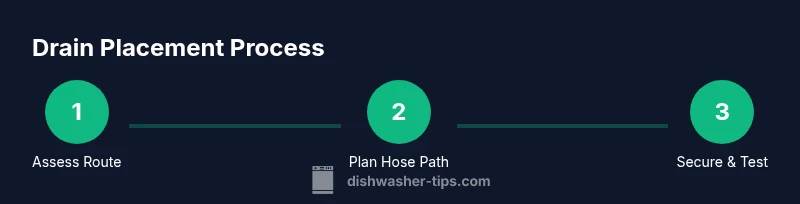
Determine the best route to the sink drain or disposal, ensuring a clear path for the hose and a proper high loop. Measure the distance, add extra for the loop, and mark where fittings will occur.
Tip: Reserve extra hose at both ends to accommodate a comfortable loop without tension. - 4
Install drain assembly and route hose
Assemble the drain components and connect the hose to the chosen outlet. Route the hose so it rises above the outlet level, creating a reliable high loop. Secure hoses with clamps and check for sharp bends.
Tip: Avoid kinks by using smooth bends and supported clamps rather than staples. - 5
Connect to sink/disposal and test for leaks
Attach the drain line to the sink tailpiece or disposal, install the disposal knockout plug if required, and run water to test the connection. Check all joints for leaks and tighten as needed.
Tip: Test under pressure by running the dishwasher’s hottest cycle briefly to reveal leaks. - 6
Finalize and clean up
Tidy the workspace, recheck hose routing, and ensure all fasteners are secure. Wipe up water and inspect for moisture around connections over the next 24 hours.
Tip: Take a photo of the final setup for future reference.
People Also Ask
Do I need an air gap for dishwasher drain?
Air gaps are required in some jurisdictions, while others allow a high loop. Check your local code to determine whether you must install an air gap or if a high loop suffices. In many homes, a properly secured high loop with secure connections can be enough, but always verify local requirements.
Air gaps are required in some places, but not all. Verify your local code to decide between an air gap or a high loop.
What is the minimum height for the high loop?
There is no universal numeric minimum; aim to keep the hose well above the disposal or trap level and out of the cabinet where water could backflow. Local codes may define a specific height, so consult your city or county guidelines.
No universal height; keep the hose well above the drain and consult local codes.
Can I connect a dishwasher drain directly to a disposal?
Yes, many setups connect to the disposal inlet, provided you remove the knockout plug if required and verify a secure seal with the clamp. Ensure the disposal is clean and not damaged to prevent clogs.
Yes, you can connect to the disposal if you remove the knockout plug and seal it well.
What should I do if water leaks after testing?
Turn off the supply, recheck each connection and clamp for tightness, and confirm there are no cracks in hoses or adapters. If leaks persist, replace faulty fittings rather than forcing a tight seal with tape.
If it leaks, shut off power, recheck connections, and replace any faulty fittings.
Is an air gap always necessary for new installs?
Not always. Some new installations permit a high loop, while others require an air gap. Always verify local code requirements and appliance instructions before deciding.
Air gaps depend on local code; check requirements for your area.
What tools make the job safer and easier?
A basic toolset including a screwdriver, pliers, measuring tape, and clamps makes the job safer and faster. Having a bucket and towels helps manage spills, and a marker keeps your routing points clear.
Use a screwdriver, pliers, measuring tape, and clamps; bucket and towels help a lot.
Watch Video
What to Remember
- Plan the drain route before cutting or drilling.
- Maintain a secure high loop to prevent backflow.
- Check local codes for air gaps vs. high loop.
- Test thoroughly for leaks after connection.