How to Put Dishwasher Filter Back in Frigidaire
Learn how to put the dishwasher filter back in Frigidaire with a clear, step-by-step process. Troubleshoot drainage, clean the filter, and keep your dishwasher performing at its best.


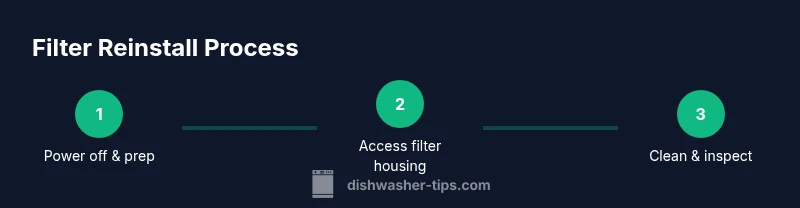
Goal: Reinstall the Frigidaire dishwasher filter correctly to restore drainage and cleaning performance. Steps: power off, remove the lower rack, locate the bottom filter, twist out the housing, rinse debris, reinsert the filter aligning tabs, lock it in place, replace the rack, and run a short test cycle to confirm proper drainage.
Why the filter matters for Frigidaire dishwashers
According to Dishwasher Tips, the dishwasher filter is your first line of defense against food particles and debris. A clean, well-seated filter helps ensure optimal water flow, thorough cleaning, and reduced wear on the pump and spray arms. When the filter is clogged or misaligned, you may notice poor cleaning results, longer cycles, or water drainage problems. Regular maintenance of the filter is a simple, cost-free way to protect the appliance and keep dishes sparkling.
Filter types and layout in Frigidaire models
Most Frigidaire dishwashers use a bottom-filter assembly that combines a coarse screen with a finer microfilter. Some models feature a two-piece layout: a circular filter cap at the base and a secondary mesh above it. The exact design varies by model year, but the goal remains the same: trap large particles and fine grit before water is pumped through spray arms. Understanding your model helps you locate and reinstall the parts correctly when cleaning is needed.
Tools, safety, and prep before you begin
Before you start, unplug the dishwasher or switch off the circuit to eliminate any risk of shock. Pull out the lower rack to access the filter area, and lay down a towel or tray to catch splashes. Wear gloves if you want extra protection from sharp edges. Keep a small bowl or container handy for rinsing and trapping debris. Having a clear workspace reduces the chance of dropping parts and misplacing small pieces.
Step-by-step context: where to begin if you’re reassembling
Begin by removing the lower rack to expose the filter housing. If your model uses a twist-off cap, carefully rotate it counterclockwise to release the filter. Inspect the filter for clogs and remove any trapped debris. Rinse the filter under running water and set it aside to dry briefly while you check the housing for obstructions. This preparation reduces the risk of re-clogging once you reinstall.
Cleaning the filter and housing effectively
Rinse the filter thoroughly with warm water, using a soft brush to dislodge stuck particles. Wipe the housing with a damp cloth to remove residue that could impede suction. If you detect a sticky buildup, use a mild dish soap solution and rinse completely to avoid soap residues on dishes. Allow everything to dry briefly before reassembly to ensure a snug seal.
Reinstalling the filter correctly: alignment and locking
Reinsert the filter assembly, making sure the tabs or notches align with the housing. If there’s a cap, twist it until it sits firmly and locks in place. Ensure the filter sits flush and does not wobble; a loose filter can cause debris to bypass the screen or create leaks. Reinsert the lower rack when the filter is secure and ready for testing.
Testing: run a cycle and check drainage
Run a quick hot-water wash with a normal cycle to verify proper drainage and filtration. Observe whether water drains completely and whether dishes come out clean and free of grit. If you notice pooling water or repeating drainage, re-open the filter area and re-check alignment and seals. A successful test confirms the filter is properly back in place.
Common mistakes and how to avoid them
Common errors include overtightening the filter cap, misaligning notches, and forgetting to reinstall the lower rack. Always ensure the filter seats evenly and that no part remains loose. If you encounter persistent leaks, inspect the gasket around the filter housing and verify the drain hose is not kinked. Taking your time during reinstall minimizes future issues.
Maintenance tips to keep your filter performing
Create a simple maintenance schedule: inspect and rinse the filter weekly with heavy use, or biweekly for light use. Wipe the housing after cleaning to prevent buildup. Consider a rinse aid or occasional dishwasher-safe cleaner to help maintain overall cleanliness, but avoid harsh solvents near seals. Regular care extends the life of the filter and the dishwasher.
Tools & Materials
- Gloves(Protect hands from sharp edges and debris.)
- Towel or tray(Catches water and debris during removal.)
- Soft-bristle brush(Gently scrubs the filter and housing.)
- Small bowl or container(Rinse debris and collect water.)
- Flashlight or headlamp(Improves visibility inside the tub.)
- Dish soap (mild)(For gentle cleaning of stubborn residue.)
Steps
Estimated time: 15-30 minutes
- 1
Power off and prep workspace
Unplug the unit or switch off the circuit. Open the door and pull out the lower rack to create a clear workspace. Place a towel under the filter area to catch any splashes.
Tip: Keep track of removed pieces so you don’t misplace any part. - 2
Access the filter housing
Locate the bottom filter assembly at the tub base. If your model uses a removable cap, turn it counterclockwise to release the filter.
Tip: Take a breath and proceed slowly to avoid dropping parts. - 3
Remove and inspect the filter
Carefully lift the filter out and inspect for clogs or damage. Remove trapped debris and set the filter aside for cleaning.
Tip: If the filter is cracked or heavily damaged, replace before reinstalling. - 4
Clean the filter and housing
Rinse the filter under warm running water and scrub with a soft brush if needed. Wipe the housing to remove residue.
Tip: Avoid harsh chemicals that could degrade seals. - 5
Inspect seals and gaskets
Check the edge of the filter housing and the gasket for wear or cracks. Replace damaged seals to prevent leaks.
Tip: A damaged gasket often causes leaks despite a clean filter. - 6
Reinstall the filter correctly
Align the filter tabs with the housing and slide it back into place. If there is a locking cap, twist until it clicks.
Tip: Ensure there is no wobble; a loose filter can bypass the screen. - 7
Reinsert the rack and start a test cycle
Return the lower rack to the tub. Run a short hot-water cycle to check operation and drainage.
Tip: Watch for any signs of drainage issues during the first minutes of the cycle. - 8
Observe for leaks and performance
Check under the unit and around the filter area for leaks after the cycle completes. Confirm dishes came out clean.
Tip: If leaks appear, recheck all seals and ensure filter is fully seated. - 9
Document maintenance
Note the date of reinstall and set a reminder for periodic cleaning based on usage.
Tip: Consistency reduces the likelihood of future clogs.
People Also Ask
Where is the Frigidaire dishwasher filter located?
In most Frigidaire models, the filter sits at the bottom of the tub. Some models have a two-piece system with a coarse filter and a microfilter. Check your owner’s manual for the exact layout.
The filter is typically at the bottom of the tub; some models have two parts. Refer to your manual if you’re unsure.
Do I need to remove both filters to reinstall?
Some Frigidaire models use a dual-filter system; you may need to remove and reassemble both pieces to ensure a proper seal and clean flow.
Some models have two filters; remove both pieces if present to reinstall correctly.
What should I do if water doesn’t drain after reinstall?
Check filter alignment and cleanliness, inspect the drain hose for kinks, and ensure the seal around the housing is intact. Reinstall if needed and run a test cycle.
If it won’t drain, check the filter, hose, and seals, then test again.
How often should I clean the filter?
Clean the filter every 1-2 weeks with heavy use, or monthly for light use. Regular cleaning reduces clogs and improves performance.
Clean the filter every couple of weeks, or monthly if unused often.
Can I use a dishwasher cleaner to clean the filter?
A mild dish soap solution is typically sufficient. Avoid harsh solvents that could damage seals or plastic parts.
Use mild soap and water; avoid harsh cleaners on filters.
Is it safe to run the dishwasher without the filter temporarily?
No. Running without a filter can allow food particles to reach the pump, causing damage. Reinstall promptly after cleaning.
Don’t run it without a filter—reinstall after cleaning.
Watch Video
What to Remember
- Power off before starting maintenance.
- Align filter tabs accurately for a secure fit.
- Regular cleaning prevents drainage problems.
- Test with a short cycle to confirm proper function.