Bosch Dishwasher Drain Pump Repair: A Practical Guide
Learn to diagnose, repair, and replace the Bosch dishwasher drain pump with a practical, safety-first approach. This guide covers symptoms, tools, steps, safety, testing, and maintenance—for homeowners and renters.


In this guide you will learn how to diagnose and repair a Bosch dishwasher drain pump. You’ll identify common symptoms, gather the right tools, and follow a safe, step-by-step process to either clear a clog, test the pump, or replace the unit if needed. According to Dishwasher Tips, a faulty drain pump is a frequent cause of poor draining. The Dishwasher Tips team found that drain-pump failure is a frequent repair scenario.
What is the Bosch dishwasher drain pump and how it works
According to Dishwasher Tips, Bosch dishwashers share a common failure mode: the drain pump. The drain pump is responsible for removing used water from the wash tub during the drain phase. In most models, it sits at the base of the appliance, connected to the sump and to the drain hose via a pair of hoses and quick-connect fittings. The pump is typically a small, electric motor-driven impeller device. When the motor runs, an impeller whips the water toward the drain line, generating enough flow to overcome gravity and push wastewater out of the unit. If the impeller jams, the motor burns out, or the electrical circuit loses continuity, water remains in the tub and the cycle stalls. This is a frequent source of Bosch dishwasher drain pump repair claims across various models. Understanding where the pump lives and how it interacts with related parts—like the float switch, filter, and check valve—helps you diagnose the problem more efficiently. In many machines, the drain pump is designed for complete submersion in water, so ensure the power is off before inspecting or handling the unit. When diagnosing, keep in mind that drain-pump problems can stem from debris in the sump, a clogged filter, or a damaged seal that allows air to bypass the pump, reducing efficiency.
For homeowners encountering slow drainage or standing water, focus first on the pump and nearby components. A failed drain pump is still one of the more affordable repairs compared with a full control board replacement. This Bosch drain pump repair guide will equip you with the right checks, replacements, and testing steps to complete the job safely. Remember to consult your model’s service manual and avoid using force that could crack the housing. A careful, methodical approach reduces the chance of leaks or electrical hazards.
length_microsite_url_compatibilty”:null},
Tools & Materials
- Multimeter or continuity tester(Check pump resistance/continuity when testing the motor; use a low-voltage setting to avoid damage)
- Screwdrivers (Phillips and flat-head)(For removing access panels and fasteners at the pump site)
- Nut drivers or pliers(Loosen clamps and hose fittings without crushing tubing)
- Bucket or towels(Catch water and keep the workspace clean during hose removal)
- Replacement drain pump (Bosch or compatible)(Have the exact model number ready to ensure correct fitment)
- Clips, hose clamps, and sealant/grease(Optional spare clamps and sealant in case of wear or leaks)
- Safety gear (gloves, eye protection)(Protect hands from sharp edges and avoid splash hazards)
Steps
Estimated time: 45-90 minutes
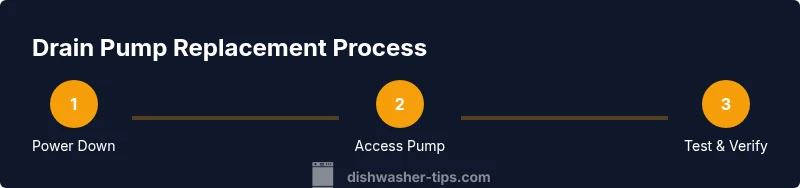
- 1
Power down and unplug
Disconnect the dishwasher from its power source at the wall outlet and, if feasible, switch off the circuit breaker. This critical step prevents electric shock while you access the pump area and hoses.
Tip: Treat every repair as live power until you’ve confirmed the outlet is de-energized. - 2
Access the drain pump
Remove the toe-kick panel or lower access panel to expose the pump housing. Depending on your model, you may need to remove the lower rack and the filter assembly first to gain clear access.
Tip: Keep track of screws and clips with a labeled tray to avoid losing parts. - 3
Disconnect hoses
Carefully loosen hose clamps and detach the inlet and outlet hoses from the pump. Have towels ready for water spillage and verify which hose feeds into the sump and which drains away.
Tip: Take a photo before removal so you can reinstall in the correct orientation. - 4
Remove the pump assembly
Unbolt or unclip the pump from its mounting bracket and gently lift it away from the sump. Note the orientation of electrical connectors and ensure you don’t bend any wiring.
Tip: Do not pull on hoses to disconnect; separate the pump body from fittings first. - 5
Inspect the impeller and seals
Rotate the impeller by hand to check for smooth movement and look for debris, wear, or damaged seals. Chips or cracks in the housing indicate the pump should be replaced rather than repaired.
Tip: Clear any lodged debris from the impeller and sump area to prevent reoccurrence. - 6
Test the pump with a multimeter
With the pump removed, set your multimeter to continuity and test the pump leads. If there is no continuity, the motor may be faulty and require replacement.
Tip: If you’re unsure, compare readings against your model’s service manual guidance. - 7
Prepare and install a replacement
If replacing, connect the new pump to the electrical harness first, then attach the inlet and outlet hoses, ensuring clamps are tight but not overtightened.
Tip: Lubricate O-rings if required and verify the hose routing matches the original design. - 8
Reassemble and restore power
Reattach the pump in its bracket, reassemble the access panel, plug the machine back in, and restore power. Keep the door latch closed until you’re ready to test.
Tip: Double-check that all fasteners are secure before cycling. - 9
Run a diagnostic test
Run a short wash cycle or a drain test to confirm the pump operates correctly and drains water as designed. Look for leaks and listen for smooth pumping sounds.
Tip: If water remains, recheck hose clamps and seals for tightness or misrouting.
People Also Ask
Can I repair the drain pump myself or should I hire a professional?
If you’re comfortable with basic electrical work and appliance plumbing, you can attempt the repair using the steps outlined. However, if you encounter stubborn leaks, unfamiliar wiring, or the model has a sealed module, consider a licensed technician.
You can try it yourself if you’re comfortable with electrical work, but call a pro if you see wiring or sealing issues.
What are the signs that the drain pump is failing besides not draining?
Common signs include unusual grinding noises, water remaining in the tub after the drain cycle, and repeated drain error codes. A burned odor or hot motor can also indicate a failed pump.
Listen for grinding, check for water left in the tub, and watch for drain error codes to confirm a pump problem.
Is it safe to run the dishwasher with a damaged drain pump?
No. A damaged pump can cause water leakage, electrical hazards, or further damage to the drain system. Stop using the machine and inspect the pump before the next cycle.
It’s not safe to run with a damaged pump; stop and check the pump before the next load.
Do I need any special tools to replace the drain pump?
Most repairs require basic hand tools and a multimeter for testing. Some models may need specialty clamps, but you won’t typically need expensive equipment.
Basic tools and a multimeter are usually enough.
How long does a Bosch drain pump typically last?
Durability varies by model and usage, but a well-maintained pump can last several years. If you frequently run full cycles or overload the dishwasher, pump wear may accelerate.
Durability depends on usage and maintenance; regular care helps extend life.
Will replacing the drain pump fix not-draining issues in all Bosch models?
Replacing the pump fixes most not-draining issues when the symptoms point to a pump fault. If the problem is a clogged filter or faulty control board, you may still need additional repairs.
It fixes most pump-related not-draining issues, but other causes may require more fixes.
Watch Video
What to Remember
- Diagnose pump failures by symptom and testing, not guesswork.
- Use model-appropriate parts to improve reliability.
- Always disconnect power and seal hoses to avoid spills.
- Label components to ensure correct reassembly.
- Test_cycles verify drainage function and leak-free operation.