Dishwasher Drain Pump Repair: Step-by-Step Guide
Step-by-step guide to diagnose, repair, and maintain a dishwasher drain pump. Learn safety, tools, testing, and when to replace parts for homeowners and renters.


Learn how to diagnose and repair a dishwasher drain pump. This quick guide covers identifying symptoms, safe disassembly, testing, and deciding between repair versus replacement, with practical tips to avoid common mistakes. You’ll need basic tools, a compatible replacement pump or impeller, and a clear drain path to complete the fix, plus steps to verify proper drainage afterward.
What a dishwasher drain pump does and why it fails
In most dishwashers, the drain pump is responsible for removing soiled water between cycles. When it seizes, becomes clogged, or the impeller wears, water fails to drain, leading to standing water, odors, and longer wash times. According to Dishwasher Tips, a properly functioning drain pump is essential to preventing standing water and odor. A malfunction can arise from debris, improper loading, or mineral buildup over time. Failures are often not the pump itself but a clogged inlet hose or impeller, which mimics a pump failure. Understanding the pump's role helps you diagnose issues more precisely and avoid unnecessary replacements. After you verify the pump's electrical connection, you can move to testing to confirm whether the pump is the culprit.
Symptoms of a failing drain pump
Common indicators include water not draining after a wash, a buzzing or humming noise from the bottom of the appliance, and standing water at the end of the cycle. You might notice water around the base or pooling if the hose is kinked or the pump is blocked. A clogged filter, clogged drain hose, or a malfunctioning float switch can produce similar symptoms, so it's important to test the pump in context. If the dishwasher lights flash or the cycle terminates prematurely, the pump or its control board could be implicated. Regular maintenance reduces the chance of sudden pump failure.
Safety and preparation before disassembly
Before touching any wiring, unplug the dishwasher and shut off the household breaker to the unit. Move the appliance away from the wall to access the bottom panel; place towels or a shallow tray to catch residual water. Wear gloves to protect sharp edges and keep a clean work surface. Take photos of wiring and hose routes before disconnecting anything to simplify reassembly. Label connectors if needed. This preparation helps prevent electric shock and water damage.
Tools, parts, and where to source replacements
You’ll typically need a screwdriver set (flat and Phillips), a multimeter for electrical checks, a replacement drain pump or impeller kit that matches your dishwasher model, a towel or small tray to catch spills, and a bucket for larger leaks. If you can’t locate the exact pump, aim for a model with the same voltage, connector type, and mounting configuration. Keep a spare hose clamp and some pipe sealant on hand in case you need to reseal connections. Having the right parts minimizes rework and reduces the risk of leaks.
Diagnosing the drain path and pump: tests you can do
Start by inspecting the drain hose for kinks, blockages, or air gaps that prevent proper drainage. Remove the inlet strainer and check for debris that can hinder flow. If you have access to a multimeter and feel confident, test the pump leads for continuity according to the appliance’s service manual. A non-echoing pump and clean housing are good signs; a short or open circuit usually means the pump must be replaced. Always test with the power removed and follow the manufacturer’s safety guidelines.
Cleaning, repairing, and reassembly steps (non-destructive options first)
If the impeller and housing are intact but dirty, clean all accessible passages with a soft brush and warm water. Remove mineral scale from the impeller by gently scrubbing and ensure the impeller spins freely without rubbing on the housing. Reinstall any seals or gaskets carefully to prevent leaks. If there is visible wear, cracks, or persistent noise, replacing the pump is usually the safer long-term choice. Reassemble in the reverse order of disassembly, ensuring hoses are properly seated and clamps tightened.
Maintenance to prevent future drain pump failures
To extend the life of your drain pump, clean the filter and sump area regularly, rinse away food debris from the spray arms, and ensure the drain hose remains untwisted and free of kinks. Regularly running an empty cycle with a cleaning solution can reduce mineral buildup that would otherwise stress the pump. Don’t overload the dishwasher, which can cause backflow and strain the pump. The Dishwasher Tips analysis shows that proactive maintenance reduces unexpected drain issues and keeps your appliance performing efficiently.
Authority sources
This section provides authoritative guidance on appliance safety and maintenance. For more details, consult reputable sources including national energy and safety agencies and environmental protection guidance. These sources offer general safety practices, proper disposal considerations, and recommendations for maintaining home appliances to minimize failures such as drain pump issues. Always follow manufacturer manuals and local electrical codes when performing repairs. See: Energy.gov, CPSC.gov, EPA.gov for related appliance safety and efficiency information.
Tools & Materials
- Flathead screwdriver(For access panels and screws on lower kick panels)
- Phillips screwdriver(For fasteners on access panels and pump housing)
- Nut driver or socket set(To remove mounting bolts or clamps on the pump assembly)
- Multimeter(To check continuity and electrical connections)
- Replacement drain pump or impeller kit(Match model, voltage, and connector type)
- Towels or absorbent rags(Catch residual water during disassembly)
- Bucket(Temporary collection for larger leaks)
- Pliers(For hose clamps and quick-disconnects)
Steps
Estimated time: 30-45 minutes
- 1
Power down and prepare the workspace
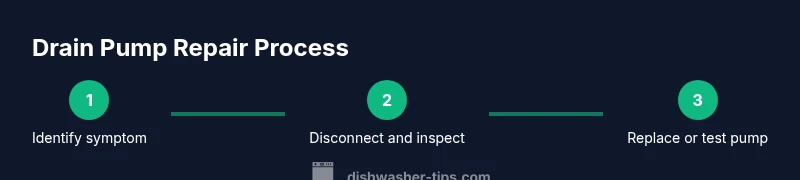
Unplug the dishwasher from its outlet and switch off the circuit at the breaker to prevent shock. Move the unit away from the wall and place towels on the floor to catch any residual water. Gather your tools and have a replacement pump or impeller ready. This ensures safety and reduces the chance of a rushed, risky repair.
Tip: Unplug first, then water access; never touch electrical components while the unit is wet. - 2
Access the drain pump area
Remove the lower front or side panel according to your model’s service manual. This typically involves unscrewing a few fasteners and carefully lowering the panel. Once exposed, visually locate the drain pump at the bottom of the tub and prepare to disconnect hoses and wiring.
Tip: Keep track of screws and take a quick photo for reassembly. - 3
Disconnect hoses and electrical connections
Label and note where each hose and connector goes before detaching. Gently loosen hose clamps and detach the drain hose and any inlet/outlet hoses. Disconnect the pump’s electrical leads, ensuring the wires are not under tension.
Tip: Use a container to catch any leaking liquid and avoid tugging on wires. - 4
Inspect the pump and impeller
Examine the impeller for debris, cracks, or wear. Check the housing for cracks or scoring that could cause leaks. Spin the impeller by hand to ensure it rotates freely without rubbing. If damage is present, replace the entire pump.
Tip: Even minor debris can prevent proper water flow; remove it carefully without bending the impeller blades. - 5
Test or replace the pump
If you have a compatible replacement pump, install it following the reverse of the removal steps. If bench-testing is possible, verify continuity and proper resistance per your manual. Confirm the new pump spins smoothly and sits correctly in its mount.
Tip: Double-check seals and gaskets to prevent leaks after reassembly. - 6
Reassemble and run a test cycle
Reconnect hoses, wiring, and the access panel. Restore power and run an empty cycle to verify drainage and check for leaks. Listen for abnormal noises that might indicate misalignment or an incomplete seal. If drainage is still poor, reconsider replacement or seek professional help.
Tip: Run a full cycle first with no dishes to observe drainage behavior.
People Also Ask
What are the most common signs that my dishwasher drain pump is failing?
Common signs include water that won’t drain after a cycle, a buzzing sound from the base, or standing water at the end of a wash. Debris in the pump or clogged hoses can produce similar symptoms, so testing is essential.
If you notice water not draining or strange noises from the bottom, start with the pump and hose checks.
Can I repair a drain pump myself, or should I replace it?
Small clogs and debris can sometimes be cleared and the pump re-sealed. If the pump shows wear, cracks, or persistent noise, replacing the pump is usually the safer, longer-term solution.
You can attempt a repair if you’re comfortable with basic disassembly; otherwise a replacement is more reliable.
Do I need to unplug and drain water before starting a repair?
Yes. Always unplug the unit and turn off the water supply. Drain residual water using the appliance’s manual or a towel to avoid spills.
Safety first: unplug and drain before you begin any repair work.
How long does a drain pump repair typically take?
A straightforward diagnosis and replacement can take about 30-45 minutes for a single pump. Complex issues or model-specific steps may extend this time.
Most repairs take under an hour if you have the right parts and tools.
Will replacing the pump fix all draining issues?
Replacing the pump resolves pump-specific failures, but drains can still be blocked by hoses, filters, or the sump. Always inspect the full drainage path for best results.
A new pump fixes pump problems; other drainage issues may still need attention.
Watch Video
What to Remember
- Diagnose symptoms to confirm drain pump relevance
- Follow safety steps before disassembly
- Use model-matched replacement parts for reliability
- Inspect and clean the drain path to prevent recurring issues
- Test drainage with an empty cycle after repair