Dishwasher Circulation Pump Repair: A Step-by-Step Guide
Learn how to diagnose, remove, and repair a faulty dishwasher circulation pump with a practical, safety-focused approach. This guide covers symptoms, tools, replacement options, and prevention tips from Dishwasher Tips.


To repair a dishwasher circulation pump, identify symptoms (not draining, buzzing, or loud grinding), gather basic tools, unplug the unit, and access the pump housing. Test the motor and impeller for blockages or wear, and replace worn parts or the entire pump if needed. This guide walks you through a safe, step-by-step repair.
How the dishwasher circulation pump works
The circulation pump is a crucial component that moves water through the spray arms during the wash cycle and ensures the rinse water circulates for effective cleaning. A modern dishwasher relies on a sealed motor, impeller, and impeller housing to generate the required water pressure. When the pump wears, seals fail, or the impeller gets clogged, you’ll notice poor cleaning, inadequate rinsing, or drainage problems. Understanding the pump’s role helps you diagnose issues more accurately and prevents unnecessary part replacements. Throughout this guide, we’ll use the term circulation pump to refer to the motor-driven unit that propels water, rather than the drain pump or fill valve, which perform different functions in the system. According to Dishwasher Tips, a healthy circulation loop is essential for energy efficiency and consistent cleaning results, so addressing pump problems promptly protects dishes and appliance health.
Symptoms that point to a circulation pump issue
Common indicators include: dishes not drying, poor water circulation during wash, unusual buzzing or grinding noises when the cycle runs, or water not circulating to the spray arms. If you notice standing water at the bottom after a cycle, it can also signal a clogged or failed pump. Also watch for leaks around the pump housing during operation, which often indicate worn seals. Before assuming a pump failure, rule out clogs in the filter, spray arms, or drain hose, as these can mimic pump-related problems. A precise diagnosis saves time and reduces the chance of unnecessary replacements. Dishwasher Tips notes that pump-related drainage is among the most frequent repair reasons, making correct identification critical.
Safety first: planning and precautions
Safety is the foundation of any DIY appliance repair. Start by unplugging the dishwasher or turning off the circuit, and shut off the water supply. If your unit is under a countertop with a nearby electrical outlet, consider using a dry workspace and wearing safety glasses when removing panels. Have towels or a shallow tray ready to catch residual water. If you’re not comfortable working with electrical connections, or if you see damaged wiring or burnt smells, stop and call a pro. Taking photos during disassembly helps you reassemble accurately and reduces mistakes.
Tools, parts, and what to buy
You’ll need a few common tools and a compatible pump or pump kit with seals. A well-prepared toolbox reduces delays and helps you complete the repair in one session. Essentials include a screwdriver set (Phillips and flathead), a socket or nut driver, pliers, a multimeter for basic electrical checks, a flashlight, a bucket, towels, replacement seals or an entire circulation pump kit, and any required clamps or hoses. Before purchasing, confirm the model number from your dishwasher’s data plate to ensure a correct pump replacement. Ensuring you have the correct seals and gaskets minimizes leaks after reassembly.
Step-by-step repair process (overview)
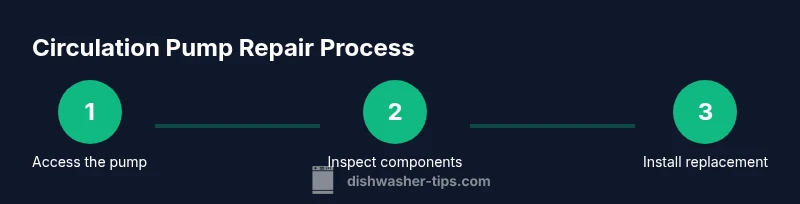
Repairing a circulation pump involves safely accessing the pump, disconnecting electrical and water connections, inspecting for wear or blockages, replacing the pump or impeller, resealing, and testing. If your model uses a modular pump assembly, replacement is often simpler than rebuilding. In some cases, you may only need to replace the impeller or a worn seal. The exact procedure varies between brands and models, so always consult your service manual for model-specific steps and tolerances. Dishwasher Tips emphasizes choosing the right replacement part to maintain efficiency and avoid future failures.
Installing a replacement pump and seals
If you’re replacing the pump, install the new unit according to the manufacturer’s instructions. Reattach seals and ensure a tight, uniform seal around the housing to prevent leaks. Reconnect water lines and electrical connectors in the correct orientation. Use a new gasket or O-ring where applicable, and apply a light film of silicone grease to seals if recommended by the manufacturer. Double-check that hoses are secure and clamps are tight before wiring the unit back into service.
Reassembly, testing, and final checks
With the pump in place, reassemble panels and fasten screws securely. Restore power and run a short cycle with no dishes to check for leaks and proper circulation. Listen for normal pump operation; a grinding or loud buzz could indicate a misaligned impeller or a loose mounting. If water isn’t circulating after the first test, recheck hose connections and seal integrity. Dishwasher Tips suggests running a full wash cycle with a light load to confirm performance and identify any residual issues.
Post-repair maintenance and prevention
To extend pump life, keep the filter and spray arms clean to reduce debris that can reach the pump. Use the appropriate detergent and avoid powders that can leave mineral buildup, which can harden around seals. Periodic inspections of the pump housing and hoses help catch wear before it becomes a leak. If your water is hard, consider a rinse aid and occasional descaling to minimize mineral buildup that can affect pump performance.
Tools & Materials
- Phillips head screwdriver(Size #2 is common for dishwasher panels.)
- Flathead screwdriver(For prying clips or caps if present.)
- Socket or nut driver set(Common sizes: 1/4" to 3/8".)
- Pliers (needle-nose)(For hose clamps and connectors.)
- Multimeter(Basic voltage checks on pump terminals.)
- Bucket and towels(Catch residual water during the job.)
- Replacement circulation pump kit (with seals)(Model-specific; includes gaskets O-rings.)
- Replacement impeller (if applicable)(Only if the impeller shows wear.)
- Silicone grease or lubricant (food-grade)(Lightly coat seals if recommended.)
- Flashlight or headlamp(Inspect dark pump housing effectively.)
Steps
Estimated time: 60-90 minutes
- 1
Power off and unplug
Unplug the dishwasher or switch off the circuit at the breaker. This eliminates shock risk while you work around the pump assembly.
Tip: Verify power is off with a multimeter on the plug or outlet. - 2
Access the circulation pump
Remove the lower access panel or kickplate to expose the pump housing. If your model has an inner panel, remove it carefully to view the pump and wiring.
Tip: Take photos of wire routes and clamp positions before disconnecting anything. - 3
Disconnect electrical and hoses
Carefully unplug the pump’s electrical connector and detach water hoses. Place a bucket under the area to catch any residual water.
Tip: Label connectors and note hose orientation for accurate reassembly. - 4
Inspect the pump and impeller
Inspect the impeller for cracks and debris. Look for worn seals or a cracked housing. Remove the pump for a thorough look if needed.
Tip: Use a flashlight to inspect inner passages for mineral buildup. - 5
Replace or rebuild the pump
Install the new pump or the refurbished unit. Secure mounting screws and ensure all seals are in place without gaps.
Tip: Replace all gaskets and seals to prevent leaks; don’t reuse old O-rings. - 6
Reconnect and seal
Reconnect electrical connectors and hoses in the same orientation as removed. Refasten clamps and verify seals are tight.
Tip: Apply a thin layer of silicone grease to seals if recommended by the manufacturer. - 7
Test and verify
Restore power and run a short wash cycle with a light load to check for leaks and proper circulation. Observe pump operation for abnormal noises.
Tip: If leaks persist, power down and recheck all seals and hose connections.
People Also Ask
What are the most common signs that the circulation pump needs replacement?
Typical signs include no drainage, poor water circulation, loud buzzing or grinding, and visible leaks around the pump housing. If symptoms persist after clearing clogs and filters, replacement is often the most reliable fix.
Common signs are poor drainage, weak spray, loud noises, and leaks around the pump housing. If these persist after checking for clogs, consider replacing the pump.
Can I repair a circulation pump myself, or should I hire a technician?
For many homeowners, replacing the pump is a feasible DIY project with basic tools and careful follow-up testing. If you encounter electrical damage, unusual smells, or complex wiring, hire a technician to avoid safety risks.
DIY is possible for safe pumps with the right tools. If unsure about wiring or water leaks, call a pro.
What tools are essential for replacing a dishwasher circulation pump?
You’ll need screwdrivers, a socket set, pliers, a multimeter, a bucket, towels, and a replacement pump kit with seals. Always confirm compatibility with your dishwasher model before purchasing.
Essential tools include screwdrivers, a socket set, pliers, a multimeter, a bucket, towels, and the replacement kit with seals.
How long does a typical circulation pump repair take?
A straightforward pump replacement typically takes about 60-90 minutes for a DIY fix, depending on model accessibility and your familiarity with appliance repairs.
Usually about an hour to an hour and a half, depending on access and model.
Will replacing the pump fix all drainage problems?
Replacing the pump resolves pump-related drainage and circulation issues. If drainage problems persist, inspect the filter, spray arms, hose routing, and check for clogs elsewhere in the system.
A new pump fixes pump-related drainage issues, but other components can also cause drainage problems.
Should I use OEM or aftermarket pumps?
OEM pumps are designed for exact fit and reliability, while reputable aftermarket options can be cost-effective. Check return policies and warranty coverage when choosing.
OEM parts fit perfectly and preserve warranty; aftermarket options can be cheaper but ensure compatibility.
Watch Video
What to Remember
- Identify symptoms early to isolate the pump issue.
- Power down before any disassembly to prevent shocks.
- Replace gaskets and seals when installing a new pump.
- Test thoroughly with a full cycle to confirm no leaks or clogs.