Repair GE Dishwasher: DIY Troubleshooting and Fixes
Step-by-step instructions to diagnose and repair common GE dishwasher problems. Learn safety, essential tools, and maintenance tips to keep your GE dishwasher running smoothly.


Goal: repair ge dishwasher safely by diagnosing the most common failures and performing basic fixes. You’ll learn the required tools, how to test drains and filters, inspect the door latch, and decide when professional service is needed. This guide covers hands-on steps and safety precautions.
Troubleshooting common GE dishwasher problems
If you’re looking to repair ge dishwasher, you’ll start by identifying the most common symptoms and their likely causes. This section highlights how to differentiate not draining, poor cleaning, leaks, and cycles that stop early. Dishwasher Tips analysis shows that clogged filters and drainage paths are frequent culprits; tackling these early will save time and effort. Always prioritize safety and follow the steps below to isolate faults. By understanding symptom clusters, you can decide whether a simple cleaning fixes it or a replacement part is needed. This approach keeps you in control and minimizes unnecessary disassembly.
Safety and power-down procedures
Safety is non negotiable when repairing any appliance. Before you touch GE dishwasher internals, unplug the unit from the wall outlet or switch off the dedicated circuit breaker. Shut off the home water supply to prevent leaks during inspection. Wear gloves and keep a dry workspace; use a flashlight to clearly see inside the sump area. If you suspect a live electrical fault, do not proceed and contact a qualified technician. A calm, methodical approach reduces the risk of damage and personal injury.
Tools, materials, and common replacement parts
Before you begin, gather the following tools and parts. Essential items: Phillips head screwdriver, flathead screwdriver, needle-nose pliers, multimeter, and a clean microfiber cloth. Replacement parts commonly needed for GE dishwashers include the filter assembly, spray arms, door gasket, and drain hose; keep spare gaskets and clamps handy. Optional items like a small brush, toothpicks, and valve lubricant can speed up the job. Having a labeled work area and a parts tray helps prevent mix-ups during reassembly.
Diagnostic flow overview (how to isolate faults)
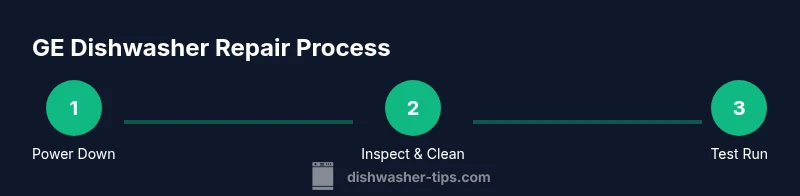
Use a simple, repeatable flow to isolate the issue: confirm power and door latch, inspect for visible leaks, clean filters and sump area, test drainage path, and run a short cycle. If the unit starts but stops mid-cycle, focus on the drain system and control panel feedback. If it won’t start at all, re-check power, door latch, and safety interlocks. Throughout, document symptoms and results to determine whether you’re dealing with a mechanical fault, a clogged pathway, or an electrical/control issue.
When to DIY vs. call a pro and how to decide
DIY repairs work best for non-technical issues like dirty filters, clogged spray arms, or loose hose clamps. For problems involving the control board, wiring, or refrigerant-free components, professional service is safer and may be required by warranty terms. If you encounter persistent leaks after tightening hose connections or notice corrosion on metal parts, pause and seek expert help. Remember, some GE models have design-specific quirks that benefit from brand-specific guidance.
Maintenance tips to prevent future GE dishwasher problems
Regular maintenance reduces the frequency of repairs. Clean the filter assembly monthly, inspect spray arms for obstructions, and run a cleaning cycle with an affresh-type cleaner every few months. Check the door seal for wear and replace as needed. Periodically inspect hoses and clamps for signs of wear or kinks, and run hot-water cycles to ensure optimal drainage. A proactive routine extends the life of your GE dishwasher and keeps performance steady.
Tools & Materials
- Phillips head screwdriver(Comfortable grip; for removing screws from the lower kickplate and filter housing)
- Flathead screwdriver(For prying stubborn clips or prying open panels)
- Needle-nose pliers(Grasp clamps, pull hoses, remove small parts safely)
- Multimeter(Check voltages on basic circuits; ensure power is off before testing)
- Microfiber cloths(Wipe and dry surfaces; keep areas free of debris)
- Replacement filter assembly / spray arms(Keep on hand in case of wear or clogging beyond cleaning)
- Drain hose clamp kit(If hose shows signs of looseness or leaks; secure connections)
- Gasket lubricant (silicone)(Lubricate door gasket during reassembly if needed)
- Bucket and towels(Contain leaks and keep the workspace clean)
Steps
Estimated time: 45-60 minutes
- 1
Power down and secure water supply
Unplug the dishwasher from the wall or switch off the circuit breaker. Shut off the home water supply to prevent unexpected leaks while you inspect. This initial step ensures your safety when handling electrical and water components.
Tip: Verify complete power-off with a tester before touching any wiring or panels. - 2
Access and inspect the filter/sump area
Remove the lower rack, take out the filter assembly, and rinse it under running water. Use a toothpick to clear clogged holes in the spray arms. Reassemble carefully to ensure a proper seal and drainage path.
Tip: Record any unusual debris patterns to help identify the source of the clog. - 3
Check the drain path and hose
Inspect the drain hose for kinks or clogs; detach and flush if necessary. Ensure the hose is properly connected to the disposal or sink drain with a high loop or air gap as required by code. Replace clamps if they appear worn.
Tip: Do not force the hose; a gentle back-and-forth movement helps clear blockages. - 4
Test the door latch and control panel
Close the door firmly and listen for the latch engaging. If the control panel does not respond, reset the circuit briefly and try again. A nonresponsive panel can prevent the unit from starting or completing cycles.
Tip: If resetting, wait 60 seconds after restoring power before testing again. - 5
Inspect the float switch and sump area
Locate the float switch and verify it moves freely; remove debris that could trap it. Ensure the sump area is clear of sediment and food particles. A stuck float can prevent the dishwasher from draining properly.
Tip: Gently move the float by hand to confirm smooth operation before running a test cycle. - 6
Run a test cycle and verify results
Reconnect power and run a short wash cycle. Observe drainage, pump operation, and leaks. If issues persist, note the symptoms and consider deeper diagnostics or professional service.
Tip: Have towels ready for any spillover and document the cycle’s behavior for reference.
People Also Ask
Can I repair GE dishwasher myself?
Many common issues can be fixed by homeowners with basic tools and careful safety practices. Start with cleaning and checking the drain and filter, then move to electrical checks only if you’re confident. If you encounter wiring or control-board problems, consider professional help.
Yes, many GE dishwasher repairs can be done at home with basic tools, but avoid wiring or control board work if you're unsure.
What should I check first if it won't start?
First, verify power at the outlet or circuit breaker, then confirm the door latch engages when closed. If the panel remains unresponsive, reset power for a minute and try again.
Check power and door latch first, then try a quick power reset if the panel is unresponsive.
My GE dishwasher won't drain. What now?
Inspect and clean the filter, check the drain hose for kinks, and ensure the disposal connection is clear. Run a short cycle to test drainage after cleaning.
Clean the filter and drain hose, then test with a short wash to confirm draining.
Is resetting the GE dishwasher helpful?
A simple power reset (unplug or breaker off for about 5 minutes) can clear minor glitches. Reconnect power and run a short cycle to confirm normal operation.
A quick power reset can fix small glitches; test afterwards.
When should I replace parts versus repair?
If a part is visibly damaged, excessively corroded, or repeatedly failing after cleaning or reseating, replacement is often safer and more cost-effective than continuous repairs.
If a part is damaged or repeatedly failing, replacement is usually best.
What safety precautions should I follow?
Always unplug, shut off water, wear gloves, and avoid touching hot components. Work in a well-lit area and keep liquids away from electrical parts.
Unplug, shut off water, wear gloves, and stay safe around hot parts.
Watch Video
What to Remember
- Power down before inspection for safety
- Clean filters and spray arms to restore performance
- Check drainage path for not-draining issues
- Test door latch and control panel before deeper fixes
- Know when to call a professional for wiring or major component faults