GE Dishwasher Troubleshooting Guide
Learn how to diagnose and fix common GE dishwasher problems—drainage, cleaning performance, leaks, and cycle issues—with practical steps and maintenance tips.


By following these steps, you’ll diagnose and fix common GE dishwasher problems such as drainage issues, poor cleaning, leaks, and cycles that won’t start. This quick guide highlights essential checks, safety reminders, and model-agnostic tactics you can apply to most GE dishwashers before calling a technician. For ge dishwasher models, this approach works across brands while respecting GE design specifics.
What makes GE dishwashers notable
GE dishwashers are recognized for reliability and thoughtful design features that help homeowners tackle everyday dishwashing challenges. In this guide we focus on the GE lineup and common issues that arise in typical household use. According to Dishwasher Tips, GE models often emphasize efficient cleaning, quiet operation, and practical controls. When you own a ge dishwasher, you’ll likely rely on features such as soil sensors, adjustable racks, and multiple wash temperatures. Understanding the core design helps you diagnose problems quickly and save time and money. This article uses practical steps and non-technical language to help homeowners and renters troubleshoot, maintain, and repair common failures. By following this guide, you’ll be able to identify the root cause of many issues and decide whether a simple fix or professional service is needed. The GE brand prioritizes durability and parts availability, which means most common problems have straightforward checks you can perform at home before calling a repair technician. We’ll cover drainage, cleaning performance, leaks, and power/cycle issues, with model-agnostic advice that applies to most GE dishwashers.
Common issues with GE dishwashers
Even well-made GE dishwashers can face a handful of recurring issues. The most common complaints involve:
- Dishes coming out dirty due to spray-arm blockage or insufficient water temperature.
- Not draining or poor drainage caused by clogged filters, kinked hoses, or a clogged drain pump.
- Leaks around the door or base from worn door seals or failed gaskets.
- The cycle not starting or stalling because of power or control board problems.
- Noisy operation from worn bearings, loose racks, or debris in the pump.
Solution approach is to isolate symptoms and test one variable at a time. Start with checking the filter and spray arm; then verify drainage sequences; finally inspect seals and door latches. The goal is to build a simple, repeatable diagnosis that you can perform with basic tools and without specialized gear. For homeowners and renters, addressing these issues early can prevent costly water damage and extend the life of your ge dishwasher.
Drainage problems: diagnosing GE dishwashers
Drainage problems are among the most frustrating GE dishwasher issues because they can cause standing water, foul odors, and unfinished cycles. Begin by inspecting the lowest filtration stage and emptying any visible debris. Check the door latch to ensure the unit isn't stopping mid-cycle due to safety interlocks. A clogged filter, stray food particles, or a blocked drain cone can halt drainage. If your model has a dual-filter setup, clean both screens. Next, examine the drain hose for kinks or a crimped loop that blocks flow. Finally, inspect the pump for obstructions. Clear the pump housing of any foreign objects, and verify that the impeller spins freely. If the pump seems intact but water remains, test a manual drain flow using a small amount of water in a basin to observe the hose's performance. Regular maintenance reduces the likelihood of this issue recurring in a ge dishwasher.
Cleaning performance: what to check in a GE dishwasher
When dishes come out dull or with spots, the issue is often related to detergent effectiveness, water temperature, or spray arm condition. Ensure you’re using fresh, high-quality detergent appropriate for your water hardness and dishwasher model. Verify rinse aid levels and run the wash on the hottest setting your model supports. Inspect spray arms for clogs and ensure they spin freely without obstruction. Remove and clean spray arms if you notice crusty residue or blocked holes. Clean the filter assembly and the sump area to remove trapped food particles. If mineral buildup is a factor, consider descaling with a product recommended for dishwashers and recheck after a couple of cycles. Regular cleaning keeps ge dishwasher performance consistent and helps protect glassware and plastic items.
Maintenance routines to prevent problems in GE dishwashers
Proactive maintenance reduces emergencies and extends life. Create a monthly habit of checking the filter, cleaning the spray arms, and inspecting door seals. Run an empty hot-water cycle to flush the system and dry the interior after use. Use a toothbrush or soft brush to scrub hard-to-reach areas around the filter housing. Keep the drain area clear of debris by brushing away hair, food, and grease. For hard-water areas, periodically run a descaling cycle following the manufacturer’s directions. Record any recurring symptoms to monitor long-term trends and plan repairs before failures escalate in a ge dishwasher.
Parts to inspect and replace in GE dishwashers
Shelf life varies by model, but a few components wear out with time: door seals, gaskets around the door, water inlet valve, spray arms, and the lower or upper racks. The rubber tub seals may crack or lose elasticity, leading to leaks during operation. Check the float switch for improper signaling, and verify the drain pump’s impeller spins freely. Inspect the filter screens for debris and ensure the sump screen is intact. If you notice persistent leaks, cracks in the tub or door frame may require professional assessment. Replacing worn parts can restore performance and prevent wasteful water usage.
Step-by-step diagnostic flow for ge dishwasher issues
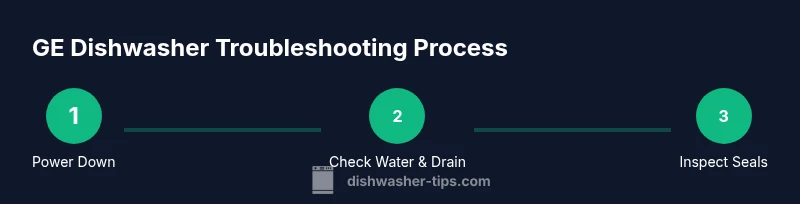
When you notice a problem, follow a disciplined diagnostic flow to avoid unnecessary replacements. Start with Step 1: Power down safely by unplugging the unit or switching off the breaker, then remove the bottom access panel to reach the drain area. Step 2: Confirm water supply is delivering hot water to the dishwasher by running the hot tap under the sink for a few seconds. Step 3: Check drainage by removing the filter and cleaning the spray arms and pump housing. Step 4: Inspect seals around the door and tub for cracks or wear. Step 5: Run a short cycle with a small amount of water and observe the process. Step 6: Reassemble and conduct a full test cycle to confirm the fix. This flow minimizes guesswork and helps you decide whether to replace parts or call a technician.
Safety considerations and warnings
Always unplug the unit before disassembly and avoid working with live electrical components near a water source. Use insulated tools and wear gloves to protect against sharp edges. Never force a stuck spray arm or twist hoses beyond their tolerance. If you smell burnt insulation or notice scorched wiring, stop immediately and seek professional service. When in doubt about a model-specific step, consult GE’s official manuals or contact a licensed technician.
Common mistakes to avoid during GE dishwasher repair
Avoid skipping power-down steps or attempting repairs with the dishwasher still connected to power. Do not ignore model-specific instructions and warranty terms. Overusing chemical cleaners or introducing too much detergent can worsen suds and damage seals. Don’t force-fit new parts without confirming compatibility and avoid running cycles without dishes to test in a way that might flood your kitchen. Always document symptoms before and after any repair.
Final checks after repair
Once you complete a repair, run a full wash cycle with dishes to confirm proper cleaning, drainage, and drying. Check for any leaks around the door, gasket, or base. Listen for unusual noises and inspect the bottom of the unit for stray water or signs of overflow. If problems persist, re-check each component methodically or consult a professional. Keeping a maintenance log from this point forward helps you spot trends early and plan replacements before failures occur.
Additional resources and next steps
For deeper guidance, consult GE’s official service manuals for your specific model and refer to trusted repair resources. Keep a list of compatible replacement parts and your model number handy when shopping. Scheduling regular maintenance visits can prevent costly breakdowns and extend the appliance’s lifespan.
Tools & Materials
- Phillips head screwdriver(Size #2; used for lower access panel screws)
- Flathead screwdriver(Helpful for prying off panels gently)
- Nut driver set(Interchangeable sizes for clamps and hoses)
- Towel or absorbent cloth(Catch water and keep area clean)
- Bucket(Collect water during drain checks)
- Gloves(Protect hands from sharp edges)
- Multimeter (optional)(Check continuity if you suspect electrical faults)
- GE model-specific service manual (optional)(For wiring diagrams and calibration details)
Steps
Estimated time: 30-60 minutes
- 1
Power down and access the drain area
Unplug the dishwasher or switch off the dedicated circuit at the breaker. Remove the lower front panel to reach the drain pump and filter area. This step reduces the risk of electric shock while you inspect drainage components.
Tip: Have towels ready to catch any remaining water; take photos of connections before removing parts. - 2
Inspect and clean the filter and spray arms
Remove the filter assembly and spray arms; rinse under warm running water. Clear any debris from all holes in the spray arms and ensure the filter screens are free of food particles.
Tip: Work over a sink to avoid losing small parts; use a soft brush for stubborn grime. - 3
Check the drain hose and air gap
Inspect the drain hose for kinks, crush points, or clogs. If your model includes an air gap, remove and clean it to restore proper drainage.
Tip: If you compress the hose, re-route it with a gentle bend to prevent future kinks. - 4
Inspect the pump and impeller
Look for obstructions in the pump housing and try to spin the impeller by hand. Remove any debris but avoid forcing parts. A stuck impeller can stop drainage entirely.
Tip: If the impeller won’t move, avoid applying force that could break the pump casing. - 5
Test drainage flow
Place a bucket under the drain and run a short cycle to observe drainage. Check that water exits promptly and the sump remains clear of clogs.
Tip: Limit test duration to avoid overflowing; monitor for unusual noises during draining. - 6
Reassemble and run a test cycle
Reinstall all parts and connectors, restore power, and run a complete cycle with dishes to verify proper operation.
Tip: Record any lingering issues and consider replacing worn parts if problems recur.
People Also Ask
Why is my GE dishwasher not draining?
Not draining is usually caused by a clogged filter or pump, a kinked drain hose, or a blocked drain. Start by cleaning the filter and inspecting the drain path, then test the pump’s operation.
Not draining is usually caused by a clog or a kink in the drain path. Start with cleaning the filter and inspecting hoses, then test the pump.
How do I reset a GE dishwasher?
To reset, unplug the unit or switch off the breaker for several minutes, then restore power. Run a short cycle to ensure it restarts normally.
To reset, power off the unit for a few minutes, then turn it back on and run a quick cycle to confirm.
Where is the filter located on a GE dishwasher?
Most GE models have a cylindrical or flat filter located at the bottom of the tub. Remove the lower rack and lift the filter assembly for cleaning.
The filter is usually at the bottom of the tub; take out the lower rack to access and clean it.
Can I fix leaks myself?
If leaks are minor, inspect door seals and gaskets for cracks and replace if needed. Major tub cracks or structural damage typically requires professional service.
Small leaks from door seals can often be fixed by replacing worn gaskets; bigger cracks usually need a pro.
Why does my GE dishwasher make grinding noises?
Grinding noises often come from a blocked pump, worn bearings, or debris caught in the spray system. Inspect the pump and spray arms for obstructions.
Grinding usually means something's caught in the pump or spray arms; check for debris and inspect the bearings.
Is it worth replacing the pump or seals on an old model?
If the unit is otherwise reliable and repairs are affordable, replacing worn parts can extend life. If the model is very old or repair costs approach a new unit, consider upgrading.
If repairs are affordable and the dishwasher is otherwise reliable, parts replacement can be worthwhile; otherwise consider upgrading.
Watch Video
What to Remember
- Identify drainage and cleaning issues first
- Follow a repeatable diagnosis flow
- Maintain filters and spray arms regularly
- Use model-appropriate parts and manuals
- Know when to call a professional