How to Clean the Drain Hose in Your Dishwasher
Learn how to clean the dishwasher drain hose to prevent clogs, leaks, and slow draining. This step-by-step guide from Dishwasher Tips covers safety, tools, and maintenance.


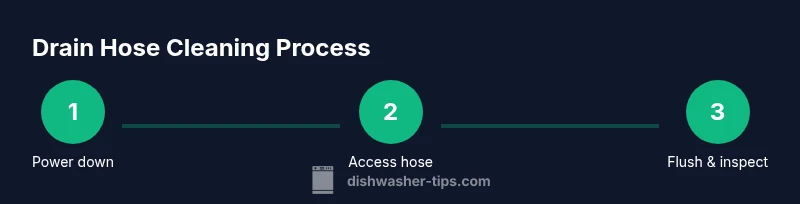
To clean the dishwasher drain hose, unplug the machine, access the drain hose, detach it, flush with water, remove buildup with a brush, reconnect, and run a test wash. This process prevents clogs, leaks, and poor drainage and should be done during routine maintenance.
Why Clean Drain Hose Matters
According to Dishwasher Tips, a clean drain hose is essential for preventing clogs, leaks, and slow draining in your dishwasher. The drain hose carries wastewater away from the tub to either a disposal, sink tailpiece, or air gap. When it becomes clogged with food debris, grease, or mineral buildup, you may notice standing water, backflow, or musty odors. A regularly cleaned drain hose helps maintain optimal drainage, reduces strain on the pump, and contributes to safer, more sanitary dishwashing. The Dishwasher Tips team found that neglecting the drain hose is a common cause of drainage problems in both gas and electric dishwashers. Proactive cleaning saves time and potential costly repairs later.
Keep in mind that “clean drain hose dishwasher” isn’t a one-off task. It should be part of routine maintenance—especially in homes with hard water or frequent use. In this section you’ll learn how to identify buildup, safely access the hose, and perform a thorough cleaning without damaging seals or electrical components. By following these steps, you’ll improve drainage performance and extend the life of your appliance.
What You’ll Need (Tools and Materials) and Preparation
Before you begin, gather the essential tools and materials to minimize interruptions and avoid improvising. A clean drain hose requires careful handling to prevent leaks and water damage. Lay down towels to protect the floor, and place a bucket to catch any residual water. Having a flashlight helps you inspect connections and clamps in tight spaces. If you have hard water, mineral buildup may require extra flushing or a brief soak with vinegar solution. Based on Dishwasher Tips research, preparing correctly reduces cleanup time and helps you complete the job in one pass.
Below is a concise checklist of items you’ll want on hand. You’ll find a full list in the Tools & Materials block later in this guide.
Safety First: Power, Water, and Ventilation
Safety is non-negotiable when working on an appliance. Always unplug the dishwasher before starting any maintenance to prevent electrical shock. If your model is hard-wired or has a direct-plug connection, switch off the corresponding circuit breaker. Turn off the water supply valve to the dishwasher or the sink shutoff if you’re disconnecting hoses. Work in a well-ventilated area, and wear gloves to protect your hands from sharp edges behind the toe-kick panel. If the hose is hot from recent operation, allow it to cool before touching. Following these precautions helps you avoid injuries and electrical hazards while you clean the drain hose.
Step-by-Step: Cleaning the Drain Hose
This section walks you through a thorough cleaning while keeping the process simple and safe. The goal is to remove clogs, rinse the interior, and inspect for wear or damage. Start by locating the drain hose, typically connected to the garbage disposal, sink tailpiece, or air gap.
- Power down and unplug the dishwasher. This is the first and most important safety step. 2) Access the drain hose by removing the toe-kick panel or the bottom access panel. 3) Place a bucket and towels to catch water; detach the hose clamp gently using the appropriate screwdriver. 4) Inspect for kinks, splits, or crushed sections—replace if damaged. 5) Rinse the interior with warm water, using a flexible brush to dislodge buildup. 6) If buildup persists, soak the hose in a mild vinegar solution for 10–15 minutes, then flush again. 7) Wipe the exterior of the hose and clamps dry to prevent corrosion. 8) Reconnect securely to the disposal or sink connection, ensuring a snug fit to prevent leaks.
Tip: Work slowly and hold the hose to prevent it from snapping back or twisting during removal. A flexible bottle brush or a long pipe-cleaner can make inside-cleaning easier.
How to Flush and Inspect for Clogs
Even after flushing, some debris may hide in the bends of the hose. A thorough inspection should include running water through the hose while it’s detached to check for continued resistance or backflow. If you notice persistent clog or reduced water flow after flushing, consider a more aggressive flush with a sink plunger or a dedicated hose-cleaning tool designed for dishwasher lines. When flushing, tilt the hose downward to let any remaining debris exit. Mineral buildup from hard water may require a vinegar soak or a brief citric acid flush for mineral removal. After flushing, reattach the hose and test the drainage by running a short wash cycle with no dishes to verify that water drains efficiently.
Reassemble and Test Your Dishwasher
After cleaning, carefully reassemble components in the reverse order of disassembly. Reconnect the drain hose firmly, secure all clamps, and ensure no kinks remain. Restore the water supply and plug the unit back in. Run a quick empty cycle to test drainage and look for any leaks at the hose connections. Listen for unusual noises from the pump and check that wastewater flows away without backing up. If you observe leaks or slow drainage, recheck hose connections and clamps. A properly reassembled system should drain promptly and quietly.
Maintenance Tips to Prevent Future Clogs
Prevention is easier than cure. Schedule a monthly or bi-monthly inspection of the drain hose, especially if you notice slower drainage. Use a dishwasher-safe cleaner periodically to reduce grease and residue inside the hose and pump. For homes with hard water, consider a rinse aid and occasional mineral buildup prevention routine. If your dishwasher has an air gap, ensure it is clear of debris to maintain proper airflow. Inspect clamps and fittings for corrosion and replace worn components as needed. Keep the underside of the dishwasher clean to spot leaks early, and store a small bucket for immediate cleanup of any spills.
Common Mistakes to Avoid
Common errors include pulling the hose too forcefully, which can damage connections; skipping the unplug/valve-off step and risking shocks; and using harsh chemicals that can erode seals. Avoid running the hose without a proper destination, which can cause leaks or improper drainage. Don’t ignore signs of persistent leaks or foul odors—these can indicate a deeper issue with the pump, valve, or venting system. Finally, never reuse damaged clamps; replace them to ensure a secure seal.
Tools & Materials
- Safety gloves(Protect hands from sharp edges and hot components)
- Screwdriver set (Phillips and flat-head)(Remove toe-kick panels and hose clamps)
- Bucket or tray(Catch water and debris as you disconnect hoses)
- Old towels or absorbent rags(Protect floor and absorb spills)
- Flashlight/headlamp(See behind panels and at hose connections clearly)
- Flexible bottle brush or long pipe-cleaner(Clean the interior of the hose more effectively)
- Vinegar or mild detergent solution(For gentle flushing of buildup (avoid harsh chemicals))
Steps
Estimated time: 60-90 minutes
- 1
Power down and unplug the dishwasher
Unplug the unit from its outlet to eliminate the risk of electric shock. If the outlet is behind a cabinet, switch off the circuit breaker for additional safety.
Tip: Always double-check the cord is completely unplugged before touching any internal components. - 2
Access the drain hose
Remove the toe-kick panel or bottom front access panel to locate the drain hose. Look for the hose clamp connections to know where to loosen them.
Tip: Use a flashlight to clearly view clamps and the hose routing behind the panel. - 3
Detach the drain hose
Loosen and remove the hose clamps; gently pull the hose away from the disposal or sink connection while keeping the other end in a bucket.
Tip: Take care not to tear the hose or disconnect other hoses inadvertently. - 4
Inspect for damage and kinks
Check for visible cracks, crushing, or sharp bends that may impede flow. Replace damaged hoses promptly to prevent leaks.
Tip: A damaged hose is a common cause of leaks and poor drainage. - 5
Flush the interior
Rinse the inside with warm water; use a brush to remove buildup. If needed, soak briefly in a mild vinegar solution and flush again.
Tip: Avoid harsh cleaners that could degrade hose material. - 6
Reconnect and test
Reconnect the hose and clamps tightly, restore power and water, then run an empty cycle to test drainage.
Tip: Observe for leaks at every connection; tighten clamps if needed. - 7
Final inspection
Check under the unit for drips after the test wash. Confirm water drains promptly and there are no unusual noises.
Tip: If leaks persist, re-evaluate hose routing and valve integrity. - 8
Document and schedule maintenance
Record the date of cleaning and plan a routine maintenance check every 1-3 months depending on usage and water quality.
Tip: A simple calendar reminder helps keep expectations consistent.
People Also Ask
How often should I clean the dishwasher drain hose?
Most households benefit from inspecting and flushing the drain hose every 3-6 months, or sooner if you have hard water or notice slow drainage. Regular checks prevent buildup and reduce the risk of clogs.
Check your hose every few months and flush if you notice slow draining or odors.
What are signs that the drain hose needs cleaning?
Look for standing water after cycles, gurgling noises, or poor draining. Odors from the dishwasher can also indicate buildup in the hose or trap.
Slow draining or odors usually mean the hose needs attention.
Can I clean the drain hose without disconnecting it?
Partial cleaning is possible by flushing from the hose end while attached, but a thorough clean usually requires disconnecting to access all internal surfaces.
You might get the major buildup, but full cleaning is easier with the hose detached.
What causes drain hoses to clog?
Food particles, grease, hair, and mineral buildup from hard water can accumulate in the hose over time, reducing flow and increasing backpressure.
Common culprits are food particles and mineral buildup.
Is vinegar safe for flushing the hose?
Vinegar is a gentle option for mineral buildup when used in small amounts and diluted. Avoid undiluted acids and excessive amounts that could affect seals.
Yes, diluted vinegar can help with mineral buildup, but don’t overdo it.
Should I replace the drain hose if it’s damaged?
Yes. A cracked or cracked hose is a leak risk and should be replaced with the correct size and type for your dishwasher.
If you see cracks, replace the hose to prevent leaks.
Watch Video
What to Remember
- Regularly inspect the drain hose for signs of wear
- Flush and clean the hose to prevent clogs
- Secure connections to avoid leaks during operation
- Use gentle cleaners and avoid harsh chemicals
- Incorporate this task into routine dishwasher maintenance