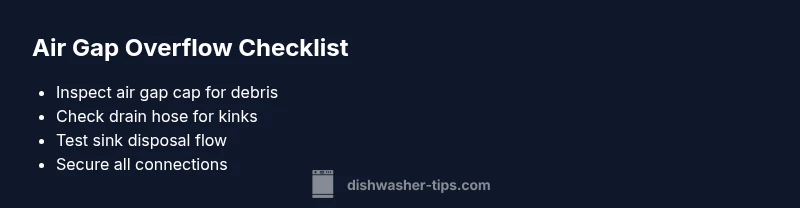
Dishwasher Air Gap Overflow: Quick Fixes & Safety Tips
Learn why your dishwasher air gap overflowing happens, quick DIY fixes, safety steps, and when to call a pro. A practical guide by Dishwasher Tips to restore proper draining and prevent future floods.


Most likely, a dishwasher air gap overflowing is caused by a blocked air gap or a clogged drain hose. Start by removing the air gap cap and clearing debris, then inspect the drain hose and sink connection for kinks. If overflow continues, check the disposal and drainage to ensure the line isn’t blocked.
What the Air Gap Does and Why Overflow Happens
The air gap is a small, often chrome-plated device mounted on the sink or countertop that creates a barrier between your dishwasher and the home drain. Its job is simple: prevent backflow of dirty water into your dishwasher. When the air gap becomes blocked or the drain hose is kinked, pressure builds and wastewater can surge back into the dishwasher, causing an overflow. The most common culprits behind a dishwasher air gap overflowing are debris in the air gap cap or strainer, a clogged drain hose, or a blocked sink drain. According to Dishwasher Tips, routine maintenance can prevent most overflow incidents, and a quick inspection often reveals the issue without pulling the unit apart. In many homes, the problem is resolved by a quick cleaning and a hose check. Regular checks also help keep your kitchen flood-free and your dishwasher operating quietly and efficiently. Keeping the area around the air gap clean reduces the chance of future blockages and supports overall drainage health in your household.
Remember, if you notice recurring overflow after basic cleaning and clearing, there may be a bigger issue with the home drainage or the waste line that requires professional attention.
Common Causes of Dishwasher Air Gap Overflowing
There are several reasons an air gap can overflow, and they often overlap. A blocked air gap cap or strainer is the simplest fix and is the first thing to inspect. Debris like food particles, broken glass, or mineral buildup can accumulate quickly, especially in households with hard water. A clogged drain hose is another frequent culprit; if this hose is bent, pinched, or kinked, wastewater can back up into the air gap and spill into the sink or dishwasher. A poorly connected or blocked sink drain can also back up into the air gap. In some cases, the disposal unit or the sink drain itself becomes a bottleneck, especially if a recent garbage disposal reset or plumbing work disturbed the drain line.
Dishwasher Tips notes that even small blockages can create enough backpressure to push water through the air gap during a cycle. Regular maintenance minimizes surprise overflows and extends the life of your dishwasher.
Quick DIY Checks to Stop Overflow Today
If your dishwasher air gap overflowing is happening now, start with fast, non-technical checks. Remove the decorative cap from the top of the air gap and clean out any visible debris from the screen or receiver. Rinse with warm water to ensure the passage is clear. Check the drain hose behind the dishwasher for kinks or crushed sections; if you see a bend or compression, straighten it and reattach securely. Ensure the hose is fully inserted into the disposal inlet or sink drain, and that the clamp is tight. Finally, run a quick cycle to observe if water continues to back up; if it does, you may have a deeper drain issue.
These steps are commonly enough to remedy an overflowing air gap in many homes and prevent damage to the cabinet and flooring.
The Diagnostic Flow: Symptom to Solution
This flow helps you systematically diagnose an overflowing air gap. Start with the symptom: water overflowing from the air gap during a cycle. Check for visible blockages in the air gap cap and screen (high likelihood). If clear, inspect the drain hose for kinks or obstructions (high likelihood). If the hose is fine, examine the sink drain or disposal for clogs (medium likelihood). If all DIY checks fail, consider a misinstalled air gap or a faulty connection (low likelihood) and plan professional service. Follow each fix in order: clean the air gap, straighten/clear the hose, and verify connections.
Dishwasher Tips emphasizes a staged approach to avoid unnecessary disassembly and to keep safety front and center.
Step-by-Step Fixes for the Most Common Cause
Step 1: Power down the dishwasher and unplug if possible; safety first. Step 2: Remove the air gap cap and clean the interior thoroughly using a small brush and warm, soapy water. Step 3: Reassemble and run a test cycle with no dishes to confirm the issue is resolved. Step 4: Inspect the drain hose behind the dishwasher for kinks; straighten and secure. Step 5: If you have a garbage disposal, run it briefly and flush with water to ensure the drain is clear. Step 6: If overflow persists, check the sink drain trap for blockages and clear as needed; re-test. If the problem continues after these steps, contact a licensed professional.
Estimated time for these steps is about 30–60 minutes depending on access and how stubborn the clog is.
Tips & Warnings for Safe, Effective Troubleshooting
- Always unplug the dishwasher or switch off the circuit before starting any maintenance.
- Do not pour any cleaners or harsh chemicals into the air gap. They can damage seals and pipes.
- Avoid forcing a bent hose into a tight bend; re-route for a gentle, smooth path.
- Consider hard-water solutions if mineral buildup is contributing to blockages.
- If you are unsure or uncomfortable, call a professional; water and electrical safety come first.
Prevention Tips to Keep Air Gaps Flowing Freely
Healthy maintenance routines reduce overflow risk. Clean the air gap cap every few months and run a venting cycle to clear residue. Inspect drain hoses for kinks yearly and replace hoses that show cracks or wear. If you have hard water, use a descaling regimen or consult your local plumber to choose appropriate water-softening strategies. Keeping the sink trap clear prevents backpressure from accumulating. Dishwasher Tips recommends documenting maintenance so you can spot patterns and address them early.
Steps
Estimated time: 30-60 minutes
- 1
Power down and access the air gap
Unplug the dishwasher or switch off the circuit. Locate the air gap at the sink or countertop and gather cleaning supplies.
Tip: Safety first: never operate while powered. - 2
Remove and clean the air gap cap
Gently unscrew and lift the cap. Use a small brush to remove debris from the screen and passage, then rinse with warm water.
Tip: A clogged cap is the most common culprit. - 3
Inspect and straighten the drain hose
Follow the hose from the air gap to the sink drain or disposal. Look for kinks or crushed sections and straighten as needed. Re-seat firmly.
Tip: Ensure the hose has a smooth route without sharp bends. - 4
Test the drain path
Run a short cycle with no dishes and observe whether water backs up through the air gap. If yes, proceed to check the sink drain.
Tip: Keep towels handy for quick cleanup. - 5
Check the sink drain and disposal
If a disposal is connected, run it briefly to clear any partial blockage and flush the line with hot water. Inspect trap and P-trap for debris.
Tip: Never reach into a running disposal. - 6
Reassemble and verify
Reattach all components securely. Run another cycle to confirm the issue is resolved. If overflow recurs, plan a professional inspection.
Tip: Document steps taken for future reference.
Diagnosis: Water overflowing from the air gap during a dishwasher cycle
Possible Causes
- highBlocked air gap cap or debris in the air gap, restricting flow
- highClogged or kinked drain hose
- mediumBlocked sink drain or garbage disposal connection
- lowMisinstalled or faulty air gap components
Fixes
- easyClean the air gap cap and screen; ensure passage is clear
- easyInspect drain hose for kinks, straighten and secure securely
- easyCheck sink disposal/drain for blockages and flush the line
- mediumVerify air gap installation and replace faulty parts if needed
- hardIf overflow persists, contact a licensed plumber or appliance technician
People Also Ask
What is an air gap and why is it required?
An air gap is a small device that prevents dirty dishwasher water from backflowing into the dishwasher and the home's water supply. It creates a physical separation between the dishwasher drain and the sink drain to protect you from contamination. Overflow can occur if the gap is blocked or the hose is clogged.
An air gap prevents backflow into your dishwasher. If it’s blocked, water can spill out; cleaning it usually fixes the issue.
How can I tell if the air gap is blocked?
A blocked air gap typically shows water backing up and overflowing from the air gap itself or slow drainage. Visual inspection of the cap and screen often reveals debris. Clear the debris and re-test.
Look for water backing up from the gap or slow drainage, then clean the cap and screen to confirm.
Can I clean the air gap without removing it?
Yes. Remove the top cap and screen while keeping the body in place, then flush with warm water and a brush to remove buildup. Reattach securely and run a test cycle.
You can clean the cap and screen without removing the whole unit; flush and reattach.
When should I call a professional?
Call a professional if the overflow recurs after cleaning or if you suspect a faulty air gap, a major clog in the drain line, or a problem with the home drainage system. They can diagnose and fix underlying plumbing issues safely.
If it keeps overflowing after DIY fixes, a pro should check your plumbing and air gap.
Does an overflowing air gap indicate a big problem?
Overflow can signal a significant backflow risk or a clogged main drain. While often solvable with simple cleaning, persistent overflow warrants professional attention to protect your home from leaks and mold growth.
Overflow can mean a bigger drainage issue; get it checked if it won’t stop.
Watch Video
What to Remember
- Identify the simplest cause first: clean the air gap.
- Check the drain hose for kinks and secure connections.
- Test with a no-dish cycle to confirm flow path.
- If unresolved, avoid DIY beyond basics and call a pro.
- Regular maintenance reduces future overflow risk.