Dishwasher and Sink Not Draining: Troubleshooting Guide
Learn how to diagnose and fix a dishwasher and sink not draining. This guide covers common clogs, shared drain issues, safety tips, and when to call a professional for durable results.


Most often the cause is a shared drain blockage or a clogged garbage disposal. Start with the simplest checks: ensure the disposal is clear and the sink trap is free of debris. If water still backs up, proceed to disconnect the dishwasher drain hose and inspect the air gap for a jam. Also check the kitchen vent if accessible.
Understanding the problem: dishwasher and sink not draining
When you notice the dishwasher and sink not draining, the issue is usually downstream of the two devices, often a shared drain line or a blocked trap. This pattern helps you avoid chasing isolated problems that share a single root cause. By starting with the simplest checks, you can often restore flow quickly and limit disruption. According to Dishwasher Tips, a calm, methodical approach beats guesswork in these situations. Common signs include standing water in the sink, slow draining, and occasional backups when the dishwasher runs.
Immediate safety checks you can perform
Safety comes first. Begin by unplugging the dishwasher or turning off its breaker and turning off the sink water supply if you’ll be working near plumbing. Place towels or a bucket to catch any water. Check for visible blockages in the sink strainer and remove large debris by hand with gloves. If you have a disposal, run it briefly with cold water to see if it clears. Never put your hands into any moving parts while power is connected.
How drainage systems work in harmony
A typical kitchen drainage setup involves the sink drain, P-trap, vent line, and sometimes an air gap or high loop for the dishwasher. The disposal or sink drain feeds into the same line, so a clog anywhere downstream can back up into both the sink and the dishwasher. Understanding this helps you trace issues more efficiently and prevents unnecessary disassembly of parts that aren’t the root cause.
Common causes when both appliances stop draining
The most frequent culprits are a clogged garbage disposal or an obstructed kitchen drain, followed by a blocked P-trap, a kinked dishwasher drain hose, or a clogged air gap. Sediment, grease, and food particles can accumulate in traps and pipes, creating backups that affect multiple devices. Sewer or septic issues are less common but can manifest as persistent drainage problems across fixtures.
Diagnostic-flow: practical steps to identify the culprit
Start by determining if the problem is isolated to the sink or shared with the dishwasher. If both backs up, focus on the main drain components: trap, disposal, drain hose, and air gap. Clear a trap if you can safely access it, inspect the hose for kinks, and ensure the air gap isn’t blocked. If you notice sewer odors or multiple fixtures are affected, more extensive professional evaluation may be needed.
Step-by-step guide to most common fixes (overview)
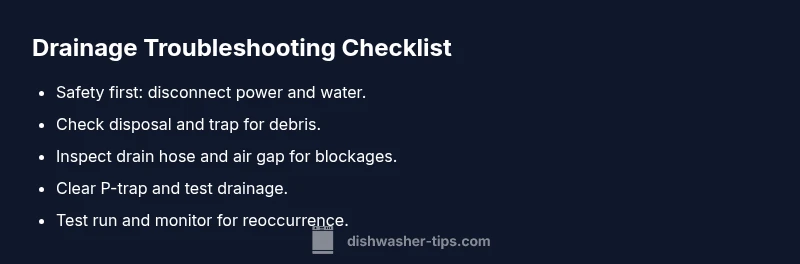
This section provides a practical overview of the typical fixes most homeowners perform. It covers clearing traps, checking the disposal, inspecting hoses, and validating the air gap. The aim is to set you up for the detailed, numbered steps in the next block without duplicating instructions. Always proceed in a calm, patient manner and re-test after each action.
Safety, warnings, and when to call a professional
If you encounter persistent backups, foul sewer smells, or if you’re uncomfortable handling plumbing tasks, contact a licensed plumber. Electrical safety is crucial when working near disposals and outlets. Avoid chemical clog removers in a disposal system, because they can damage seals and pipes. Document steps taken for reference by a pro if you must call one.
Maintenance routines to prevent future clogs
Preventive care matters. Clean the P-trap periodically, use a screen to catch debris, and avoid pouring grease down the sink. Run the disposal and sink with hot water regularly to prevent buildup. Periodic inspection of hoses, clamps, and the air gap can catch wear before it becomes a problem. Small, consistent habits reduce big headaches later.
Quick wins you can try today
Begin with the simplest fixes: rinse and re-test the drain after clearing the trap, then inspect the disposal for jams and run it with water to confirm it’s clear. If the problem persists, move to the dishwasher drain hose and air gap. Each success builds confidence and reduces the need for more invasive work.
Steps
Estimated time: 30-60 minutes
- 1
Power down and prepare
Begin by unplugging the dishwasher or turning off its breaker. Shut off the kitchen water supply if you’ll be near plumbing. Gather towels, a bucket, and basic hand tools. Safety tip: never touch wiring or cutters with power on.
Tip: Double-check the circuit to ensure no power remains before touching wiring. - 2
Inspect disposal and sink drain
If a garbage disposal exists, run it briefly with cold water to observe whether it grinds smoothly. If jammed, use a disposal wrench or tongs to remove debris—never put hands in the chamber.
Tip: Clear any obvious obstruction and reset the disposal if possible. - 3
Check the P-trap
Place a bucket beneath the trap, then carefully unscrew the slip nuts to access the trap. Remove standing water and clean debris from the U-bend. Reassemble and run hot water to test.
Tip: Use a rag to catch dripping water and avoid spills. - 4
Inspect the dishwasher drain hose and air gap
Trace the drain hose from the dishwasher to the sink. Look for kinks or dents and detach to flush with clean water. If you have an air gap, remove the cap and clean any debris.
Tip: Flush with a steady stream to push blockages free. - 5
Test after assembly
Reconnect all connections, restore power and water, and run a test cycle with hot water. Observe whether drainage improves and listen for unusual noises.
Tip: Do not overload the dishwasher; run an empty cycle initially. - 6
Evaluate results and repeat if needed
If water still remains, repeat inspection of traps and hoses. Consider replacing worn hoses or seals if recurring issues occur.
Tip: Document steps and low-cost fixes you performed. - 7
Document and plan maintenance
Create a simple maintenance plan: periodic trap cleaning, screens in the sink, and a quick check of the air gap every few months.
Tip: Set a reminder to check drains regularly.
Diagnosis: Dishwasher and sink not draining
Possible Causes
- highClogged kitchen drain with shared blockage
- highBlocked garbage disposal
- mediumKinked or clogged dishwasher drain hose
- mediumAir gap at sink clogged or missing
- lowSeptic tank or sewer line issue
Fixes
- easyUnblock garbage disposal and remove jams
- easyClear sink trap and clean the P-trap
- easyInspect and straighten dishwasher drain hose; detach and flush
- easyClean the air gap and reattach
- hardIf sewer/septic issue, call a licensed plumber
People Also Ask
Why do both the dishwasher and sink drain at the same time?
Because they often share the same drain line. A blockage in that line impacts both devices simultaneously, so addressing the main drain is usually the fastest fix.
They share a drain line, so a single blockage can affect both the sink and dishwasher.
What should I check first when they won't drain?
Start with safety, unplug the appliances, and inspect the sink trap and disposal for obvious blockages. Clear any debris you find and re-test before moving to more complex steps.
First, ensure safety and check the trap and disposal for blockages.
Can a clogged garbage disposal cause drainage problems for the dishwasher?
Yes. A jammed disposal can block the drain line, causing backups that affect both the sink and dishwasher.
A clogged disposal can block the drain and back up water into both fixtures.
Is it safe to disconnect and inspect the dishwasher drain hose?
Yes, but only after power is off and you’ve drained standing water. Inspect for kinks, cracks, or blockages and straighten or replace as needed.
Power off first, then check the hose for kinks or cracks.
When should I call a professional for drainage problems?
If you can’t locate the blockage after a thorough check or if you hear sewer gas or notice multiple fixtures affected, a licensed plumber is the best option.
Call a pro if you can’t fix it yourself or you smell sewage.
What maintenance helps prevent future drainage issues?
Regularly clean traps, avoid pouring grease down the sink, and use a screen to catch hair and food. Schedule periodic inspections of hoses and air gaps.
Keep traps clean, grease out of sinks, and maintain hoses and air gaps.
Watch Video
What to Remember
- Identify shared drainage issues early.
- Clear disposals and traps before deeper diagnostics.
- Respect safety and electrical warnings.
- Follow the step-by-step guide for best results.
- Prevent future clogs with a maintenance routine.