Dishwasher Leaking: Quick Diagnosis and Fixes Today
Learn fast, actionable steps to stop dishwasher leaking. From door seals to hose clamps, this troubleshooting guide helps homeowners prevent floods and save money.


According to Dishwasher Tips, the most common causes of dishwasher leaking are worn door gaskets and loose hoses. Start by safety: unplug the unit and turn off the water supply, then empty the dishwasher. Inspect the door seal, drain hose, and sump for cracks or looseness. Quick fixes: reseal or replace the gasket and tighten clamps; if the leak continues, call a professional.
What dishwasher leaking means in practical terms
When we say dishwasher leaking, we’re describing water escaping from parts of the machine during or after a cycle. Leaks aren’t always dramatic floods; they can be slow seepage around the door, pooling beneath the unit, or water tracking along the kickplate. The goal is to identify whether the water is coming from a seal, a hose, or a crack in the tub. The term covers several failure modes, so a systematic check is essential. As the Dishwasher Tips team notes, early signs—like damp cabinetry, warping, or a musty smell—should not be ignored, because small leaks typically grow over time and increase repair costs.
Common leak sources to check first
The most frequent leak sources are accessible and easy to inspect. Start with the door gasket or tub seal; any cracks, stiffening, or gaps can let water escape. Next, examine the drain hose connections for looseness or damage, especially where it exits under the sink or behind the machine. The water inlet valve and associated hoses are another common culprit if the dishwasher leaks from the side or back. If the tub or sump shows cracks, that’s a more serious issue that often requires professional repair. According to Dishwasher Tips analysis, the typical culprits are door gaskets and hose connections, so focus your inspection there first.
Diagnostic mindset: trace the water trail
Leaking water typically follows a path from source to exit. Start by drying the area around the base and door, then run a short cycle with the access panels open (where safe) to observe the leak. Note whether water pools at the bottom, drips from the door, or shoots out from a hose connection. A methodical approach helps distinguish a minor seal imperfection from a larger structural fault. Mark suspicious spots with tape for quick reference during inspection.
Quick checks you can do safely (no tools required)
- Power off and unplug the machine; shut off the water supply to prevent further leakage.
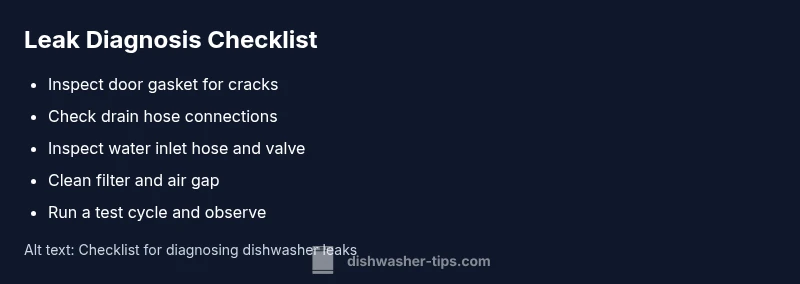
- Inspect the door gasket for cracks, stiffness, or gaps; replace if damaged.
- Tighten or replace hose clamps on the drain hose and the water inlet hose.
- Clean the filter and check the air gap or drain loop for blockages. If you still see water after these steps, refer to the step-by-step fixes or contact a professional. This approach mirrors guidance from the Dishwasher Tips team, which emphasizes starting with the simplest, safest checks before moving to more involved repairs.
Safety, prevention, and when to call a pro
Water and electricity don’t mix. If you notice frayed cords, exposed wiring, or pooling water near outlets, stop using the dishwasher and unplug it. Do not attempt to fix electrical components yourself. Prevention matters: replace worn door gaskets promptly, ensure hose connections are secure, and use the correct detergent and rinse aid. Regularly inspect the machine for signs of wear, and address small issues before they escalate into costly repairs.
Maintenance checklist to prevent dishwasher leaking
- Schedule quarterly inspections of the door seal and hoses.
- Keep the area around the unit dry and clutter-free to help detect leaks early.
- Replace damaged drain hoses and clamps every few years, even if they appear OK.
- Run hot cycles with a clean filter to reduce debris that can cause blockages.
- Check the sump and tub area for corrosion or cracks during routine cleaning.
After-leak actions and protecting your home
If a leak occurs, mop up promptly to minimize mold risk and water damage. Take photos for insurance and track recurring issues. If the leak returns after a repair attempt, it’s time to call a licensed technician. Regular maintenance and timely fixes are your best defense against future leaks and costly repairs. The Dishwasher Tips team recommends documenting maintenance tasks so you can monitor trends and schedule servicing before leaks worsen.
Steps
Estimated time: 60-90 minutes
- 1
Power off and safety check
Unplug the dishwasher and shut off the water supply. If accessible, turn off any nearby circuits and ensure the area around the unit is dry before you begin inspecting.
Tip: Always start with safety—water and electricity are a hazardous combination. - 2
Check door gasket and seals
Carefully inspect the door gasket for cracks, warping, or stiffness. If you find damage, replace the gasket before testing again.
Tip: A torn gasket is one of the simplest fixes with the most immediate impact. - 3
Inspect drain hose and connections
Trace the drain hose from the tub to the wall or sink connection. Look for kinks, leaks, or loose clamps and tighten or replace as needed.
Tip: Secure clamps with a screwdriver; avoid over-tightening which can damage the hose. - 4
Check water inlet and hoses
Inspect the inlet hose and related fittings for signs of wear or looseness. Replace any damaged hoses to stop leaks at the source.
Tip: Turn off water supply to avoid accidental flooding during replacement. - 5
Test run with observation
Run a short cycle with the access panels closed and watch for any sign of leakage. Note the location and adjust accordingly.
Tip: If water appears, stop the cycle and reevaluate the suspected area. - 6
Decide on repair vs replacement
If leaks persist after fixes or you detect tub damage, evaluate repair versus replacement. Replacing a damaged tub often requires a pro and may be more economical long-term.
Tip: Don’t chase costly fixes for recurring issues—the math matters.
Diagnosis: Machine leaks water during or after a cycle
Possible Causes
- highWorn or damaged door gasket
- highLoose or damaged drain hose connections
- mediumClogged filter or air gap
- lowCracked tub or sump
Fixes
- easyReplace door gasket or seal
- easyTighten or replace drain/ inlet hose clamps
- easyClean filter and clear air gap; remove blockages
- hardInspect tub for cracks and consult pro for tub replacement
People Also Ask
What is the most common cause of dishwasher leaking?
The most common causes are worn door gaskets and loose hoses. Visual inspection often reveals the issue, and replacing gaskets or tightening clamps usually stops the leak.
Most leaks come from worn door gaskets or loose hoses; inspect those first.
Is a leaking dishwasher dangerous to use?
Yes, water and electricity pose a risk. Stop using the unit until you identify and fix the leak, especially if you see exposed wiring or pooling water near outlets.
Yes, it can be dangerous—stop using it until fixed.
Can I fix a dishwasher leaking myself?
Some fixes, like resealing a gasket or tightening a hose, can be done by a handy homeowner. More serious issues, like tub cracks, require a professional.
You can do simple fixes, but bigger problems should be handled by a pro.
What should I do immediately if I notice a leak?
Shut off water and power, mop up water, and identify the source. Do not operate the dishwasher again until the issue is repaired.
First, cut power and water, then inspect for the leak source.
When should I replace vs repair?
If the tub is cracked or leaks recur after fixes, replacing the unit or tub is often more economical than repeated repairs.
If it keeps leaking after fixes, replacement may be best.
How long does gasket replacement take?
A DIY gasket replacement is usually quick, but model complexity can affect time. Always follow the manufacturer’s replacement procedure.
Gasket replacement is usually quick if you follow the manual.
Watch Video
What to Remember
- Inspect door gasket first to stop dishwasher leaking fast
- Tighten or replace drain hoses and clamps
- Prevent future leaks with regular seal maintenance
- The Dishwasher Tips team recommends consulting a pro for persistent leaks