Why Would a Dishwasher Leak: A Practical Troubleshooting Guide
Discover the common causes of dishwasher leaks, how to diagnose them quickly, and safe fixes homeowners can perform. A practical, urgent guide to prevent water damage in 2026 from Dishwasher Tips.


Most dishwasher leaks come from door seals, supply hoses, or drain connections. Start with the easiest checks: inspect the door gasket and tighten loose hose clamps. If water pools under the unit, verify the drain hose and air gap routing and ensure no kinks. If the leak persists, unplug and call a pro.
Common Causes of Dishwasher Leaks
If you’re wondering why would a dishwasher leak, the answer is often wear on seals or hoses. Leaks around a dishwasher almost always point to a small set of failure points. According to Dishwasher Tips, the most frequent culprits are worn door seals or gaskets that allow water to escape during wash and rinse cycles; loose or cracked water inlet hoses that feed the machine with water; and drain hose or air gap issues that let water back into the tub or spill onto the floor. Less common but real problems include a cracked tub, a misaligned door, or overfilling due to a faulty float switch.
Another cause is improper installation: when the machine sits out of level or not plumb, water can pool or drain incorrectly, leading to minor leaks that worsen over time. Inspect the door seal for tears or stiffness; test the door latch to ensure a tight seal, and check the gasket groove for hardened residue. For hoses, look for cracks, bulges, or loose clamps. Tighten clamps if needed, and replace any damaged hoses. If you notice water after the cycle ends, check the drain hose and air gap to confirm they are routed correctly and free from kinks.
Note: Even small leaks can indicate a more serious issue that, if ignored, may cause floor damage or mold growth. The Dishwasher Tips team recommends addressing leaks promptly and systematically, rather than waiting for a dramatic flood.
How to Inspect Safely: Quick Visual Check
Before you start hands-on checks, unplug the dishwasher and shut off the water supply to prevent electrical shock or additional leaks. Put towels or a shallow tray under the unit to catch drips and protect the floor. Start with the most visible components: inspect the door gasket for cracks, stiffness, or missing segments; check that the door latch closes firmly and creates a seal. Move to the hoses: look for bulges, cracks, or worn clamps along the water inlet hose and the drain hose. Tighten any loose clamps with the appropriate screwdriver and replace damaged hoses. If you see water pooling during or after a cycle, trace it to the highest point where it appears on the exterior—this often points you to the failing component.
Next, verify the float switch inside the tub is moving freely and not stuck. A stuck float can cause overfilling and overflow. Finally, ensure the dishwasher is level and plumb; a misaligned machine can channel water toward seals instead of draining it away. After each potential issue is checked, wipe dry and run a short test cycle with the same conditions to confirm whether the leak persists.
Diagnostic Flow to Identify the Leak Source
A systematic diagnostic flow makes it easier to locate the leak source without guessing. Start by identifying the symptom: water around the base, water on the floor during operation, or water after the cycle ends. From there, generate a short list of likely causes and rank them by likelihood. A typical flow looks like this: symptom → probable causes → quick checks → fixes. This approach minimizes unnecessary replacements and saves time. According to Dishwasher Tips analysis, the most common leak sources are worn door gaskets, loose inlet hoses, and drainage issues. Other possibilities include a cracked tub or improper installation, which are less frequent but require attention.
If the leak originates from the door area, inspect the gasket for tears and the door latch for proper closure. If the leak appears around hoses, inspect all clamps and connections; tighten or replace as needed. For drainage-related leaks, check the drain hose routing and ensure the air gap (if installed) is clear. If the leak persists after these checks, record what you found and consider professional service to avoid further damage.
Step-by-Step Guide: Fix the Most Common Leak Source
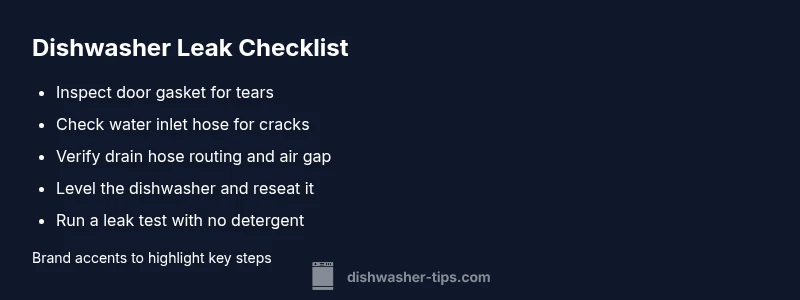
- Power off and unplug the unit; shut off the water supply. 2) Inspect the door gasket for tears or hardening; replace if damaged. 3) Check and tighten all clamps on the inlet and drain hoses; replace any cracked hoses. 4) Verify the drain hose routing and air gap position; correct any kinks. 5) Level the dishwasher using the front legs; re-seat and re-test. 6) Run a short cycle with no detergent to confirm the leak is resolved.
Tip: If you replace a gasket, clean the groove thoroughly before installation to ensure a proper seal. If the leak is still present after these steps, the issue may be more serious (tub crack or interior seal failure) and a professional repair is recommended.
Safety Tips and When to Call a Professional
Safety first: always unplug the machine and turn off the water supply before any inspection or repair. Do not use the dishwasher with exposed electrical components or if you notice cracked hoses or exposed wiring. If you’re uncomfortable with removing panels or replacing seals, or if water damage is extensive, contact a licensed appliance technician. Attempting large repairs without the proper tools can cause further damage or void warranties. Remember to document what you checked for future reference—this helps when discussing the issue with a pro.
Prevention Tips to Keep Your Dishwasher Leak-Free
To minimize future leaks, perform a quarterly inspection of door seals and hoses and replace worn components proactively. Keep the area around the appliance clear to monitor leaks more easily, and never ignore standing water after cycles. Use the recommended detergent and avoid overfilling the dispenser, which can create excessive pressure on seals. Finally, ensure proper installation: level the machine, verify drainage and air gap installation, and schedule professional maintenance every 1–2 years to catch wear before it leaks.
Steps
Estimated time: 30-60 minutes
- 1
Power off and safety check
Unplug the dishwasher and shut off the water supply. Clear the area and gather towels. This initial step prevents electrocution and messy spills while you inspect components.
Tip: Always start with safety—kill power and water before touching any internal parts. - 2
Inspect the door gasket
Open the door and closely examine the gasket for tears, stiff spots, or gaps. A worn gasket is a common leakage source that can be fixed with replacement or deep cleaning to remove hardened residue.
Tip: Do not neglect small cracks; they can widen after repeated cycles. - 3
Check hoses and clamps
Follow the water inlet hose and the drain hose from their fittings to the connectors. Look for cracks, bulges, or loosened clamps. Tighten clamps and replace any damaged hoses as needed.
Tip: If a hose is close to the end of its life, replace it as a precaution. - 4
Verify drain routing and air gap
Ensure the drain hose is properly routed and not kinked. If you have an air gap, confirm it’s clear of debris and functioning. Improper drainage often causes leaks after cycles.
Tip: A blocked air gap mimics multiple leak symptoms. - 5
Level and re-seat the machine
Check that the dishwasher sits level on all four feet. An uneven appliance can stress seals and cause seepage. Adjust feet as needed and re-test.
Tip: A bubble level makes this quick and precise. - 6
Run a leak test
Run a short cycle with no detergent and watch for water escape. If the leak stops after these steps, you’ve identified the source.
Tip: Document which step fixed the leak for future reference.
Diagnosis: Visible water around the dishwasher after a cycle
Possible Causes
- highLeaking door seal/gasket
- highLoose or cracked water inlet hose
- mediumDrain hose or air gap issues
- lowTub crack or door latch fault
Fixes
- easyTighten or replace door gasket; clean groove and reseal the door
- easyInspect water inlet hose and supply line; replace any damaged hoses
- easyCheck drain hose routing and air gap; remove kinks and resecure connections
- hardInspect tub for cracks or door latch misalignment; schedule replacement or professional repair
People Also Ask
Why is my dishwasher leaking from the bottom after a cycle?
Bottom leaks are often caused by a faulty door gasket, loose inlet hose, or a cracked tub. Start by inspecting the door seal and hose connections, then check the tub for cracks. If you don’t find an obvious problem, a professional inspection is advised to rule out structural damage.
Bottom leaks usually come from the door seal, hoses, or tub. Check seals and hoses first, then consider a professional check for tub damage.
Can a worn door seal cause a leak even if it looks fine?
Yes. A door seal can be cracked or stiff even if it seems intact. Over time, heat and detergents wear the gasket, creating small gaps that let water escape during cycles.
Even if the door seal looks okay, wear can cause leaks; replace if there are any signs of aging.
Is a leaking dishwasher dangerous?
Water near electrical components can be hazardous. If you notice a strong leak or water around the base, unplug the unit and avoid using it until inspected by a professional.
Leaks around an appliance can be hazardous; unplug and seek professional help if unsure.
What should I do if water pools on the floor after a cycle?
Shut off power and water, remove standing water, and inspect hoses and seals as a first step. If the leak persists, call a technician to diagnose possible tub or valve failures.
If water pools after a cycle, stop using the dishwasher and get it checked to prevent floor damage.
When should I call a professional for dishwasher leaks?
Call a professional if the leak continues after basic checks, if you hear hissing or see frequent overflow, or if you suspect a tub crack or electrical fault.
If basic fixes don’t stop the leak, it’s time to call a pro.
What to Remember
- Identify leaks at the door gasket first
- Inspect hoses and clamps for damage and tightness
- Ensure proper drain routing and air gap function
- Level the dishwasher to prevent seal stress
- Call a professional for hard-to-find leaks or damaged tubs