If Dishwasher is Leaking? Quick Troubleshooting Guide
Discover fast, safe ways to diagnose and fix a leaking dishwasher. This guide covers common leak points, step-by-step troubleshooting, and when to call a professional.


Most leaks start at the door gasket or a loose drain hose. Quickly inspect the door seal for cracks or warped sections and check hose clamps under the sink for tightness. If you still notice water, examine the water inlet hose and the drain hose for kinks or loose fittings. If the drip persists, stop using the dishwasher and contact a qualified technician.
Why a Dishwasher Leaks
If your dishwasher is leaking, you’re likely facing a problem that can be fixed without replacing the entire appliance. The issues are almost always related to seals, hoses, or misalignment. According to Dishwasher Tips, the most common culprits are a worn door gasket, loose or damaged hoses, or improper installation causing water to collect at the base. Small drips can escalate quickly if ignored, so start with the simplest checks you can perform safely. By addressing the obvious leaks first, you reduce the risk of water damage to your kitchen floor and cabinetry.
The goal of this section is to help you identify whether the leak comes from the door area, the hose connections, or the tub itself. You’ll learn to differentiate between a dishwasher leaking during a cycle and one that leaks when the door is opened. Understanding the likely failure points will save you time and money and guide you toward the right repair path.
Common Leak Points
Leakage can originate from several points on most household dishwashers. The most frequent culprits include the door gasket, the door seal area, and the drain hose connected to the sink drainage system. The water inlet valve and its tubing can also leak when fittings loosen or hoses age. Other potential sources include a cracked tub, a loose spray arm connection, or a failing float switch that falsely triggers the system to overfill.
By knowing where to look, you can visually inspect each component. Start with the door area when the machine is closed, then follow the path of water to see where it begins to pool. Note that some leaks only occur during specific cycles or when a certain spray arm is active, which can help you isolate the problem.
Quick, Safe Checks You Can Do
Before you begin any inspection, unplug the machine and shut off the water supply to prevent more water from entering the unit. Then:
- Inspect the door gasket for cracks, warping, or buildup that prevents a tight seal. Clean the gasket with mild soap and water to remove debris.
- Check hose clamps on the drain hose and water inlet for looseness. Tighten any loose clamps with a screwdriver.
- Look under the dishwasher for pooled water around hose connections and at the base of the tub. A small puddle may indicate a loose connection rather than a ruptured tub.
- Verify the dishwasher is level. An unlevel machine can push water toward the door or base, creating leaks around improperly seated seals.
- If you notice water only during a wash cycle, observe whether the spray arm or any spray arms are clogged or misaligned, as this can force water into unintended areas.
If you’ve completed these checks and still see water leakage, proceed to more detailed diagnostics or call a technician. Avoid running cycles with a known leak to prevent flood damage.
Diagnostic Flow: Symptom to Solution
This flow helps you organize what you observe and map it to likely causes and fixes. Start from the symptom and move toward a practical remedy. In short, look for the source, confirm the condition of seals and hoses, then apply the corresponding fix. If you cannot resolve the issue with basic steps, it’s time to seek professional help.
Symptoms -> Likely Cause -> Quick Fixes -> Next Steps
- Water around the base after a cycle → Likely door gasket wear or loose drain hose → Replace gasket or tighten hose clamps → Run a test cycle and recheck.
- Water leaks from the front door area when closed → Door gasket or door latch misalignment → Clean/replace gasket; ensure latch seals properly.
- Water pooling near the left side → Water inlet hose or drain hose issue → Tighten connections; replace damaged hoses if needed.
Remember: if you are unsure, consult a professional. The Dishwasher Tips team emphasizes safety first; never bypass safety features or run a leaking unit for extended periods.
Step-By-Step: Replacing a Worn Door Gasket (Most Common Fix)
- Power down and unplug the dishwasher, then turn off the water supply. Remove any dishware to access the door.
- Remove the door panel if needed and inspect the gasket for visible wear, tears, or hardened sections. Clean the channel with a soft cloth.
- Buy a compatible gasket kit for your model. Compare the new gasket’s dimensions to the old one to ensure a proper seal.
- Remove the old gasket by gently prying it out of the channel. Clean the groove before installing the new gasket to remove old adhesive residue.
- Press the new gasket into the channel, ensuring even compression all the way around. Reattach the door panel and reseat any catches or latches.
- Reconnect power and water supply. Run a short cycle with towels around the base to catch any initial drips.
- Check for leaks around the door. If water still escapes, inspect the corners of the gasket and re-tighten any loose fasteners.
- Record the date of replacement and monitor for the next few cycles to confirm success.
Tips: Handle parts gently to avoid tearing the gasket. If in doubt, consult the model’s manual or a professional.
Prevention and Maintenance to Stop Future Leaks
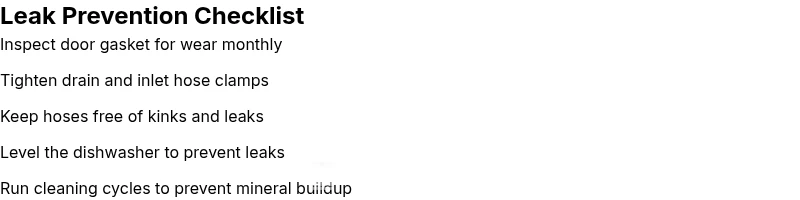
Proactive maintenance reduces the chance of leaks. Schedule monthly checks of door gaskets, hoses, and clamps. Keep the drain hose clear of kinks and ensure that the water supply line is not corroded or loose. Use dishwasher-safe sealant only when recommended by the manufacturer and avoid overfilling the machine, which can increase pressure on seals and cause leaks.
Regular cleaning of the float switch and filter helps prevent overfill scenarios and clogs, both of which can mimic leaks. Use the right type of detergent in the recommended quantity, as soap residue can affect seals and drainage. If you notice persistent mineral buildup, run a cleaning cycle with a dishwasher cleaner as directed by your appliance’s manual.
When to Call a Pro
Some leaks are easy fixes, but others require professional attention. If you notice water coming from the tub seam, a cracked tub, or the internal welds around the motor area, a licensed technician should handle the repair. Persistent leaks after gasket replacement or leaks that reappear within a few weeks may indicate a deeper issue, such as a faulty water inlet valve or a compromised tub shell. Safety considerations include electrical exposure risk and potential damage to cabinetry, so err on the side of caution and contact a professional if you’re uncertain.
The Dishwasher Tips team recommends scheduling a diagnostic visit if you cannot locate the leak after thorough inspection, or if you are uncomfortable disassembling parts. A pro can assess the underlying cause and offer a durable repair plan that protects your home.
Steps
Estimated time: 60-90 minutes
- 1
Power down and prepare
Unplug the dishwasher, turn off the water supply, and remove any dishes. This keeps you safe while you inspect components.
Tip: Always start with safety; dry hands and a dry area reduce slip hazards. - 2
Inspect the door gasket
Close the door and look for cracks, hardening, or warping. Clean the gasket channel to remove debris.
Tip: A clean gasket seals better and makes replacements easier. - 3
Check hose connections
Examine the drain and inlet hoses for cracks or loose clamps. Tighten clamps gently with a screwdriver.
Tip: Do not overtighten; overtightening can damage fittings. - 4
Level the unit
Use a level to ensure the dishwasher sits evenly. An unlevel unit can push water toward seals during cycles.
Tip: Adjust leveling feet slowly and recheck after running a test cycle. - 5
Test the water inlet valve
Inspect the inlet valve hose for leaks and ensure the valve threads are tight.
Tip: A faulty inlet valve may leak even when the door is sealed. - 6
Inspect the tub and spray area
Look for cracks in the tub or misaligned spray arms that could force water to leak.
Tip: If you see a crack, plan for a replacement or professional repair. - 7
Seal new gasket
Install a compatible gasket kit, ensuring a full seal around the door channel.
Tip: Double-check fitment before closing the door. - 8
Run a test cycle
Run a short cycle with a towel around the base to catch initial drips and observe leak behavior.
Tip: If water still leaks, stop the cycle and consult a pro.
Diagnosis: Visible water around the base after a cycle
Possible Causes
- highDoor gasket wear or warp
- highLoose or damaged hoses
- mediumOverfill or drain valve issue
Fixes
- easyReplace worn door gasket and reseal door channel
- easyTighten clamps on drain and water inlet hoses; replace damaged hoses
- mediumCheck float switch and drain system; adjust or replace faulty components
People Also Ask
What is the most common cause of a leaking dishwasher?
The most common cause is a worn door gasket or loose drain hose. Inspect and replace if necessary, then test the unit.
The common causes are worn gaskets or loose hoses; check and replace as needed, then test.
Can I fix a leak myself?
Many leaks are repairable by replacing gaskets or tightening hoses. Use the manufacturer’s gasket kit and follow safety steps.
Yes, many leaks can be fixed by replacing gaskets or tightening hoses with caution.
Is it safe to run a leaking dishwasher?
No. Running a leaking dishwasher risks water damage and electrical hazards. Stop using it until the leak is resolved.
No, stop using it until you fix the leak to avoid damage.
How long does a door gasket replacement take?
A typical gasket replacement takes about 30-60 minutes, depending on your model and access to screws.
About half an hour to an hour, depending on your model.
When should I call a professional?
If the leak persists after gasket and hose fixes, or if you see tub cracks, contact a licensed technician.
If leaks continue after fixes or you notice tub damage, call a pro.
Watch Video
What to Remember
- Identify the leak source quickly via gasket/hoses
- Replace worn gaskets or tighten hoses as first fixes
- Level the unit to prevent further leaks
- Test after fixes; call a pro if unresolved