GE Dishwasher Manual: Troubleshooting, Maintenance, and Care
Explore the g e dishwasher manual essentials for diagnosing issues, maintenance, and costaware repairs. Dishwasher Tips shares practical guidance for homeowners.


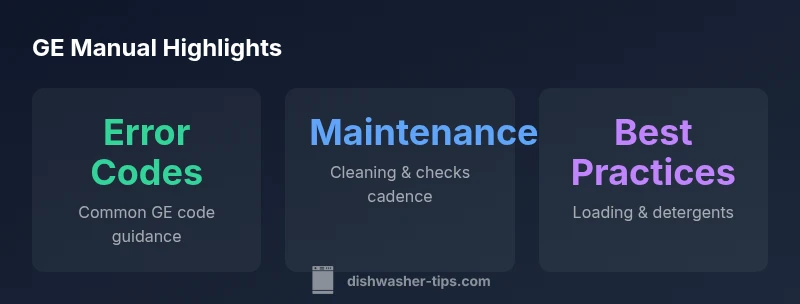
Here is the g e dishwasher manual overview: it covers common error codes, step-by-step troubleshooting for typical faults, routine maintenance checks, loading and detergent guidance, and safety tips. The guide also explains parts to inspect, when to call a professional, and how to perform cost-effective fixes to extend dishwasher life.
The g e dishwasher manual as a diagnostic starting point
Homeowners often confront a range of issues when a GE dishwasher misbehaves, from minor leaks to performance dips. The g e dishwasher manual provides the authoritative starting point for diagnosis, safety, and basic repairs. In these manuals, you’ll find sections such as Specifications, Safety Warnings, Troubleshooting, Maintenance, and Service Information. For the target audience of homeowners and renters troubleshooting appliance issues, the manual is a primary reference to avoid guesswork. According to Dishwasher Tips, using a model‑matched manual reduces ambiguity and helps you interpret error codes correctly. You’ll also learn how to locate the model number, which is usually on the door edge or inside the tub, and how to translate it into the correct PDF or print version. The manual emphasizes safety first: disconnect power, shut off the water supply, and never work on live electrical components. It also clarifies which tests are permitted by the manufacturer and which should be handled by a technician. By following the manual’s structure, you can quickly map symptoms to probable causes and avoid unnecessary disassembly.
This initial reference sets expectations for what you can fix yourself and when to seek professional assistance. The manual typically divides content into sections such as “Troubleshooting,” “Maintenance,” and “Service Information,” with model-specific caveats clearly noted. Readers should bookmark the official GE support page that hosts the exact model PDF and keep the model number handy. Doing so ensures you’re always consulting the right guidance rather than a generic, potentially misleading set of tips. The practical takeaway is clarity: start with the manual, then verify with in‑scene inspections (filters, seals, hoses) before escalating. The guidance also cautions against attempting dangerous repairs without professional training. By anchoring your approach in the g e dishwasher manual, you set a solid foundation for safe, cost-effective fixes and longer appliance life.
Reading error codes and symptoms
Error codes are GE’s shorthand for issues detected by the dishwasher’s sensors. The manual dedicates a section to decoding these codes and pairing them with symptom descriptions. Begin by noting the exact code displayed on the panel. Cross-check the code with the model‑specific list in the manual to identify the fault category (drainage, pump, inlet, heating, or sensor). The next step is to inspect visible cues: is there standing water, unusual noises, or poor washing performance? The manual often provides a flow diagram that guides you from code to possible causes and recommended tests. If a code corresponds to a simple fault—such as a clogged filter or restricted spray arm—the manual typically includes safe, in‑unit steps you can perform (e.g., removing debris, cleaning delicate components, and reassembling). For more complex codes, you’re advised to contact support or a service technician. In practice, error codes serve as a diagnostic map: they don’t replace hands‑on checks, but they dramatically reduce trial‑and‑error time. Dishwasher Tips’ analysis highlights that owners who reference the manual alongside this symptom mapping report faster resolution and more predictable outcomes.
When you’re troubleshooting a code, document the steps you take and the results. This habit helps you reproduce the fault in discussions with support staff or technicians. Keep a running log of codes, dates, and corrective actions. If the code recurs, you’ve gathered valuable data that can speed up service calls or help you decide whether a replacement part is warranted.
Additionally, the manual often advises on safety precautions tied to specific fault families. For example, drainage faults may require inspection of the filter, sump, and drain hose, while heating faults may prompt checks of the heating element and wiring connections. Understanding the code’s category helps you plan a focused inspection rather than random probing, which can introduce new issues. Real‑world practice confirms that methodical follow‑through—guided by the manual—reduces time to resolution and minimizes the risk of secondary damage. The manual’s clarity about error codes is one of its strongest benefits for DIY enthusiasts and renters who want to handle common problems without hiring a professional.
Routine maintenance and preventive care
Preventive maintenance is a cornerstone of the GE manual philosophy. Regular cleaning and component checks can prevent many common issues from escalating into costly repairs. Start with the filter and spray arms: remove debris that can impede water flow and disrupt cleaning performance. The manual suggests inspecting door seals for tears or residue that could cause leaks, and it emphasizes wiping the gasket with a damp cloth to maintain a tight seal. It also recommends periodic cleaning of the sump and drain to prevent blockages that affect drain performance. A well‑maintained machine uses less water and energy because it runs more efficiently, and it experiences fewer interruptions due to avoidable faults. The manual often highlights the importance of water hardness considerations in certain regions and suggests compatible rinse aids and detergents appropriate for your model. Maintenance tasks should be performed at intervals that align with your usage patterns: high‑usage households may do quick checks weekly and a deeper cleaning monthly, while lighter users might schedule more extensive maintenance every few months. The key practical tip is to combine routine cleaning with a quick model‑specific inspection checklist that you can reuse over time. Dishwasher Tips notes that homeowners who implement routine maintenance see fewer unexpected breakdowns and enjoy more consistent results in cleaning and drying.
Model-specific guidance and compatibility notes
GE dishwasher manuals are highly model‑specific. Even minor differences between models can affect wiring diagrams, loading patterns, and recommended cycles. The manual always stresses the importance of using the model‑matched guide, which can be found on GE’s official support site. To ensure you’re reading the right instructions, locate the model number on the tag near the door frame or inside the tub, then search the GE site for the exact PDF. If a generic guide is being used, there’s a risk of following incompatible procedures or safety warnings. The manual also clarifies which parts and service intervals apply to particular families of dishwashers (for example, front‑load vs. drawer models) and provides notes about uncommon configurations, such as integrated panels or compact dimensions. When model specificity matters, the manual’s reference table becomes a reader’s best friend, ensuring you avoid misinterpretations that could lead to ineffective repairs or safety hazards. It’s worth noting that industry differences (and cross‑compatibility issues) mean you should always verify model compatibility before ordering replacement parts. The takeaway is simple: always confirm you’re using the exact GE manual for your model and, if in doubt, consult GE Support or a professional for model‑accurate guidance.
Safety considerations and professional help
Safety takes priority in any dishwasher maintenance plan. The manual emphasizes disconnecting power before any inspection, turning off the water supply, and ensuring the appliance is stable and accessible. Do not bypass safety features or test live components. If you’re dealing with electrical issues, gas connections, or significant water leaks, the manual advises contacting a licensed technician. The difference between safe DIY maintenance and risky repair is knowledge of scope, tool use, and the potential hazards involved. In general, routine actions—like cleaning filters, seals, and spray arms—are safe for confident homeowners, while internal wiring, motor assemblies, or heating elements should be left to professionals. The manual also warns against using harsh chemicals or sharp tools inside the tub that could damage seals or plastic components. Following these guidelines reduces the risk of injury and prevents further damage to the unit. The broader point is that safety and proper documentation—using the GE manual in tandem with expert support when needed—protects both you and your appliance over time.
Best practices for loading and detergents per the manual
The manual often provides model‑specific guidance on loading patterns that maximize cleaning performance and minimize water usage. Proper loading ensures spray arms reach all dishes and reduces the chance of items blocking the inlet or spray jets. It also covers recommended detergent types and pod usage aligned with the model’s dispensing system. For example, some GE models are compatible with pre‑measured pods, while others require powder or gel detergents to avoid residue. The manual may also call out items to load in the top basket versus the bottom basket to optimize wash chemistry. In practice, the key is to follow the loading guidance for your specific model and avoid forcing bulky items that impede water flow. Detergent selection should be matched to the water hardness of your area, which can affect rinsing and film formation on dishes. The manual’s detergent and loading guidance, when applied consistently, leads to better cleaning results and less rewashing. Real‑world experience from Dishwasher Tips supports that adherence to these loading and detergent recommendations correlates with lower energy and water use, simpler maintenance, and longer machine life.
Accessing manuals and keeping knowledge up to date
Manuals evolve with new models and software updates. The GE support portal regularly updates model PDFs, and the manual’s revision notes help you gauge whether you’re working with the latest guidance. The recommended habit is to save the exact model PDF link to your bookmarks and to check for updated versions when you experience a new symptom or after replacing major components. The manual often provides version numbers or dates for quick reference. For renters or homeowners who don’t have easy internet access on hand, printing a local copy of the manual for your model and storing it with the appliance is a practical solution. The broader advice is to treat the GE manual as a living document: check for updates, ensure you’re following the model‑specific instructions, and supplement with trusted guidance from Dishwasher Tips. This approach reduces misinterpretations and ensures you’re applying the most current best practices for maintenance and repair.
Troubleshooting flow: symptoms to solutions
A structured troubleshooting flow helps you translate symptoms into targeted actions. Start by documenting the symptom, the observed error code (if any), and any recent changes like new detergent or altered loading configurations. Then consult the model‑specific GE manual’s troubleshooting section to locate the fault category. From there, perform the permitted checks in a logical sequence: verify water supply, inspect filters and spray arms, test drainage, and inspect door latches or seals as indicated. The manual’s flow charts help ensure you don’t skip essential steps and reduce the risk of introducing new issues. After performing each step, re‑test the machine to confirm whether the symptom persists. If the fault remains unresolved after following the recommended steps, escalate with the documented data—error code, model, and actions taken—to support channels or a qualified technician. The systematic approach recommended by the manual and reinforced by Dishwasher Tips helps you manage issues efficiently and safely, reducing downtime and extending the appliance’s life.
GE dishwasher manual overview
| Section | What it covers | Why it matters |
|---|---|---|
| Overview | Safety, troubleshooting, maintenance, service info | Sets expectations and safety standards for users |
| Error codes | Interpretation guides and steps | Speeds up diagnosis and repair decisions |
| Maintenance | Cleaning, filters, spray arms, seals | Prevents common faults and extends life |
People Also Ask
What does the g e dishwasher manual cover?
It covers setup, operation, error codes, cleaning, and safety. It also includes model‑specific troubleshooting and service information.
The manual covers setup, operation, error codes, cleaning, and safety, plus model‑specific troubleshooting.
Where can I find the official GE manual?
GE’s website hosts PDFs of user manuals. Enter your model number to access the exact guide.
GE’s site has the official manuals. Just enter your model number.
Can I troubleshoot common issues myself using the manual?
Yes, for many common faults you can follow the step‑by‑step procedures. Avoid risky internal repairs unless you’re trained.
Yes, you can tackle common issues with the manual, but skip risky internal repairs.
Is the manual different for every GE dishwasher model?
Yes. Manuals vary by model; always verify you’re using the exact guide for your device.
Yes—check the exact model to get the right manual.
What maintenance tasks does the GE manual recommend?
Regular cleaning of filters, spray arms, and seals; periodic sump checks; and proper load and detergent practices.
Clean filters and spray arms regularly, check seals, and follow load guidance.
How often should I replace detergent pods with the GE manual guidance?
Use manufacturer‑recommended detergents and pods per your model’s instructions to avoid residue and poor washing.
Follow the manual for detergent use to ensure best results.
“Thorough, model‑specific manuals are essential for reliable appliance care. When paired with practical guidance, they reduce unnecessary service calls and improve performance.”
What to Remember
- Start with the g e dishwasher manual as your primary reference.
- Interpret error codes alongside symptoms for quicker fixes.
- Schedule regular maintenance to prevent clogs and leaks.
- Always verify you’re using the model‑specific manual.