How Come My Dishwasher Won’t Turn On? An Urgent Troubleshooting Guide
Urgent troubleshooting guide to diagnose why your dishwasher won't turn on. Check power, door switch, control panel, and wiring with clear steps from Dishwasher Tips. Learn fast fixes and when to call a pro.


Power or door-switch failure is the most common reason your dishwasher won t turn on. Start with safe checks: ensure the outlet has power, reset a tripped breaker, and inspect the door latch. If the unit still won’t respond, test the control panel connections and look for loose wires. If issues persist, seek professional help.
Why this happens when a dishwasher won t turn on
If you’re asking, how come my dishwasher won t turn on, you’re not alone. In most homes the issue isn’t a broken motor but a simple power or safety-related fault. A common culprit is a tripped circuit breaker or a GFCI outlet that cuts power to the appliance. Another frequent cause is the door latch switch; if the dishwasher can’t detect that the door is fully closed, the control logic keeps the start sequence from running. A damaged control board or a blown internal fuse can also stop all power flow to the electronics. Finally, loose or corroded wiring behind the unit can interrupt the power path. Understanding these possibilities helps you diagnose quickly without risking shock or flood. By approaching the problem systematically, you can separate the easy, DIY fixes from the problems that require a professional.
Immediate checks you can perform safely
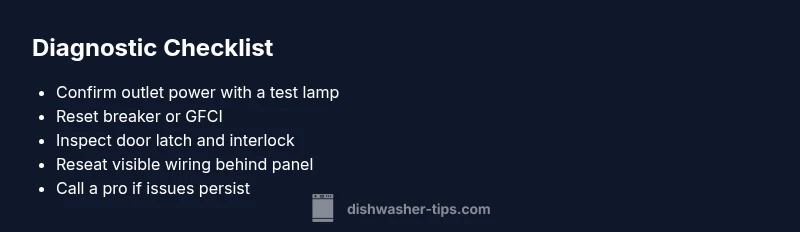
- Verify power at the outlet by plugging in a lamp or another device to confirm the circuit is active.
- Inspect the circuit breaker and any GFCI outlets; reset tripped breakers or press the reset button on GFCIs.
- Check the door latch: close the door firmly and listen for a latch click; the control won’t start if the latch isn’t sensed as closed.
- Look for display lights or status indicators. A dark display often indicates power or connection problems, not a dead motor.
- If you can access the main power disconnect, briefly unplug the dishwasher or switch off the circuit, then plug back in after 60 seconds to reset.
Common causes and how to test them
- Power supply issue: If the outlet or circuit is faulty, the dishwasher will not power up. Test with a known-good device and reset the breaker.
- Door latch switch fault: A faulty latch prevents the control from starting for safety. Wiggle the door slightly when closed to see if the latch is engaging consistently.
- Control panel or wiring harness problem: Loose or corroded connectors behind the unit can break the signal path. With the power off, gently reseat all visible connectors; look for burnt or damaged wires.
- Internal fuse or timer control fault: A blown fuse or failed timer inside the control module can stop the entire circuit. This typically requires professional service to replace.
Diagnostic flow: symptom → diagnosis → solutions
Following a logical path avoids unnecessary disassembly. First confirm power is reaching the unit. If power is present, move to door latch and safety interlocks. If those pass, inspect the control panel for signs of damage or loose wiring. If the unit still won’t turn on, the issue is likely with the internal control or a wiring fault that requires a professional. Always prioritize safety and avoid working with live components. If you feel uncertain, skip ahead to professional help rather than risking a shock or flood.
Step-by-step overview for the most common fix: power supply issue
This section gives a concise overview of the fix path so you understand what’s involved before you dive into the hands-on steps. Start with power verification, then door latch testing, followed by a controlled reset of the breaker or GFCI, and finally a careful wiring check behind the panel. If anything feels off or the unit still doesn’t respond after these steps, it’s time to book a professional repair and protect yourself from potential hazards.
Steps
Estimated time: 30-60 minutes
- 1
Verify outlet power
Unplug a nearby appliance and plug it into the dishwasher outlet or test with a lamp to confirm current. If there’s no power, investigate the circuit breaker, GFCI, and wiring from the panel with caution.
Tip: If you must reset a GFCI, wait 30 seconds before testing again. - 2
Check the door latch
Close the door firmly and listen for a solid latch click. Some models require you to push the door in slightly after closing to engage the interlock. If there’s any slack or the latch feels loose, replace the latch or the entire door assembly.
Tip: Don’t force the door; if it doesn’t latch, avoid running the unit until repaired. - 3
Reset power safely
If the outlet and door appear fine, disconnect power for 60 seconds and then restore it. Some models benefit from a full power cycle by unplugging the unit from the wall.
Tip: Keep hands dry and dry surroundings while handling electrical connections. - 4
Inspect wiring behind the panel
With power off, remove access panels to view the internal wiring. reseat connectors, looking for loose pins or signs of corrosion. Do not bend wires or force connectors.
Tip: Take a photo before disconnecting anything so you can reassemble correctly. - 5
Test for control panel activity
Reapply power and watch for indicator lights or a display. If the display remains blank, the fault may be the control board or a failed interlock.
Tip: If there’s any buzzing or burning smell, stop immediately and call a professional. - 6
Decide on next steps
If the unit responds after these checks, test a wash cycle. If not, arrange service; continuing can risk electrical shock or water damage.
Tip: Document each step you performed for the technician.
Diagnosis: Dishwasher won't power on or respond to controls
Possible Causes
- highPower supply issue (outlet, circuit breaker, or GFCI)
- mediumDoor latch switch fault
- lowLoose or damaged wiring behind the dishwasher
Fixes
- easyTest the outlet with a lamp to confirm power, then reset the circuit breaker or GFCI outlet if tripped
- easyInspect the door latch mechanism; ensure it engages firmly when the door is closed
- mediumReconnect any loose harnesses behind the panel and inspect for damaged wires; if corrosion or burns are present, stop and call a pro
People Also Ask
My dishwasher won't turn on even when plugged in. What should I check first?
Start with power and safety interlocks. Verify the outlet has power and reset any tripped breakers or GFCIs. Then check the door latch because the unit won’t start if the door isn’t detected as closed.
First check the outlet and the door latch; reset breakers if needed, then test again to see if it powers on.
Can a faulty door latch stop a cycle from starting?
Yes. A failed latch can prevent the control from sensing a closed door, stopping power to the motor. Inspect the latch and interlock, and replace if defective.
A bad door latch often prevents starting—inspect and replace if needed.
Is it safe to reset the breaker or unplug the dishwasher?
Yes, a controlled reset is a safe, effective first step. Always disconnect power first, then re-establish it after about a minute to reset the electronics.
Yes—power down, wait a minute, then power back up to reset.
Could a bad control board cause this problem?
A faulty control board can keep the dishwasher from powering up. If power and door checks are fine, diagnosis may point to the control module and warrant professional testing or replacement.
A failing control board is a common cause when other checks pass.
When should I call a professional?
If you’ve checked power and safety interlocks but the dishwasher still won’t turn on, or if you notice burning smells, buzzing, or damaged wiring, contact a licensed technician.
Call a professional if basic checks don’t solve the issue or you notice damage.
How can I prevent this problem in the future?
Regularly inspect power cords, keep the area dry, and schedule periodic professional checks. Use a dedicated circuit for the dishwasher and avoid overloading outlets to reduce risk of nuisance trips.
Keep the cord intact, dry, and ensure the dishwasher has its own circuit.
Watch Video
What to Remember
- Power first: verify outlet, breaker, and GFCI before touching internals
- Door latch matters: a faulty interlock stops all startup attempts
- If power returns but no activity, inspect the control panel and wiring
- When in doubt, call a pro to avoid safety risks