How Long Should a Dishwasher Drain Hose Be? A Practical Guide
Learn how long dishwasher drain hose should be, how to measure it, and install it properly to prevent leaks and backups. Dishwasher Tips delivers data-driven, practical guidance for homeowners.


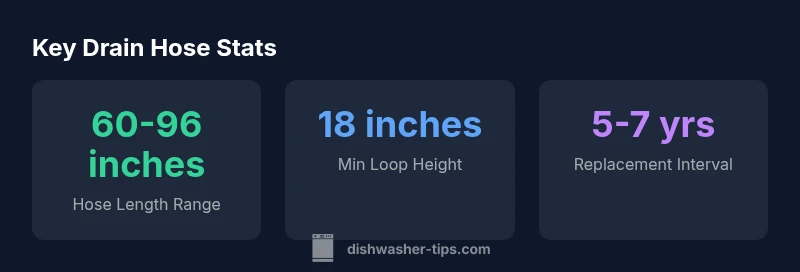
To put it plainly, a typical dishwasher drain hose length is about 5 to 8 feet (60–96 inches), depending on your standpipe height and kitchen layout. The exact length should allow a smooth loop or air gap, without tension or sag. In short, avoid a hose that's too short or too long to prevent leaks and backups.
why length matters for the drain hose
According to Dishwasher Tips, the length of your drain hose influences drainage efficiency, backflow risk, and overall dishwasher performance. When you evaluate the question of how long the dishwasher drain hose should be, you're balancing gravity-driven drainage with your kitchen's physical layout. The exact length isn't universal, but choosing a hose that's too short or too long can lead to leaks, clogs, and wastewater backup situations. A correctly sized hose minimizes air pockets and reduces the chance of siphoning, which protects your cabinets and floors. In practical terms, measurement and setup are as important as the hose's material, especially for renters who can't modify plumbing. The Dishwasher Tips team has found that aligning the hose with your standpipe height is crucial for reliable drainage over the life of the appliance.
typical drain hose length options and configurations
Most dishwashers ship with hoses in a few standard lengths to accommodate common kitchen layouts. Typical options range from about 5 feet to 8 feet (60 to 96 inches) in length, with longer hoses used for island setups or kitchens with unusual sink configurations. Shorter hoses are common under-sink installations or compact apartments. Keep in mind that longer hoses may be more prone to sagging if not properly supported, while shorter hoses may require an additional elbow or an extension. The goal is to avoid excessive slack that can kink, yet ensure a smooth path to the standpipe or disposal, with enough length to accommodate seasonal household movements without pulling on the connection.
how to measure your dishwasher drain hose accurately
To measure, start at the dishwasher's drain connection outlet and run the hose along the floor or cabinetry to the standpipe or disposal inlet. Use a flexible tape measure and account for any bends, clips, or wall corners. Measure both straight-line distance and any curves; add 6 to 12 inches for connectors and slack. If your current hose is older, note its length as a baseline, but do not assume it is correct for a new setup. In many installations, the measured length should be roughly 60 to 72 inches, but you should verify against your standpipe height and the dishwasher model's installation guide.
installation considerations: height, loops, and air gaps
A correctly installed drain hose relies on a few key principles. First, ensure that the hose rises to a high loop or is equipped with an air gap per local codes, which helps prevent backflow into the dishwasher. The vertical height from floor to standpipe commonly affects siphoning risk; when possible, position the hose so that the outlet is at least 18 inches above the floor before it descends to the standpipe. Avoid sharp bends and kinks, and use straps to keep the hose in place. If you can't meet the ideal height, choose a hose length that allows a comfortable loop behind the machine without creating tension at the connection.
consequences of incorrect length: leaks, backups, and wastewater exposure
If the drain hose is too short, you may experience frequent air gaps or forced backups into the tub. Overly long hoses can sag, trap wastewater, or create an inefficient path that reduces drainage velocity. Both extremes can lead to leaks, mold growth behind cabinets, and water damage to flooring. In rental homes, improper hose length could also violate lease terms if it causes damage. The easy fix is to adjust the hose length or replace it with a model that fits your space while maintaining the required loop or air gap.
step-by-step verification in your kitchen setup
- Turn off power to the dishwasher and water supply. 2) Disconnect the hose and measure its actual path from the dishwasher outlet to the standpipe. 3) Reconnect with a length that provides a gentle arch, avoiding tight bends. 4) Test by running a cycle and watching for leaks at the hose clamp, the sink drain, and the disposal. 5) If you notice backflow or water pooling under the sink, re-check loops and clip positions. 6) Retain any documentation from the installation guide for future reference.
maintenance tips and replacement timing
Inspect the drain hose periodically for cracks, stiffening, or crust on the exterior; replace the hose if you notice bulges or leaks. Many households replace hoses every 5 to 7 years as preventive maintenance, but you should follow the model's service schedule and local code requirements. When replacing, choose a hose with the correct connector size and a visible measuring mark to confirm length. Regular checks help prevent unexpected backups and water damage.
choosing the right replacement drain hose on a budget
If you need to replace, look for a hose that matches the DIN connectors on your dishwasher and sink plumbing. Compare lengths in ranges rather than a single fixed number to accommodate layout changes over time. Seek hoses with reinforced walls and corrosion-resistant clamps to extend life. DIY installation is feasible for many renters and homeowners, but verify that your new hose is compatible with your model and with any air gap devices required by your local codes.
safety and when to call a professional
When in doubt, or if you suspect a leak at the water inlet or a damaged standpipe, contact a licensed plumber or appliance technician. A professional can verify that the hose, air gap, and standpipe meet local codes and ensure the installation does not void your warranty. If your home is under a lease, check your lease terms before making changes to drainage paths.
final checks and next steps
Double-check all clamps and connections, confirm the hose is free of kinks, and ensure the height and loop comply with local code requirements. A correct hose length helps prevent backups, reduces odors, and keeps cabinets dry. For model-specific guidance, always consult your installation manual and the Dishwasher Tips resources.
Drain hose length options by setup
| Configuration | Recommended Hose Length | Notes |
|---|---|---|
| Standard installation (floor to standpipe) | 60-72 inches | Most homes use this length |
| Under-sink/plumbed cabinet installs | 36-60 inches | Shorter hose for tight spaces |
People Also Ask
How long should my dishwasher drain hose be?
In most homes, about 5-6 feet (60-72 inches) is a typical starting point. Always measure from the dishwasher outlet to the standpipe and adjust to fit your layout.
Five to six feet is a good starting point; measure your space and check your manual.
Can I cut the drain hose to shorten it?
Shortening is possible if you preserve proper clamps and maintain a safe loop or air gap. Do not cut beyond what the model and local codes allow.
Yes, you can shorten a bit, but follow clamps and codes.
What happens if the hose is too long?
An overly long hose can sag, trap wastewater, and cause backflow, leading to leaks and odors.
Too long can sag and back up, causing leaks.
Do I need an air gap or high loop?
Many codes require an air gap or high loop. Check local regulations and your installer or landlord for compliance.
Air gaps or loops are usually required by code.
How do I measure hose length correctly?
Measure from the dishwasher outlet to the standpipe, add extra for connectors and bends, and confirm with the installation guide.
Measure outlet to standpipe, add a little extra for connectors.
When should I call a professional?
If you notice persistent leaks, improper drainage, or local code concerns, contact a licensed plumber or appliance technician.
If leaks persist or codes are unclear, call a pro.
“Length accuracy matters more than you might expect; a correctly sized drain hose minimizes leaks, backups, and service calls.”
What to Remember
- Measure space before selecting a hose.
- Aim for a smooth loop or air gap, not tension.
- Check local codes for air gap requirements.
- Avoid hoses that sag or kink; length matters.
- Always refer to your model's installation guide.