How Long Does a Dishwasher Take? A Practical Guide to Cycle Times
Learn how long dishwashers take across common cycles, from quick eco settings to heavy loads, and what factors influence timing for practical planning.


A standard dishwasher cycle typically runs from about one to four hours, depending on the chosen cycle, soil level, and any extra options like sanitizing. Quick or eco cycles tend to be shorter, while heavy pots-and-pans cycles take longer. Actual times also depend on dishwasher efficiency, water pressure, detergent type, and whether the dishwasher starts with a fully loaded or partially filled rack. Modern dishwashers with soil sensors automatically adjust cycle length.
Why Cycle Time Matters
Understanding how long does dishwasher take helps homeowners plan energy usage, schedule kitchen tasks, and anticipate when dishes will be ready. In practice, cycle durations are influenced by the cycle type, soil level, water temperature, and how full the rack is. For many households, typical loads span roughly one to four hours for a single cycle, but exact times depend on model and settings. This awareness matters for busy kitchens, as planning around cycle timing reduces bottlenecks and ensures dishes, utensils, and cookware are ready when needed. By thinking in terms of cycles rather than a fixed wall clock, you can manage expectations, coordinate with other appliances, and minimize the frustration of unexpectedly long runtimes. The question how long does dishwasher take isn't a single number—it's a range shaped by what you choose and what you're washing.
Typical cycle durations by cycle type
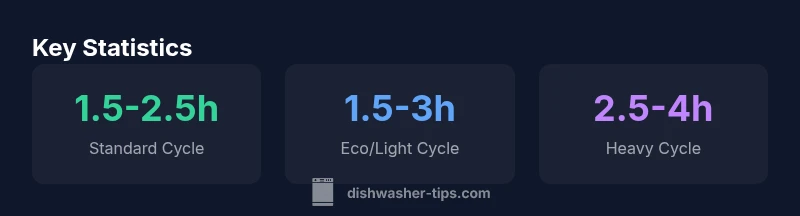
| Cycle Type | Typical Duration | Notes |
|---|---|---|
| Eco/Quick | 1.0-1.75 hours | Best for lightly soiled loads; uses less water/energy |
| Normal/Standard | 1.5-2.5 hours | Balanced performance for everyday dishes |
| Heavy/Pots & Pans | 2.5-4.0 hours | For heavily soiled or bulky cookware |
People Also Ask
How long does a quick wash take on most dishwashers?
Most quick or eco cycles finish in about one to two hours, depending on model and load. They’re suited for lightly soiled dishes and smaller loads. If the dishwasher has a soil sensor, it may adjust the timing a bit based on dirt level.
Quick cycles usually wrap up in about an hour or two, good for light loads.
Why is my dishwasher taking longer than usual?
Longer cycle times can result from heavy soil, large or bulky items, blocked spray arms, low water pressure, or a dirty filter. Selecting extra rinse or sanitize options also extends duration. If your cycle time noticeably increases, check for blockages and run a cleaning cycle.
If it’s taking longer than normal, check for soil buildup or a clogged filter.
Does load size affect cycle duration?
Yes. Larger loads, particularly with bulky items, can extend cycle time as the dishwasher works to ensure all items are cleaned and rinsed evenly. Overloading can also reduce cleaning efficiency and may prolong the cycle due to retries.
Load size can lengthen cycles, especially if items block spray paths.
Do sanitize cycles always take longer?
Sanitize cycles typically run longer because they include higher temperature steps to kill germs. The exact duration varies by model, but you should expect longer runtimes when sanitize is selected.
Sanitize modes usually add more time than standard cycles.
Can I shorten cycle times without sacrificing results?
You can choose shorter cycles appropriate to the soil level and avoid extra features like extra rinse if not needed. Pre-rinsing lightly soiled dishes can help the cycle do its job faster. Regular maintenance improves efficiency and lets shorter cycles perform well.
Stick to the cycle that matches the dirt level and keep it well-maintained.
What should I check if cycle times seem unusually long?
Check the water temperature, filter and spray arms for clogs, and ensure the door seals properly. Run a cleaning cycle to remove buildup. If problems persist, consult the manual or service technician.
Look for clogs, dirty filters, or worn seals if cycles drag on.
“Cycle timing is not a single fixed value; it’s the result of sensors and programs adapting to soil, load, and water conditions. Modern dishwashers aim to clean effectively while minimizing unnecessary time.”
What to Remember
- Plan around cycle types to estimate finish times
- Soil level and load size drive most timing differences
- Sensors optimize duration for cleanliness and efficiency
- Eco modes save energy but may extend total time
- Regular maintenance helps keep cycle times predictable