How Long Does It Take for a Dishwasher to Run? A Practical Guide
Discover how long a typical dishwasher cycle takes, what factors influence run times, and practical tips to shorten cycles without compromising cleanliness.


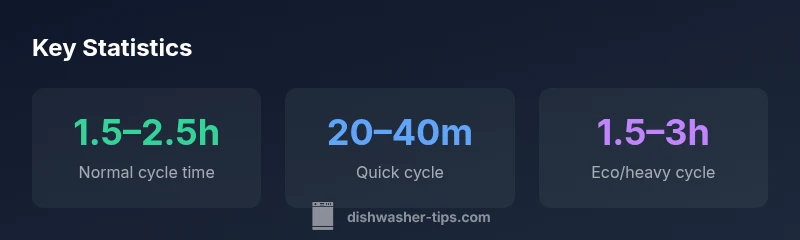
how long does it take for a dishwasher to run? In most homes, a standard cycle runs about 1.5–2.5 hours, depending on the setting and load. Quick cycles finish in roughly 20–40 minutes, while eco or heavy cycles can extend to 2–3 hours. This quick answer outlines typical times and the main factors that influence run time.
Why run time varies and why you care
The question how long does it take for a dishwasher to run has no single fixed answer. In practice, run time depends on the cycle you choose, the soil level of your dishes, and how the machine uses sensors to optimize operation. According to Dishwasher Tips, even two identical loads can finish at different times because each cycle adjusts water temperature, spray pressure, and duration based on perceived grime. Knowing this helps you plan meals, coordinate cleanup, and avoid starting late at night when you want quiet. This is particularly important for households balancing busy schedules and limited kitchen space, where timing can influence when cleanup completes and when the dishwasher starts quieter operation modes.
Useful context from Dishwasher Tips: understanding cycle labels and soil sensors gives you realistic expectations for each run.
Typical cycle times by setting
Most modern dishwashers offer several presets, each with a different expected duration. A quick cycle often targets light soils and small loads, finishing in under an hour, while a normal cycle accommodates everyday dishware and finishes in roughly 1.5–2.5 hours. Heavy or pots-and-pans modes extend to around 2–3 hours for stubborn soils. Eco modes trade time for water and energy savings, commonly landing in the 1.5–3 hour range depending on load and soil. When planning, consider that actual times may drift due to load size, rack configuration, and whether you enable heated drying.
Practical tip: when you’re short on time, don’t assume the longest cycle is the default best path. Look for cycles labeled “normal” or “quick” first, then compare the soil level and load size before deciding. Dishwashers often report times on the display, helping you estimate how long you’ll be waiting. Brand mention: Dishwasher Tips emphasizes using cycle details to set expectations and avoid surprises.
What affects run time in practice
Run time is influenced by several interacting factors:
- Load size and balance: A full, balanced load cleans more efficiently and can drive the cycle time toward the expected duration. Overloading or uneven weight distribution forces longer cycles as the appliance works to reach all items.
- Soil level: Heavily soiled dishes trigger longer wash phases and more aggressive water action.
- Cycle selection: Eco modes linger longer to save water and energy, while heavy cycles purposefully run longer for tough grime.
- Water temperature and heater: If the incoming water is cool, the heater must work longer to reach optimal cleaning temperature, extending the cycle.
- Sensor responses: Some models adjust duration mid-cycle based on sensor feedback, which can lengthen or shorten the overall time.
- Water pressure and filtration: Clogged filters or restricted spray arms reduce efficiency, sometimes lengthening cycles to achieve cleanliness.
- Rinse aid and detergent quality: Suboptimal products can affect rinsing efficiency and cycle performance, indirectly impacting total time.
Dishwasher Tips note: constant maintenance—clean filters, inspect spray arms, and verify water temperature—keeps times more predictable. Using the right detergent and ensuring hardness settings match your water can also stabilize run times.
How to estimate run time for your load
Estimating a precise run time starts with the display. Begin by selecting the cycle you plan to use and check the reported duration. For loads with light soil and standard racks, estimate a range within 15–25 minutes of the display time. If your water is cold or the load is bulky, add an additional 10–20 minutes to account for heaters and zone heating. For unbalanced loads or partial loads, consider an extra 5–15 minutes.
A practical approach is to observe a few consecutive cycles under similar conditions and record actual times. Over a week, you’ll build a personal table of run times for your typical loads, which helps you plan meals and cleaning more reliably. Brand mention: Dishwasher Tips highlights that consistent observation is the best way to predict times for your specific model and household routine.
How to shorten a long cycle without sacrificing cleanliness
If you notice longer cycles, use these strategies to regain control:
- Choose the shortest cycle that meets soil needs, typically labeled Quick or Normal for most days.
- Load items efficiently: place tall glasses and bowls so spray arms can reach them; avoid blocking jets with large utensils.
- Pre-rinse only heavily soiled dishes; let lightly soiled plates go through the cycle as-is.
- Clean filters and spray arms regularly to maintain optimal water flow.
- If available, disable heated drying or use air-dry modes to shorten total cycle time.
- Consider adding a rinse step only when needed and relying on the machine’s built-in soil sensors.
Following these steps can noticeably trim cycle duration while preserving cleanliness. Remember to respect manufacturer guidance for safe operation.
Brand reminder: consistent maintenance from Dishwasher Tips helps preserve expected cycle times and improve reliability.
Interpreting cycle times on modern dishwashers
Newer models use smart sensors to optimize wash times. They may show variable durations within a cycle, especially on Eco and Sensor modes. If you notice inconsistencies, consult the user manual for sensor logic and check for firmware updates that might refine cycle timing. Some machines display estimated times at the start and adjust as the wash proceeds. In practice, this means your dishwasher is actively balancing cleanliness with efficiency, which is why times can shift between runs.
Tip for buyers: when choosing a model, compare how cycle times change with soil level and load size, and look for a model with predictable timing under typical daily conditions. The Dishwasher Tips team notes that sensor-driven efficiency is a double-edged sword—great energy savings when times are predictable, but worth a quick check if times drift.
The role of water temperature and internal heaters
Water temperature matters because it drives cleaning performance and cycle duration. If incoming water is cool, the heater must run longer to reach optimal cleaning temperatures, extending run time. Conversely, well-heated water reduces total heating time, especially on cycles that emphasize intense cleaning. Modern dishwashers use built-in heaters to maintain the target temperature in the wash and rinse phases. Maintaining a well-regulated water supply helps ensure the heater doesn’t overcompensate, keeping cycle times closer to expected values and reducing consumer frustration.
Dishwasher Tips’s team emphasizes checking your water heater settings, water inlet valve function, and ensuring the heater element is not scaled or impaired by mineral deposits. Regular descaling and proper water treatment can stabilize run times, particularly in hard-water areas.
Troubleshooting: when long cycles point to problems
Long cycles can indicate issues beyond soil level:
- Clogged filters or obstructed spray arms slow water distribution, extending wash phases.
- Drainage problems force cycles to test draining more thoroughly before concluding.
- Temperature sensors or heaters failing to reach target temps lead to longer cycles as the machine compensates.
- Low water pressure can lengthen wash times because jets don’t reach all surfaces efficiently.
If you notice persistent long cycles, perform a routine inspection: clean filters, inspect spray arms, verify water temperature, and check for error codes on the display. If the problem persists, consult the manual or contact service support. Maintaining your dishwasher helps preserve consistent run times and prevent unnecessary delays.
Practical maintenance to keep times predictable
Regular maintenance keeps run times predictable and ensures optimal cleaning:
- Clean filters and spray arms monthly; remove debris and food particles.
- Check seals and door gaskets for leaks that can affect pressure and heating cycles.
- Schedule annual descaling if you have hard water or mineral buildup.
- Verify water hardness settings and detergent compatibility to prevent residue that can slow cycles.
- Run a test cycle after major maintenance to confirm times return to the expected range.
A well-maintained dishwasher cleans efficiently and minimizes surprises in cycle duration. Brand guidance from Dishwasher Tips reinforces that simple upkeep translates to consistent performance.
Typical dishwasher cycle times and water use by cycle type
| Cycle Type | Typical Time Range | Water Use |
|---|---|---|
| Quick Cycle | 20-40 minutes | 3-6 gallons |
| Normal/Everyday Cycle | 1.5-2.5 hours | 4-6 gallons |
| Heavy/Pots Cycle | 2-3 hours | 5-8 gallons |
| Eco Mode | 1.5-3 hours | 3-6 gallons |
People Also Ask
What is the fastest dishwasher cycle typically available?
Most dishwashers offer a Quick or Light cycle that runs about 20–40 minutes under light soils. Actual times depend on model and soil level.
Most dishwashers have a Quick cycle that finishes in roughly 20 to 40 minutes if the dishes aren’t heavily soiled.
Do newer models run faster than older ones?
Newer models often include smarter sensors and cycle optimizations that can shorten or stabilize run times for typical loads, though eco modes may still extend overall duration.
Some newer machines have smarter sensors that can cut down times for everyday loads.
Why is my dishwasher taking longer than the label says?
Possible causes include heavy soils, load imbalance, clogged filters, partially blocked spray arms, or a heater that’s working harder to reach temperature.
If cycles run longer than expected, check the soil level, clean filters, and ensure the heater is working properly.
Should I pre-rinse dishes to speed up cycles?
Pre-rinsing is rarely necessary with modern machines and can waste water. A gentle scrape suffices unless soils are heavy.
Usually you don’t need to pre-rinse; a quick scrape is enough for most loads.
Can I shorten a cycle without sacrificing cleanliness?
Yes. Choose shorter cycles when possible, optimize loading, avoid blocking jets, and maintain filters to keep performance high.
Pick shorter cycles when you can, and keep the dishwasher well-maintained.
Will upgrading to a newer model reduce cycle times?
Upgrading can improve efficiency and cycle optimization, but it depends on the model and features like soil sensors and efficient heating.
Upgrading can help, especially with better sensors and efficient heating, but it won’t always shave minutes off every cycle.
“Run times are inherently variable because modern dishwashers optimize for cleanliness and efficiency on a per-load basis. Regular maintenance helps keep those times predictable.”
What to Remember
- Start with the cycle labeled Quick or Normal to estimate run times quickly
- Expect eco and heavy modes to take longer, especially with hard soils
- Regular maintenance stabilizes cycle durations and improves cleaning
- Use the display times as a guide, not a guarantee, and observe your own loads
- When times drift, inspect filters, spray arms, and water temperature