How to Fix a Dishwasher Latch: A DIY Guide
Learn a practical, safe step-by-step method to fix a dishwasher latch. Diagnose latch types, test components, replace worn parts, and prevent future door issues for reliable dishwashing.


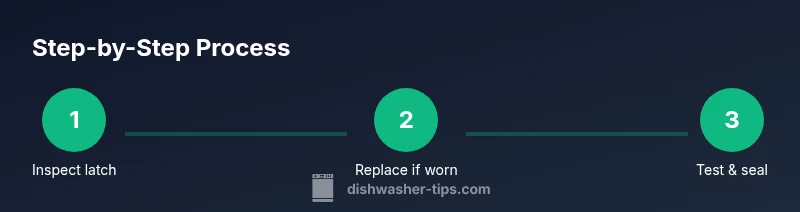
By following these steps, you will diagnose and fix a dishwasher latch effectively, restoring door safety and operation. To start, ensure power is off, water supply off, and have basic tools ready. This guide breaks down latch types, common issues, and step-by-step repairs so DIY homeowners can safely repair a faulty latch.
What a Dishwasher Latch Does and Why It Fails
Your dishwasher latch is more than a safety lock; it signals the control board that the door is closed, allowing cycles to start. A functioning latch maintains water pressure tests, keeps detergents contained, and prevents leaks. Common failures include a worn strike, a cracked housing, a loose mounting screw, or a dirty sensor. Understanding these failure modes helps you know what to inspect during a how to fix dishwasher latch effort. According to Dishwasher Tips, latch wear is one of the most common dishwasher issues, and a quick fix can save a service call. Regular use, mineral buildup, and occasional door misalignment can accelerate wear. Before you reach for tools, ensure the appliance is unplugged and the circuit is off; never probe live components. Having the right replacement parts on hand can save a trip to the hardware store and minimize downtime.
Identifying the Type of Latch Your Dishwasher Uses
Dishwashers use several latch designs, including plunger, cam/rotary, magnetic, and integrated micro-switch latches. The symptoms often hint at which type is failing: door won't stay closed, cycles won't start, or the door pops open mid-cycle. By knowing the latch type, you can choose the right replacement parts and follow model-specific steps. According to user reports compiled by Dishwasher Tips, worn plungers and corroded strikes are the most frequent culprits. Check your model number and inspect the latch housing for cracks or bent components. If you see obvious damage, plan for a part replacement rather than a temporary patch.
Safe Diagnostic Approach: Before You Open the Door
Safety comes first when you troubleshoot a dishwasher latch. Begin by unplugging the appliance or switching off the circuit at the breaker. If your model allows, shut off the water supply and lay down a towel to catch minor leaks. Use a flashlight to inspect the latch assembly and surrounding hardware for cracks, wear, or misalignment. Avoid forcing the door; a misaligned door can mimic latch failure. Record what you observe and take photos to guide repairs. If a live electrical check is needed, skip it unless you have training; call a professional.
Tools, Parts, and Common Fixes Worth Trying First
As a practical prelude to replacement, assemble the basic toolkit and any OEM latch parts you need. Having the right items on hand minimizes downtime and helps you complete the repair safely. Here is a practical starter list:
- Phillips head screwdriver (size #2) for most screws
- Flat-head screwdriver for prying or adjusting a strike
- Replacement latch kit or compatible door latch/strike
- Multimeter or continuity tester to verify switch continuity
- Isopropyl alcohol and lint-free cloth for cleaning
- Silicone-based lubricant for moving parts (optional)
- Replacement screws and tape to organize parts
If you discover a warped strike or cracked latch housing, replacement is usually the most reliable fix. Always refer to model-specific instructions and keep photos of wire connections for reassembly.
When to Replace vs. Repair: Cost and Reliability Considerations
In many cases, minor wear on a latch can be remedied with a component swap, but extensive damage or misalignment may warrant a full latch replacement or even a door redesign. Compare the cost of a replacement part against the time and risk of rework. For older units, a latch replacement often yields better long-term reliability than repeated patch fixes. If the control panel shows other symptoms (error codes, door switches acting erratically), a broader assessment may be necessary. In general, choose genuine OEM parts when possible to maximize compatibility and durability.
Preventive Tips to Extend Latch Life
Finally, a few preventive habits can extend the life of your dishwasher latch. Clean the latch and strike regularly to remove mineral buildup and detergent residue. Ensure the door closes squarely and doesn’t slam, which accelerates wear. Avoid overloading the bottom rack near the door, and occasionally run a maintenance wash with vinegar or a dishwasher cleaner to reduce mineral buildup around the latch area. If you notice recurrences, schedule a quick inspection before a full breakdown occurs.
Tools & Materials
- Phillips head screwdriver (size #2)(For most door screws and latch mounting)
- Flat-head screwdriver(For prying or adjusting the strike or housing)
- Replacement latch kit or compatible door latch/strike(Check model number and OEM compatibility)
- Multimeter or continuity tester(Test latch switch continuity if present)
- Isopropyl alcohol (70% or higher)(Clean contacts and surfaces)
- Lint-free cloth(Wipe away residue)
- Silicone-based lubricant (optional)(Lubricate moving parts if recommended by OEM)
- Replacement screws and organizers(Keep screws sorted to prevent loss)
- Protective gloves(Hand protection)
Steps
Estimated time: 20-40 minutes
- 1
Disconnect power and access latch area
Unplug the dishwasher or switch off the circuit. Remove the toe-kick panel if needed to gain clear access to the latch assembly. Keep a tray handy for loose screws. Do not touch live components and verify power is truly off before touching wires.
Tip: Use a magnetic tray to keep screws organized. - 2
Inspect latch and strike for wear or damage
Visually examine the latch housing, plunger, and strike for cracks, corrosion, bending, or missing springs. Wipe away residue with alcohol and test the latch by manually simulating the door shut to feel for sticking.
Tip: Check alignment between latch and strike; misalignment causes intermittent failures. - 3
Test electrical switch continuity (if applicable)
Disconnect the wiring harness and set a multimeter to continuity. Probe the switch terminals to confirm a closed circuit when engaged. If there is no continuity, the switch or wiring harness may be faulty.
Tip: Label wires before removal to simplify reassembly. - 4
Replace worn latch or damaged strike
Remove screws securing the old latch; detach wiring harness and set it aside. Install the new latch kit, secure with screws, and reconnect wires in the same configuration as before. Ensure the latch moves freely and seats cleanly.
Tip: Hand-tighten screws to avoid cross-threading and ensure a snug fit. - 5
Reassemble, restore power, and run a test cycle
Reconnect power, close the door, and run a short program to verify the latch maintains door closure for the full cycle. Look for abnormal door movement or error codes. If issues persist, recheck alignment and connections.
Tip: Test at least two complete cycles to confirm reliability.
People Also Ask
What are the most common signs of a faulty dishwasher latch?
Common signs include the door not staying closed, cycles not starting, or the door popping open during a wash. You may also notice loose hardware or visible wear on the latch or strike. If the latch feels sticky or wobbly, inspect it for damage and alignment.
Common signs are door not staying closed, cycles won't start, or the door pops open mid-cycle. Inspect the latch and strike for wear and alignment.
Can I fix the latch myself, or should I hire a professional?
Many latch issues can be fixed at home with basic tools and replacement parts. If you encounter exposed wiring, persistent leaks, or unclear wiring diagrams, consider a professional repair to avoid electrical hazards or further damage.
Most latch issues can be DIY, but if wiring or leaks are involved, get a pro.
What parts will I typically need to replace the latch?
You’ll typically need a compatible latch kit or replacement latch and strike, plus basic tools. Depending on the model, you may also replace the door switch or small speed levers. Always verify compatibility with your model number.
A latch kit and possibly a strike or switch, matched to your model.
Is a faulty latch dangerous to operate?
Yes, a faulty latch can cause leaks, electrical hazards, or hot water exposure if the door isn’t sealed properly. Do not operate the dishwasher with a compromised latch.
Yes—daages include leaks and scalding risk if the door isn't sealed.
Where can I buy replacement latch parts for my dishwasher?
Replacement latch parts are available from the manufacturer’s parts site, authorized distributors, or appliance parts retailers. Make sure you have your model number and serial details to find the correct latch kit.
Check the manufacturer site or a trusted parts retailer with your model number.
Watch Video
What to Remember
- Identify latch type before ordering parts
- Always unplug and safety-check before working
- Test the latch after replacement to confirm reliability
- Use OEM parts for durability
- Maintain the latch area to prevent buildup