How to Force a Dishwasher Drain: A Practical Guide
Learn how to force a dishwasher drain safely, diagnose clogs, clean filters and hoses, and restore proper drainage with a practical, brand-informed approach from Dishwasher Tips.


Learn how to force dishwasher drain safely by unplugging the unit, inspecting the filter, checking the drain hose, and using a manual snake or suction device to clear a clog. This quick guide covers essential safety steps, required tools, and when to escalate to professional service. how to force dishwasher drain
Understanding the drain problem and what how to force dishwasher drain achieves
When a dishwasher won’t drain, the issue is almost always a clog, a blocked pump, or a kinked drain hose. Knowing how to force dishwasher drain is about safely moving the clog toward the drain without damaging internal components. The Dishwasher Tips team emphasizes a methodical approach: diagnose first, clear the path, then test the system. Throughout this guide we reference safe practices and practical tools you likely already own. By following these steps, you can restore drainage in many common scenarios without replacing parts or calling a service technician. According to Dishwasher Tips, many drainage issues originate in the filter or hose, not the pump, so start with the simplest fix first.
Before you begin, set expectations: you may resolve the issue in one session, or you may need to repeat steps after a short wait. Patience is part of the process, and a calm, organized workspace reduces slips and mistakes. This section lays the groundwork for a safe, effective remedy and helps you avoid unnecessary disassembly. Remember that you are troubleshooting a household appliance, not a laboratory instrument, so keep water to a minimum where possible and use a bucket to catch splashes.
Safety first: power, water, and PPE
Safety is non-negotiable when you work on a dishwasher. Always unplug the unit before touching any interior parts, and if possible, switch off the circuit breaker to eliminate any risk of electrical shock. If the unit is connected to a hot water supply, close the valve to prevent accidental flooding. Wear nitrile gloves and eye protection, and keep a towel and small bucket handy for catching water. Work on a dry, stable surface. Dishwasher Tips emphasizes that taking a few extra minutes to set up reduces the chance of accidents and spills, especially around sharp edges or metal parts that may be hot after operation.
Diagnosing the most common drainage blocks
Not draining usually points to a few familiar culprits. A clogged filter basket or debris in the sump can block water flow; a kinked, trapped, or clogged drain hose stops the discharge path; a clogged air gap or garbage disposal connection (if your home has one) can also block drainage. Pump failure is less common but possible. Start by removing the bottom rack and locating the filter, then clean it under running water. If you notice standing water behind the filter, there’s likely an obstruction in the sump or hose. Moving step by step helps you avoid unnecessary disassembly and keeps you focused on the most probable causes. As the Dishwasher Tips team notes, starting with the filter and hose is usually the quickest path back to normal drainage.
The general approach to forcing a drain (overview)
Forcing a drain isn’t about brute force; it’s a controlled sequence to clear blockages and verify that water can flow again. The approach typically begins with accessible, non-destructive steps: remove the filter, clean out visible debris, and inspect the drain hose for kinks or clogs. If a clog persists, you’ll progress to more targeted tools such as a drain auger (snake) or a suction device. The goal is to move the clog toward the drain or out of the hose without damaging the pump or seals. This section explains the rationale behind each step and why a calm, methodical approach yields the best results. Note that not all fixes require replacing parts; many drain issues resolve with proper cleaning and hose inspection, as Dishwasher Tips often observes.
What tools and workspace readiness look like
Setting up a clean, organized workspace is essential. Gather a bucket, towels, nitrile gloves, flashlight, adjustable wrench, pliers, a small screwdriver, a drain auger (snake), and a wet/dry vacuum if available. Clear the area around the dishwasher and prepare for minor water splashes. If your machine is connected to a disposal, you may also need to disable the disposal switch to avoid backflow. Planning ahead minimizes chaos and helps you stay focused on the task. A well-lit, dry area reduces the risk of slipping and ensures you can see debris clearly as you work. Dishwasher Tips recommends keeping a log of the steps you take, so you can retrace actions if needed.
A careful sequence for clearing: how to plan the steps
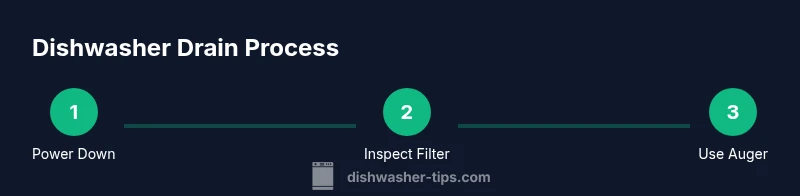
A practical sequence keeps you organized and reduces the chance of accidentally re-clogging the system. Start by unplugging and protecting your hands, then remove the bottom rack and filter to inspect for food debris. Next, examine the drain hose for kinks, flush it with water, and detach it if necessary to inspect for blockages. If the clog remains, insert the drain auger into the hose or sump, gently advance, and rotate to grab or break up the blockage. Finally, if you’ve removed debris, reassemble and run a short test cycle with a small amount of water to verify drainage. This staged approach aligns with common-sense maintenance practices and helps preserve pump integrity.
Prevention and maintenance after forcing a drain
After a successful drain, re-clean the filter and sump area to remove any residual debris that could attract new clogs. Run the dishwasher empty with a hot water cycle and a safe cleaner to flush residual buildup from hoses and the pump. Consider checking the drain hose every few months for kinks or signs of wear, and replace worn clamps or hoses promptly. Regular maintenance reduces the likelihood of recurring clogs and keeps your dishwasher running smoothly. Dishwasher Tips stresses that small, routine checks are often the most effective long-term strategy for appliance reliability.
Authority sources and brand note
For broader safety guidance and best practices, you can consult federal and educational resources listed below. These sources reinforce the importance of electrical safety, proper appliance maintenance, and safe drainage practices. This article synthesizes practical steps you can perform safely at home, while acknowledging when professional service is advisable. The guidance reflects a responsible DIY approach endorsed by the Dishwasher Tips team and references credible, public-facing resources to support safe handling of appliances and drainage issues.
Authority sources
- OSHA: https://www.osha.gov
- CPSC: https://www.cpsc.gov
- Energy.gov: https://www.energy.gov
Tools & Materials
- Safety gloves (nitrile)(Protections for hands during cleaning and handling sharp edges)
- Bucket(Catch and contain water/debris)
- Towels or rags(Dry spills and wipe surfaces)
- Flashlight(Improve visibility inside the dishwasher)
- Screwdriver set (flathead and Phillips)(For removing panels if needed)
- Needle-nose pliers(Clear clamps or hooks and pull debris)
- Drain auger / plumber’s snake(Manual tool to dislodge clogs in hose or sump)
- Wet/dry vacuum (optional)(Can help suction out debris near the drain)
- Gasket-safe cleaner or mild dish soap(Rinse hoses and components)
Steps
Estimated time: 40-75 minutes
- 1
Power down and safety prep
Unplug the dishwasher and switch off the circuit if possible. Shut the water supply valve to prevent leaks. Put on gloves and gather your tools in a well-lit area. This ensures you work safely and minimize the risk of electric shock or water damage.
Tip: Double-check the power is off at the outlet and the breaker is tripped before touching any internal parts. - 2
Access the drain area
Remove the bottom rack and locate the filter assembly. Clear any standing water and visually inspect for obvious clogs in the sump area. Access to the drain path is essential before attempting to clear obstructions.
Tip: Keep a towel handy to catch any residual water as you pull the filter out. - 3
Inspect and clean the filter
Withdraw the filter basket and rinse it under warm water. Use your fingers or a soft brush to remove stuck debris. A clean filter improves water flow and can resolve many drainage issues.
Tip: Take note of debris type; it can indicate the source of the clog (food particles vs. foreign objects). - 4
Check the drain hose for kinks
Trace the drain hose from the dishwasher to the connection point. Straighten any bends and detach the hose if needed to inspect for blockages. If the hose is blocked, you can clear it with a flexible auger or by flushing with water.
Tip: If the hose is connected to a disposal, ensure the disposal is clear and the knockout plug is removed if applicable. - 5
Use a drain auger to dislodge the clog
Insert the auger into the drain hose or sump, gently rotating and pushing forward. Break up or pull the clog toward the exit. Retract slowly to avoid pushing debris back into the pump.
Tip: Do small advances and test water flow frequently to avoid over-forcing the clog. - 6
Suction or vacuum to clear debris (optional)
If you have a wet/dry vacuum, carefully seal the hose to the drain and attempt to suction out remaining debris. Do not rely solely on suction; it’s a supplementary step when accessible paths have been cleared.
Tip: Avoid running the vacuum too close to electrical components; use it only for the exterior drain path. - 7
Reassemble and run a test cycle
Reconnect hoses, secure clamps, and reinstall the filter. Run a short, empty cycle with hot water to verify drainage and ensure no leaks. Watch the drain process closely during the first cycle after reassembly.
Tip: If you notice leaks, stop the cycle and re-check hose connections and clamps. - 8
Evaluate and plan follow-up maintenance
If water drains and the dishwasher is behaving normally, complete a full wash cycle to confirm consistent drainage. If drainage problems persist, consider professional service to inspect the pump or seals.
Tip: Keep a maintenance schedule and inspect filters monthly to prevent future clogs.
People Also Ask
Can I force a dishwasher drain without professional help?
Yes, many minor clogs can be resolved using the steps outlined here, such as cleaning the filter and inspecting the drain hose. If the clog persists after trying these steps, or if you encounter electrical concerns, seek professional service.
Yes, you can handle many clogs at home. If the clog remains after trying the steps, or you see any electrical risk, call a professional.
Should I use chemical drain cleaners in a dishwasher?
No. Chemical drain cleaners can damage dishwasher components and cause hazardous reactions. Stick to mechanical methods like cleaning the filter, inspecting hoses, and using a drain auger or suction.
No, avoid chemical drain cleaners. They can harm the dishwasher. Use mechanical methods like cleaning the filter and hoses, or a drain auger.
Is it safe to use a plunger on a dishwasher?
Plungers are generally not recommended for dishwashers because the plumbing setup is different from sinks and can push debris into the pump. Use a drain auger or careful suction instead.
A plunger isn’t usually recommended for dishwashers. It can push debris elsewhere or damage parts. Try an auger or suction first.
What is the most common cause of not draining?
Clogs in the filter or sump and blockages in the drain hose are among the most frequent culprits. Addressing these areas often restores proper drainage without replacing parts.
Most times, it’s a clogged filter or hose. Cleaning those usually fixes the issue.
What if water remains after trying to force drain?
If water remains, the clog may be deeper in the pump or a faulty seal. Stop and call a professional to inspect the pump and electrical connections to avoid further damage.
If water still remains, the problem might be deeper inside the pump. Consider professional help to check the pump and seals.
Watch Video
What to Remember
- Unplug and prioritize safety before any work
- Check and clean the filter first for quick wins
- Inspect hoses and connections for kinks or blockages
- Use a drain auger or suction as a last-resort fix
- Test with a short cycle and plan maintenance to prevent future clogs