Light flashing on dishwasher: Troubleshoot fast
Discover why the light flashing on dishwasher happens, how to troubleshoot safely, and when to call a pro with practical, step-by-step guidance from Dishwasher Tips.


The most likely causes of light flashing on dishwasher are a faulty door latch/sensor or a control-board glitch. Start with a safe reset: unplug the unit for 60 seconds, plug back in, and run a test cycle. If the light persists, check for error codes and perform a power-cycle; if unresolved, consult the manual or a pro.
Why the light flashing on dishwasher matters
The light flashing on dishwasher is more than a cosmetic annoyance—it signals a fault that can affect performance, safety, and even energy use. According to Dishwasher Tips, inconsistent flashing patterns often point to a door latch or control-board issue, but wiring, sensors, or water inlet problems can also trigger alarms. Recognizing the pattern of the flash (constant, rapid, or pulsing) helps you triage quickly and avoid unnecessary part replacements. For homeowners, diagnosing early means fewer surprises when you need to book service, and DIY prevention tips can extend the life of your appliance. In 2026, the Dishwasher Tips team emphasizes that a disciplined check routine saves time and reduces risk, particularly for electrical work or panel access.
A flashing indicator also serves as a built-in diagnostic tool. By mapping the blink sequence to your model’s manual, you gain clues about what to inspect first. If you’re new to appliance troubleshooting, start with the simplest fixes and work through a logical flow of checks before deciding to replace components. This approach aligns with practical, AI-informed guidance from Dishwasher Tips, which prioritizes safe, incremental steps that homeowners can perform without specialized tools.
Common flashing patterns and what they indicate
Different manufacturers use various light codes, but a few universal patterns repeatedly appear in consumer models. A slow, steady flash often signals a door latch problem or a sensor misread. A rapid, continuous flash can indicate a control board fault or a software glitch that requires reset or firmware refresh. A single, occasional flash may be a minor alert that a cycle didn’t complete due to a water inlet issue or a sensor stall. Throughout this guide, you’ll see how to interpret these patterns and apply a safe, methodical diagnostic flow. Remember: if the pattern becomes erratic or the unit sparks, power down immediately and avoid further handling until you’ve consulted the user manual or a professional.
Safety first: basic checks you can do
Before touching any internal components, unplug the dishwasher and switch off the circuit breaker for your safety. Check external indicators: does the door latch align properly, is the door fully closed, and are the control buttons responding to input? Inspect visible wiring for loose connections or obvious damage. Many issues are resolved by reseating a connector or replacing a disengaged door latch switch. If you notice moisture near electrical components, stop and call a pro. Safety is the top priority, especially when dealing with high-voltage parts in dishwashers.
Electrical and control board considerations
If simple resets don’t fix the flashing, focus on the control electronics: the control board, wiring harness, and touchpad. A firmware glitch can cause the panel to send incorrect signals, prompting a repeated alert sequence. A professional technician can perform a diagnostic test to confirm whether the problem is limited to the control board or involves related sensors and harnesses. While DIY checks like reseating connectors and cleaning corrosion from terminals are possible, avoid invasive probing behind the control panel unless you have the right tools and instructions. Working near live circuits without proper precautions can cause electric shock or fire hazards.
When to call a professional and what to expect
Persistent flashing after basic resets and inspection indicates a more serious fault. If you cannot identify a simple cause or if the fix requires panel removal or soldered repairs, it’s time to call a professional. A trained technician will verify power supply integrity, inspect the door latch sensor, test the wiring harness, and determine whether the control board or a sensor needs replacement. Expect the technician to run fault codes, perform a safety check, and provide a written estimate for parts and labor. Early professional input can prevent further damage and help you choose between repair and replacement options.
Maintenance tips to prevent future light flashes
Establish a simple maintenance routine to minimize flashing lights and related issues. Clean the door seal and latch area monthly to prevent debris from interfering with sensors. Run a dedicated maintenance cycle with a dishwasher-safe cleaner to remove mineral buildup that can affect sensors and flow paths. Check water supply lines for kinks or leaks, and ensure the drain hose is clear. Finally, keep your model’s firmware up to date if updates are available from the manufacturer. These proactive steps help maintain performance and reduce the likelihood of future faults that trigger a light sequence.
Steps
Estimated time: 45-75 minutes
- 1
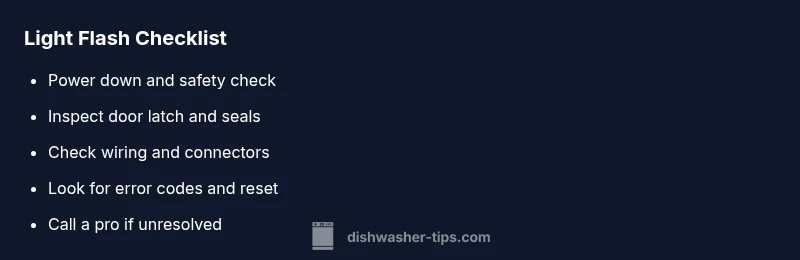
Power down and safety check
Unplug the dishwasher and switch off the circuit breaker. Confirm the area is dry and free of standing water. This prevents shock and protects sensitive electronics while you inspect the exterior and visible connections.
Tip: Always start from a safe, powered-down state before touching any internal parts. - 2
Inspect the door latch and seals
Open the door fully and inspect the latch and strike plate for wear or misalignment. Ensure the door closes firmly and the latch engages. If you see cracks, corrosion, or a loose hinge, replace the latch.
Tip: A worn latch is a common cause of false fault signals. - 3
Check wiring and connectors
Carefully remove the access panels as per the user manual and inspect for loose, frayed, or discolored wires. Reseat any loose connectors and look for signs of heat damage. Do not force wires through tight spaces.
Tip: Loose connectors can intermittently trigger failure indicators. - 4
Reset and test
Reconnect power, reset the control panel, and run a short wash cycle to observe the LED pattern. Note if the flashing repeats or changes with each cycle.
Tip: Document the pattern for reference when checking the manual or contacting support. - 5
Read error codes and consult the manual
If the appliance shows a fault code, look up its meaning in the model’s manual. Some manufacturers offer online code databases or apps.
Tip: Error codes help narrow the cause quickly and accurately. - 6
Call a professional if unresolved
If the light persists after these steps, a professional diagnosis is recommended to avoid further damage to electronics or wiring.
Tip: A pro can safely diagnose and replace a faulty board or sensor.
Diagnosis: Light flashing on dishwasher
Possible Causes
- highDoor latch/door switch fault causing intermittent power to the control panel
- highControl board fault or firmware glitch triggering incorrect signals
- mediumWater inlet valve or sensor issue leading to incomplete cycles
- lowLoose wiring or corrosion in connectors
Fixes
- easyInspect door latch and door switch; reseat connectors and replace if visibly damaged
- easyPower cycle the unit by unplugging for 60 seconds, then plugging back in and running a test cycle
- mediumCheck control panel for error codes and perform soft reset or firmware update if available
- hardConsult a professional for control board or wiring issues and possible replacement
People Also Ask
What does a flashing light on my dishwasher mean?
A flashing indicator usually signals a fault detected by the control system. Start with a reset, then inspect the door latch and look for error codes in the manual. If the light persists after basic checks, escalate to professional service.
A flashing light means the dishwasher detected a fault. Start with a reset and check the latch; if it doesn’t clear, consult the manual or a pro.
Can I fix it myself safely?
For basic checks like door latch inspection, reseating connectors, and power cycling, you can DIY safely if you follow safety guidelines. Avoid opening the control panel or wiring compartments unless you are confident and unplugged from power. If you’re unsure, call a pro.
Yes, for simple checks. If you’re unsure, it’s safer to call a technician.
Is it safe to operate the dishwasher if the light flashes while loading?
If the light flashes during operation, stop the cycle and power down to inspect. Do not ignore warning indicators, as ongoing faults can cause water leaks or electrical hazards.
No, stop and check before continuing. Safety first.
When should I replace the control board?
If diagnostics repeatedly point to a board fault after resets and inspections, replacement may be necessary. A professional can confirm whether repair or replacement is more cost-effective.
If tests keep showing board faults, replacement is often the best option.
Will a leak trigger a flashing light?
Leaks themselves don’t usually trigger a light, but moisture near sensors or electrical components can cause false readings. Fix leaks first to prevent further sensor issues.
Leaks aren’t the direct cause of a flash, but they can create sensor problems.
Watch Video
What to Remember
- Start with simple, safe checks before complex repairs
- Power cycle and door latch checks fix most non-critical faults
- Record error codes to accelerate diagnosis
- Seek professional help for electrical or control-board failures