Samsung Dishwasher Code 4C Troubleshooting Guide
Urgent guide for samsung dishwasher code 4c: what it means, quick at-home fixes, diagnostic flow, and step-by-step repairs to get your dishwasher draining again.


Samsung dishwasher code 4C usually signals a drainage fault that prevents the unit from draining properly. The quickest fixes are to check the water supply, clean the filter and sump area, and inspect the drain hose for kinks or blockages. If the code persists, stop operating the unit and contact a certified technician.
What samsung dishwasher code 4c means in practice
When your samsung dishwasher code 4c appears, it generally points to a drainage fault that stops water from evacuating after a cycle. This often leads to standing water and an incomplete wash. The Dishwasher Tips team emphasizes that many 4c issues can be resolved at home with methodical checks rather than immediate part replacement. Recognizing the code helps you triage quickly and decide between a DIY fix and professional service. In the broad landscape of dishwasher error codes, 4c sits squarely in the drainage family, so focus on the drain path first and foremost.
According to Dishwasher Tips, your first step is to verify the basic plumbing and filter condition before moving to more involved repairs. A calm, structured approach reduces risk and prevents accidental damage to electrical components. While this article centers on the samsung dishwasher code 4c, the same principles apply to similar drainage faults across major brands.
Quick checks to perform before you dive in
Before you disassemble major components, do these at-a-glance checks:
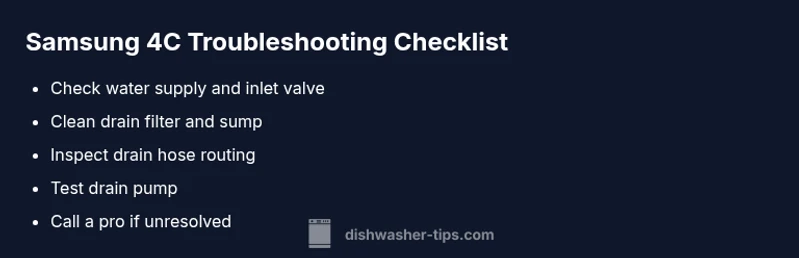
- Ensure the water supply is fully on and the inlet valve is not blocked or stiff.
- Remove the bottom rack and pull out the filter assembly; clear any visible debris and wipe the sump area.
- If your model allows, inspect and gently clean the spray arm and impeller area for lodged food particles.
- Inspect the drain hose for kinks, crimps, or sagging that could trap water; verify it runs upward to prevent backflow.
- Run a brief empty cycle and observe whether water drains within 30–60 seconds after the cycle ends. If water remains, proceed to more thorough checks.
These actions are quick wins that address the most common drainage faults tied to samsung dishwasher code 4c.
Diagnostic flow: symptoms, causes, and fixes
Symptoms to watch for:
- Water remains in the tub after a cycle; error 4C lighting or beep pattern.
- Unusual pump noise or a smell of burning plastic after a drain attempt.
- Visible wet areas on the floor around the unit after cycle completion.
Common causes (ranked by likelihood):
- High likelihood: Clogged drain filter or sump debris, which blocks water flow. Fix: clean filter and sump thoroughly.
- Medium likelihood: Drain hose kink or blockage, or improper hose routing that traps water. Fix: straighten and clear the hose, ensure proper routing.
- Low likelihood: Drain pump failure or relay/control board fault. Fix: pump test/ replacement or board diagnostics by a pro.
Practical fixes include a full drain-path inspection and confirming the pump and hose are functioning correctly. If the code remains after addressing clogs and kinks, escalate to a professional for a pump or control-board diagnosis.
Step-by-step fix for the most common cause: clogged drain or filter
Step 1: Power down and prepare the area. Unplug the unit and shut off the water supply to prevent leaks. Step 2: Remove the lower rack, take out the filter assembly, and access the sump. Step 3: Clean the drain filter, impeller housing, and surrounding areas with warm, soapy water until no debris remains. Step 4: Rinse parts, reassemble, and inspect the sump for any remaining obstructions. Step 5: Reconnect the power, run an empty cycle, and verify that drainage occurs promptly. If drainage still fails, consult Step 4 of the diagnostic flow for the next best moves. Tip: Use a soft brush to dislodge stubborn gunk; avoid metal tools that can scratch components. Cost note: a drain-pump replacement can range from roughly $100 to $350, depending on model and labor.
This section focuses on the most common root — a clogged drain path — and provides a safe, cost-conscious path to resolution. If you’re not comfortable handling electrical components or inspecting the pump assembly, skip ahead to the professional-repair section to avoid risk.
Other potential causes and fixes
- Drain pump or relay failure: If cleaning the filter and hose doesn’t resolve the code, the pump may be faulty. Fix: confirm electrical continuity and test the pump; replacement may be required (cost varies by model).
- Control board or sensor fault: Infrequent but possible, a software reset or board fault can trigger 4C-like codes. Fix: perform a factory reset if supported, or have a technician diagnose the board logic.
- Inlet or water-supply issues: A partially blocked inlet valve can mimic drainage issues. Fix: remove mineral buildup and test inlet valve operation; replacement may be needed if stuck.
- Door latch or seal problems: Some models re-trigger faults if the door isn’t sealing correctly, affecting cycle completion. Fix: inspect latch alignment and gasket integrity; replace if worn.
When to call a professional: If you’ve completed the at-home checks and the code persists after a thorough cleaning, if you hear unusual pump noises, or if you observe leaks during testing, a licensed technician should diagnose the drain pump, relay, or control-board status. Professional repair fees vary and often include parts and labor estimates.
Safety tips and when to call a professional
- Always unplug the dishwasher and shut off the water supply before starting any inspection or disassembly.
- Avoid flooding the area with running water; have towels or a shallow pan ready.
- Do not replace electrical components unless you’re trained; incorrect wiring can pose shock risk and void warranties.
- If you’re uncomfortable with disassembly or electrical testing, it is safer to call a professional.
The most reliable route for stubborn 4C issues is to involve a pro when basic cleaning and hose checks do not restore drainage.
Maintenance tips to prevent 4C in the future
- Clean the filter and sump monthly or after every heavy-use cycle to prevent debris buildup.
- Inspect hoses for kinks and ensure proper routing to avoid trap formation.
- Use maintenance-friendly detergents and avoid crushing detergents that leave residue.
- Schedule a yearly service check to verify drain pump integrity and control-board health.
- Keep the surrounding area dry and inspect the drain hose connection points for leaks.
By implementing these practices, you’ll reduce the likelihood of 4C reoccurring and maintain optimal drainage performance.
Key takeaways (for quick reference)
- Drainage faults are the most common trigger for the 4C code in Samsung dishwashers.
- Start with simple at-home fixes: clean the filter, inspect the drain hose, and verify water supply.
- If the code persists after these steps, escalation to a professional is recommended due to potential pump or board issues.
- Regular maintenance greatly lowers the chance of future 4C errors and extends the life of the unit.
Steps
Estimated time: 60-120 minutes
- 1
Power down and prepare
Unplug the dishwasher and shut off the water supply to prevent leaks. This is a safety-first step before any inspection.
Tip: Label disconnected hoses to help reassembly later. - 2
Access the drain area
Remove the lower rack, locate and remove the filter assembly, and gain access to the sump and drain path.
Tip: Take photos as you disassemble to guide reassembly. - 3
Clean the filter and sump
Rinse the filter, clean the sump housing, and remove all debris that can impede drainage.
Tip: Use warm, soapy water and a soft brush; avoid sharp tools. - 4
Inspect the drain hose
Check for kinks, crimps, or blockages; ensure the hose has a smooth path to avoid backflow.
Tip: If you find a kink, straighten and run water through the hose to confirm flow. - 5
Test a cycle
Reconnect everything, plug in, and run an empty cycle to test drainage before loading dishes.
Tip: Keep towels handy for any residual water. - 6
Assess the drain pump
If water remains after the test, the drain pump or relay may be faulty and require replacement.
Tip: Budget for pump replacement: typical range $100–$350 depending on model and labor.
Diagnosis: Dishwasher displays code 4C and fails to drain
Possible Causes
- highClogged drain filter or debris in sump
- mediumDrain hose kink, blockage, or improper routing
- lowDrain pump or relay fault
Fixes
- easyClean the drain filter and sump area
- easyInspect and straighten drain hose; remove blockages
- mediumTest drain pump/relay and replace if needed
People Also Ask
What does samsung dishwasher code 4c mean?
Code 4C typically indicates a drainage fault that prevents draining after a cycle. Start with filter, hose, and pump checks before considering professional repair.
4C usually means there's a drainage fault. Start by cleaning the filter and checking the drain hose, then test the pump if needed.
Can I fix code 4c myself?
Many 4C issues can be addressed at home by cleaning the filter and drain path. If the code remains after basic checks, you should consult a technician for pump or board diagnostics.
Yes, you can try the basic drain-cleaning steps first; if it stays, call a professional.
How much does it cost to repair samsung 4c?
Repair costs vary by cause. Draining-pump replacement typically ranges from about $100 to $350, plus labor, depending on model and region.
Pump replacement can be around one hundred to three hundred fifty dollars, depending on parts and labor.
Should I keep running the dishwasher if 4c appears again?
No. Repeated cycles with 4C may damage components or cause leaks. Stop, diagnose, and fix the drainage issue before using again.
No—if it reappears, stop and troubleshoot before running another cycle.
When should I call a professional?
If you can’t locate the clog, hear unusual pump sounds, or the code returns after cleaning, contact a licensed technician for definitive testing of the pump and control board.
If you’ve tried the basics and it still won’t drain or you hear odd noises, call a pro.
Can a bad door latch cause 4c?
A faulty door latch can trigger cycle interruptions and error codes in some models. Inspect the door seal and latch alignment and replace if worn.
Yes, a bad latch can trigger errors in some units; check and replace if needed.
Watch Video
What to Remember
- Start with quick drainage checks.
- Clogs are the leading cause of 4C failures.
- If the code persists, don’t delay professional help.
- Regular maintenance prevents future 4C issues.