Why Has Your Dishwasher Not Drained? A Practical Troubleshooting Guide
A practical, urgent troubleshooting guide to diagnose and fix a dishwasher that won't drain. Learn common causes, safe checks, and step-by-step fixes from Dishwasher Tips.


If your dishwasher won't drain, start with the simplest fixes: clean the filter, inspect the drain hose for kinks, and run a test cycle. If drainage remains blocked, check the drain pump and wiring, then consider professional service. This quick plan helps you isolate the issue fast. Document any steps you take in case you need repairs.
Why Has Your Dishwasher Not Drained? Common Causes and What to Check
According to Dishwasher Tips, drainage issues are one of the most common problems homeowners face after a cycle. If you're asking verbatim why has dishwasher not drained, the answer often points to simple clogs or misrouted hoses rather than a failed pump. The usual suspects are a blocked filter, a kinked or clogged drain hose, and a failing drain pump. A note on suds: using too much detergent or the wrong type can foam and block drainage as well. Before diving into parts, power off the machine and disconnect it from the electrical supply to avoid shock. Start by inspecting the obvious entry points: the filter at the bottom of the tub, the sump area around the motor, and the connection where the drain hose ties into the disposal or drain line. With a calm, methodical approach, you can narrow the issue quickly and determine whether you can fix it yourself or need professional help. This mindset, echoed by the Dishwasher Tips team, reduces wasted time and money.
Top Causes to Check First
In most homes, the drain problem stems from three main sources: a clogged filter or debris in the sump, a drain hose that is bent, kinked, or blocked, and a failing drain pump. Less common but real culprits include an air gap that isn’t properly connected and an overabundance of suds from incorrect detergent. Start by removing the kickplate or bottom access panel if you’re comfortable; this exposes the filter housing and allows you to check for built-up gunk around the impellers and seals. If the filter looks clean but water still pools, move to the drain hose and pump areas. The goal is to confirm whether the water can physically exit the tub and reach the drain line. By analyzing the path from the tub to the disposal or drain system, you’ll know which component to target next. Dishwasher Tips emphasizes a careful, stepwise approach to avoid unnecessary part replacements.
Safe, Stepwise Inspections You Can Do Today
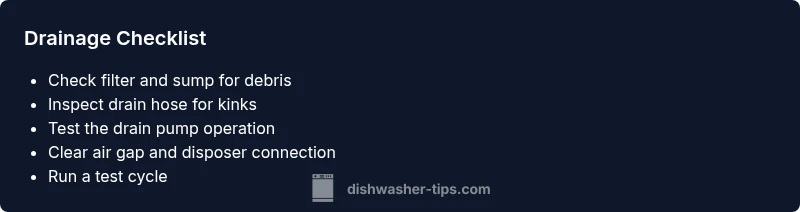
Begin with non-destructive checks and basic maintenance before considering parts replacement. First, unplug the unit and turn off the water supply. Remove the lower cover and locate the filter and sump. Clean any visible debris from the filter screen and around the pump area. Rinse the filter under running water and reassemble. Next, inspect the drain hose for kinks or obstructions and ensure it is securely connected to the disposal or drain tee. If you can, detach and clear the hose, then blow gently through it to confirm it’s clear. Finally, inspect the air gap if your setup uses one and verify the discharge line from the pump is uninterrupted. If drainage remains blocked after these checks, the pump itself may be at fault, or a more complex issue exists that requires a professional assessment. Dishwasher Tips recommends documenting each step to help any technician diagnose the problem faster.
Prevention Tips to Avoid Future Drainage Issues
Regular maintenance is the best defense against repeated drainage problems. Clean the filter every cycle or two, especially after cooking with fibrous foods. Periodically check the drain hose for wear, kinks, or loose clamps, and replace hose or clamps as needed. Use the recommended detergent amount and avoid high-foaming detergents that create suds, which can back up the drain. If you notice slow draining—even if it works now—perform a quick maintenance cycle weekly or monthly to keep the pump, hose, and filter clear. Based on Dishwasher Tips research, these proactive steps dramatically reduce the frequency of drainage problems and extend the life of your appliance.
Steps
Estimated time: 60-90 minutes
- 1
Power down and safety first
Unplug the dishwasher and shut off the water supply. Remove the kick panel if accessible to inspect for obvious water leaks or loose connections. This step protects you from electric shock and prevents accidental startup during inspection.
Tip: Label any wires or connectors before removing panels so you can reassemble correctly. - 2
Inspect and clean the filter
Urlocate the filter at the bottom of the tub. Remove and rinse it under warm running water. Use a soft brush to remove stubborn debris from the screen and seals around the filter housing.
Tip: A dirty filter is the leading cause of poor draining; cleaning it alone can fix many cases. - 3
Check the drain hose path
Trace the drain hose from the tub to the disposal or drain tee. Look for kinks, crimps, or clogs in the hose. If accessible, detach the hose and flush it with water to clear obstructions.
Tip: Do not bend or crush the hose severely when reinstalling. - 4
Inspect the air gap and disposal connection
If your setup includes an air gap, ensure it’s clear and connected properly. For disposals, confirm the knockout plug is removed and that the hose is firmly connected.
Tip: A blocked air gap can completely prevent drainage even if other components are fine. - 5
Test the pump and wiring
With the filters clean and hoses clear, run a short drain test. Listen for the pump motor running; if you don’t hear it or notice burning smells, the pump may need replacement or professional testing.
Tip: Electrical testing should be done only if you’re comfortable; otherwise, call a pro. - 6
Run a final cycle and observe
Run a complete wash cycle with clean water to verify drainage. Watch the pump flow and ensure water exits through the drain hose without backflow.
Tip: If it still won’t drain, stop and call a licensed technician rather than forcing parts.
Diagnosis: Dishwasher won't drain after a cycle
Possible Causes
- highClogged filter or debris in the sump
- highKinked, clogged, or disconnected drain hose
- mediumFaulty drain pump or motor failure
- lowExcess suds from improper detergent
Fixes
- easyClean/replace the filter and remove debris from the sump
- easyStraighten, clear, or replace the drain hose and reconnect securely
- mediumTest the drain pump operation and replace the pump if it fails
- easyUse the correct detergent and run a rinse cycle to clear suds
People Also Ask
Why won't my dishwasher drain after a cycle?
Most commonly it’s a clogged filter or drain hose, or a failing drain pump. Start with the filter, then inspect the hose for kinks and obstructions. If drainage still fails, test the pump or call a professional.
Most drainage issues start with a clog or a kinked hose. Check the filter first, then the hose, and test the pump if needed.
How do I test the drain pump safely?
Unplug the unit and access the pump. Check for continuity with a multimeter if you’re comfortable. If there’s no continuity or the impeller is jammed, the pump likely needs replacement.
Test the pump with a meter; if you’re unsure, a professional can confirm. Replacing a pump is a common repair.
Can a dishwasher not draining be caused by suds?
Yes. Excess suds from the wrong detergent can overload the pump and prevent proper drainage. Use the recommended detergent and run a rinse cycle to clear suds.
Too many suds can block drainage. Switch to the right detergent and run a rinse.
Is it safe to fix electrical components myself?
Only if you’re trained and comfortable with electrical work. Always unplug the unit and, when in doubt, hire a licensed technician to avoid shock or fire hazards.
Electrical repairs can be dangerous. If unsure, call a pro.
What if the disposal connection is the problem?
If your dishwasher drains into a disposal, ensure the knockout plug is removed and that the hose is securely connected. A blocked disposal can back up into the dishwasher.
A blocked disposal can back up drainage. Check the connection and ensure the plug is removed.
Watch Video
What to Remember
- Start with easy checks to identify simple causes.
- Clean the filter and drain hose early in the process.
- Test the pump before replacing parts.
- Use the correct detergent to minimize suds and drain issues.