Most Common Dishwasher Leaks: Quick Diagnosis and Fixes
Diagnose and fix the most common dishwasher leaks with a practical, step-by-step guide. Learn safe checks, fixes, and maintenance to prevent future leaks.


Most common dishwasher leaks are caused by a worn door gasket, loose drain hose, or cracked tub. To stop a leak quickly, start with the easiest checks: inspect the door seal for cracks and debris, tighten or replace the drain hose if kinked, and run a short cycle to confirm. If leaks persist, schedule professional service.
What are the most common dishwasher leaks and why they happen
Water leaks around a dishwasher cause immediate damage to floors and cabinets. Understanding the most common dishwasher leaks helps you react quickly and prevent bigger problems. According to Dishwasher Tips, many leaks trace back to a handful of sources that wear out with time: the door gasket, the drain hose, and the tub itself. These parts experience regular pressure, heat, and exposure to detergents, which can degrade seals or create tiny cracks. You may notice a fine mist or a damp area along the lower toe-kick after a cycle, or you might see a puddle forming before the machine finishes. Recognizing the symptoms early reduces water damage risk and keeps electrical components safe. Another frequent culprit is improper installation, such as a misrouted drain hose or an unlevel machine, which creates points where water flows in the wrong directions. Finally, poor maintenance—like skipping filter cleaning—allows debris to clog pathways and direct water toward seals. By starting with the most common sources and following a calm, methodical approach, you can determine if you can fix it yourself or if you need professional help.
Common leak sources explained
Leak sources in dishwashers cluster around a few failure points that wear with time. The door gasket seals water as the door closes; if it’s cracked, stretched, or dirty, water can seep around the edge during cycles. The drain hose and its clamps are another frequent culprit; a loose or kinked hose or an improperly routed hose can spill water where it shouldn’t. The dishwasher tub itself can crack over years of heat exposure or from impact during loading. Clogged filters or a blocked pump also force water to back up and find unintended exits. Finally, installation issues—like an unlevel machine or an incorrect inlet valve position—can channel water toward the front panel or base.
Dishwasher Tips analysis shows that most leaks originate from these core parts, making targeted inspection practical for homeowners. If you find one issue, you often fix multiple symptoms with a single repair, such as replacing a worn gasket and securing a loose drain hose together.
Quick checks you can do safely
Before you dive into disassembly, perform safe, quick checks to narrow down the cause. Always unplug the unit and, if possible, turn off the water supply before touching any components. Inspect the door gasket for visible cracks, warping, or build-up of soap residue, and wipe it clean. Look for loose clamps on the drain hose and listen for dripping sounds during a test cycle. Check the spray arms and filters for debris that could redirect water flow. Ensure the dishwasher is level by placing a spirit level on the door when closed; if it tilts, water can pool and leak from the base. If you see water pooling near the front toe-kick, it’s usually a sign of seal or hose issues rather than a CPU fault. These simple checks often stop leaks without tools, but never ignore persistent drips—those require deeper inspection or professional help.
How to monitor and diagnose: visual cues, sound, and water behavior
Leaks often reveal themselves through consistent patterns. A steady stream around the door during cycles points to the gasket; if water appears only after a loud spray or during the drain portion, the drain hose or pump assembly may be involved. Listen for hissing or buzzing—these noises can indicate an obstructed pump or a failing inlet valve. Watch the outlet area for steam or mist, which can indicate a vent issue or a loose connection. If you notice water pooling under the unit after a cycle, you likely have a hose or seal problem rather than an electrical fault. With patience, you can isolate whether the leak is coming from the door, the hose, or the tub by running short, controlled tests with the access panels closed and the dishwasher empty.
The diagnostic flow explained: symptom → diagnosis → solutions
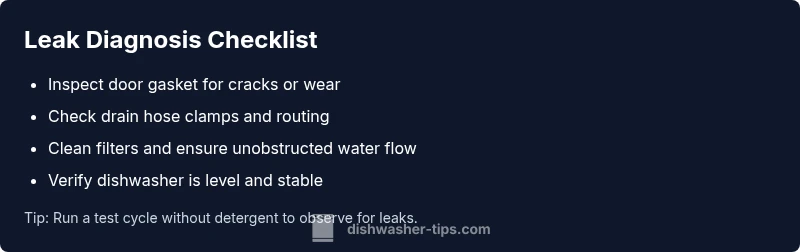
A systematic diagnostic flow helps you map symptoms to probable causes. Start with the simplest checks: inspect the door seal for wear, verify that the drain hose has secure clamps and is not kinked, and confirm the dishwasher is level. If the door gasket shows wear but the hose seems fine, replace the gasket and re-test. If leaks persist, inspect the inlet valve and fill hoses for leaks or cracks and replace as needed. For persistent issues not tied to hoses or seals, consider tub damage or internal pump failure as a more serious problem. Always document findings as you go to guide future maintenance and to communicate clearly with a technician if you need it.
Step-by-step: common fixes you can perform (high-level overview)
- Inspect the door gasket and replace if damaged; ensure proper alignment and a clean surface for a tight seal.
- Tighten or replace the drain hose clamps; ensure the hose is properly routed away from the tub and electrical components.
- Clean filters and check for debris that can alter water flow.
- If the tub shows visible cracks or if the inlet valve leaks, replace components according to the manufacturer’s instructions.
- Re-test with a short cycle to confirm the fix and confirm no new leaks occur.
Safety, maintenance, and prevention tips
Always unplug the machine before opening panels. Use the manufacturer’s service manual for any disassembly, and never apply force where metal or plastic components appear stressed. Maintain a regular cleaning schedule: clear filters every few cycles, wipe the gasket after use, and check hose connections monthly. Ensure the unit is level, as an uneven base invites leaks. Consider placing a shallow tray or mat under the dishwasher to catch minor drips during maintenance, especially if you’re in a rental where floors may be more sensitive to moisture.
Maintenance routine to prevent leaks (seasonal care)
Create a simple maintenance calendar: inspect gaskets and hoses quarterly, clean filters every 50 cycles, and run a test cycle after any repair. Replace worn parts promptly rather than waiting for a full failure. Use a recommended detergent and avoid overloading the dishwasher, which can force water toward seals. In homes with hard water, consider a rinse aid and periodic descaling to reduce mineral buildup around seals and connectors.
When to call a professional and what to expect
If you identify a drain hose rupture, a cracked tub, or repeated leaks after performing basic checks, it’s time to call a professional. A trained technician can pressure-test the plumbing, inspect the tub assembly, and replace major seals or the tub if necessary. To ensure you’re prepared, document model information, the symptoms, and steps you’ve already taken. A professional evaluation often saves time and protects flooring and wiring from water damage.
Steps
Estimated time: 60-90 minutes
- 1
Power down and secure safety
Unplug the dishwasher and turn off the water supply. Disconnect from any power source before opening access panels. This reduces the risk of electric shock during inspection.
Tip: Always start with safety; a dry work area is essential. - 2
Inspect door gasket
Check the gasket for cracks, peeling, or warping. Clean any residue, then reseal the door and run a brief cycle to test for leaks.
Tip: Wipe the gasket surface with a damp cloth to reveal cracks you might otherwise miss. - 3
Check drain hose and clamps
Inspect the drain hose for cracks or kinks and verify clamps are tight. Reroute the hose if it crosses into the tub area or sits too low.
Tip: Use the original clamps if available; mismatched clamps can fail under pressure. - 4
Examine water inlet valve and fill hoses
Look for drips around the inlet valve and hoses. If you see moisture or corrosion, replace the valve or hoses as needed.
Tip: Replace washers on quick-connect fittings to prevent slow leaks. - 5
Inspect filters and spray arms
Remove and clean filters; clear any debris from spray arms. A clogged filter can redirect water flow toward seals and create leaks.
Tip: Run a cycle with the filters removed to observe flow patterns. - 6
Run a test cycle
After making adjustments, run a short cycle with no detergent and watch for new leaks. Stop the cycle if leakage is detected.
Tip: Have a towel ready to catch any residual moisture. - 7
Document and plan next steps
Note what you found and what you fixed. If leaks persist, plan for professional evaluation and potential part replacements.
Tip: Include model number and parts you replaced to speed up service.
Diagnosis: Machine shows water pooling around base or along the door during or after cycles
Possible Causes
- highDoor gasket failure or misalignment
- highLoose or damaged drain hose or clamps
- mediumCracked tub or leaking water inlet valve
- lowClogged filter or pump causing backflow
Fixes
- easyInspect and replace the door gasket; realign the door if needed and test with a short cycle
- easyTighten hose clamps, replace an aged drain hose, and confirm proper routing away from the tub
- hardInspect the tub for cracks or replace the tub/valve as recommended by the manufacturer
- easyClean and re-seat filters, test pump operation, and ensure there is no debris causing backflow
People Also Ask
What are the most common signs of a dishwasher leak?
Look for water pooling under the dishwasher, damp cabinets, or a puddle near the unit. Check hoses and gaskets for wear.
Common signs include pooling water and damp cabinets; inspect hoses and gaskets for wear.
Can door gasket leaks be fixed at home?
Yes, often by cleaning or replacing the gasket. Ensure the door seals properly before running a cycle.
You can usually fix door gasket leaks by cleaning or replacing the gasket and resealing the door.
When should I call a professional?
If you see cracks in the tub, persistent leaks after checks, or you smell burning, discontinue use and contact a pro.
If cracks appear or leaks persist after checks, stop using it and call a professional.
How can I prevent leaks in the future?
Regular maintenance: inspect seals, hoses, and filters; ensure dishwasher is level; use correct detergent.
Prevent leaks by maintaining seals and hoses and keeping the unit level.
Is a leak always a serious issue?
Not always; leaks are often simple fixes like seals or hoses, but some leaks may indicate tub damage.
Leaks are often fixable, but some indicate tub damage and require replacement.
Watch Video
What to Remember
- Check door gasket first when leaks occur
- Inspect hoses and clamps for wear or misrouting
- Regularly clean filters to prevent backflow leaks
- If leaks persist, consult a professional sooner rather than later
- Maintain a simple upkeep routine to prevent future leaks