What Causes a Dishwasher to Leak: A Practical Troubleshooting Guide
Learn how to diagnose and fix dishwasher leaks quickly. Identify door gaskets, hoses, and other common culprits with our step-by-step troubleshooting plan for homeowners.


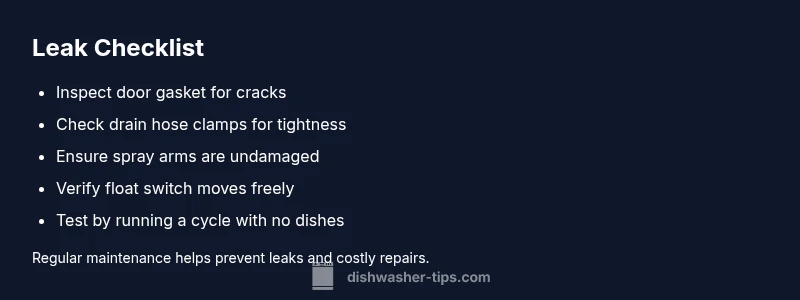
Most dishwasher leaks come from worn rubber door gaskets, loose hoses, or overfilling. Start by inspecting the door seal, spray arms, and drain hose for cracks or gaps, then check the tub and float switch for water overflows. If you spot damage, replace the faulty part and re-test. Take action now.
Understanding the core question: what causes dishwasher to leak
Water leaks around a dishwasher happen when water escapes the intended pathways inside the unit and finds its way to the floor. The phrase "what causes dishwasher to leak" covers several common failure points. According to Dishwasher Tips, the first places to check are the door gasket (the rubber seal around the door), the door latch, and the clamps where hoses connect. Over time, the gasket can dry out, crack, or shift out of position, creating a drip even during normal cycles. A loose or misaligned spray arm can spray water toward the door area or under the tub, and a poorly seated drain hose can leak where it couples to the waste line. Other frequent sources include a faulty inlet valve that lets water flow when the machine is idle, a clogged filter that forces water to back up, or a crack in the tub itself. The good news is that many leaks are signs of parts that are accessible and replaceable without specialized tools.
Most common leak points: gaskets, door seal, and hoses
The most frequent leak points on residential dishwashers are the door gasket, the door seal area, and hose connections. A worn or misaligned door gasket will allow water to escape during the wash or drain cycle. Check for visible cracking, sticky residue, or gaps where the gasket meets the door frame. Loose clamps on the drain hose or supply hoses can also spray water into the base or cabinet. If you notice staining near the bottom of the door or dampness around hose clamps, inspect the hose routing to ensure it isn’t kinked or wrongly positioned. In some cases, the spray arms can become cracked or clogged, redirecting water toward the door seam. Dishwasher Tips analysis shows that these external seals and connections account for a large share of domestic leaks and are typically the easiest fixes.
Less obvious culprits: float switch, spray arms, pump seals, tub cracks
Not all leaks are visible at the door. The float switch controls the water level; if it sticks or malfunctions, the tub can overfill and leak over the door or onto the floor. Damaged pump seals and gummed-up seals around the motor can drip water during discharge. A cracked or warped tub compromises the integrity of the interior reservoir, leading to water escaping through seams or under the frame. Additionally, a damaged or loose inlet valve can drip water into the tub even when the unit appears idle. If you see water pooling during a cycle, inspect these interior components with care, using a flashlight and a clean, dry cloth to catch any moisture you miss at first glance.
How fill level and detergent can contribute to leaks
Overfilling a dishwasher or using too much detergent can cause overflows that appear as leaks around the door. In hard-water areas, mineral buildup can affect seals and gaskets, making them stiff and prone to cracking. Ensure you are loading dishes properly to leave enough room for water to circulate, and use the recommended amount of detergent for your model and water hardness. A clogged filter cap or improper spray pattern can also force water toward seals rather than down the drain. Regular cleaning of the filter assembly and spray arms helps maintain proper water flow and reduces leak risk.
Safety checks and next steps
Before attempting any disassembly, unplug the unit and turn off the water supply to avoid shocks or flooding. Wear gloves and use a suitable container to catch any residual water. If you identify a clearly damaged gasket, hose, or valve, replace it using manufacturer-approved parts. After any fix, run a short cycle with no dishes to observe for leaks. If water continues to escape after checking and replacing obvious wear points, it’s time to call a professional. Leakage can indicate hidden problems that require specialized tools or refrigerant-free pressure tests, especially when electrical components or the inlet valve are involved. Safety first, and don’t risk personal injury or water damage.
Preventive maintenance to stop leaks in the future
Establish a routine to inspect door gaskets and hose connections every few months. Keep the area under the dishwasher clean and dry to spot leaks early. Replace worn gaskets promptly and avoid overfilling. Periodically test the door latch alignment and ensure seals are seated evenly. Using a water-softening system or mineral-cleaning additive can reduce mineral buildup that compromises seals. By keeping up with simple checks and timely replacements, you minimize the chance of a leak turning into a costly repair.
Steps
Estimated time: 60-90 minutes
- 1
Power off and disconnect
Unplug the dishwasher and shut off the water supply. Move the unit away from the wall to access hoses and seals safely. Keep a towel handy for any residual water and inspect the surrounding area for dampness.
Tip: Always unplug first to minimize electrical risk. - 2
Inspect the door gasket and seal
Check the entire gasket for cracks, tears, or areas that have flattened over time. Gently press along the seal to feel for soft spots or gaps. If you find damage, replace the gasket or reseal the frame as needed.
Tip: Use a mild soap solution to spot leaks and highlight gaps. - 3
Check door latch and hinges
Ensure the door closes flush and latches securely. A misaligned latch can leave a gap that leaks water during cycles. Tighten mounting screws if loosened and replace a faulty latch if necessary.
Tip: Close the door firmly and verify it stays shut during a cycle. - 4
Inspect spray arms and interior components
Remove spray arms to inspect for cracks or clogs. A cracked arm can spray water toward the door area, while clogs reduce drainage and increase splash.
Tip: Clear spray arm jets with a toothpick or brush; re-seat firmly. - 5
Check the drain hose and clamps
Inspect the drain hose for cracks, kinks, or loose clamps. Ensure it is properly connected to the waste line and that clamps are tight. A loose hose is a common leak source.
Tip: Run water through the hose by hand to check for any leaks outside the unit. - 6
Inspect the water inlet valve and float switch
Look for signs of moisture around the inlet valve and verify the float switch operates freely. A faulty valve or stuck float can cause overfill and leaks.
Tip: If you suspect a faulty valve, disable the water supply and arrange for a replacement part. - 7
Run a test cycle
After replacing worn parts, run a brief cycle with no dishes to observe for leaks. If moisture appears again, document where it’s coming from and consider professional service.
Tip: Take photos of any leaks to aid diagnosis.
Diagnosis: Visible water pooling around the dishwasher or leaking during cycles
Possible Causes
- highDoor gasket wear or loose seal
- mediumDrain hose or clamps loose/damaged
- lowWater inlet valve leak or misfiring float switch
Fixes
- easyReplace door gasket or reseal door frame
- easyTighten clamps, replace damaged drain hose, ensure hose is routed correctly
- mediumReplace inlet valve or repair float switch if faulty
People Also Ask
What is the most common cause of dishwasher leaks?
The most common cause is a worn or damaged door gasket. Other frequent culprits include loose drain hoses and misaligned door seals. Systematically checking these points first often resolves the issue.
The door gasket is the most common leak source, followed by loose hoses and misaligned seals.
Can residual water inside the dishwasher cause leaks?
Residual water can splash out if internal seals are compromised or if the tub is overfilled. Verify the float switch operates correctly and the water level stays within the designed range.
Yes, trapped water may leak if seals fail or the tub overfills.
Is it safe to use a dishwasher with a leaking door?
No. Do not operate the dishwasher if you see active leaks. Unplug the unit and inspect for obvious seal damage, then address the leak or call a professional.
No—unplug and inspect before using again.
How do I know if the drain hose is leaking?
Look for moisture along the length of the drain hose and at the clamp connections. If water drips from joints or the hose feels soft, replace or reseat the hose.
Check for drips along the hose and clamps; replace if needed.
When should I call a professional?
If leaks persist after inspecting seals, hoses, and valves, or if you notice cracks in the tub, it’s best to schedule professional service. Leaks involving electrical components require trained technicians.
If leaks continue after checks, call a professional.
Watch Video
What to Remember
- Inspect doors and hoses first for leaks
- Replace worn gaskets promptly
- Test after each repair cycle
- Call a professional if leaks persist