What Causes Dishwasher to Leak at Bottom of Door: A Practical Troubleshooting Guide
Learn what causes dishwasher to leak at bottom of door and how to diagnose, test, and fix it fast. This guide from Dishwasher Tips covers common seals, level issues, and safety steps to stop leaks.


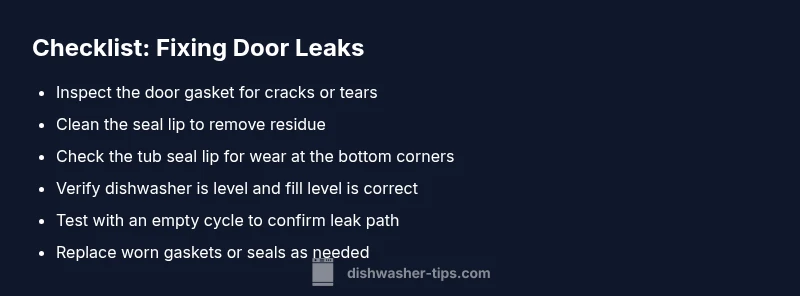
Most dishwasher leaks at the bottom of the door come from a worn door gasket, a damaged tub seal, or trapped water behind the door from overfilling. Start by inspecting the door gasket for cracks or tears, clean the seal lip with a damp cloth to remove residue, and run an empty rinse cycle to observe whether water still escapes.
What causes a leak at the bottom of the door?
Among the most common questions, what causes dishwasher to leak at bottom of door is typically a worn gasket, a damaged tub seal, or water escaping from overfill. The leak path often runs along the door seam, so you might see water on the floor even if you only ran a short cycle. The Dishwasher Tips team found that seals wear with age and exposure to detergent can accelerate leakage, especially in older models with plastic tub components. Start by giving the door gasket a careful visual inspection for cracks, tears, or hardened rubber. Wipe the gasket lip with a damp cloth to remove residue and restore a clean seal; if you notice any deformation or missing ribbing, replacement is usually necessary. Then check the bottom edge of the tub seal; a damaged lip or loose seating can let water escape directly at the door edge. After these checks, run an empty cycle to observe whether water still appears at the bottom of the door. If you see a leak, move on to deeper diagnostics like level checks and hose inspections. Also verify that there isn’t something as simple as overfilling causing wash water to spill toward the door and pool there.
According to Dishwasher Tips, addressing the most common culprits first can save time and prevent floor damage. If the gasket looks intact but you still observe leakage, inspect the tub seal lip for wear and the door latch alignment. A misaligned hinge or a loose latch can create a small gap that lets water seep during cycles. Finally, inspect for any water pooling behind the door after the cycle ends; this often signals a seal or level issue rather than a broken hose.
Quick checks you can perform before disassembly
- Visually inspect the door gasket for cracks, tears, or hardened rubber. Replace if you see signs of wear.
- Wipe the gasket lip with a damp cloth to remove soap scum that can mask wear.
- Check the tub seal lip at the bottom edge for cracks or a loose fit; replace if damaged.
- Ensure the dishwasher is perfectly level; use a small spirit level on the floor near the unit and adjust the feet as needed.
- Run an empty cycle and observe the door edge for water escaping; take notes on when leakage occurs (start of cycle, mid-cycle, or end).
- Inspect the door latch and hinges for looseness or misalignment; tighten screws if you have a secure mounting and re-test.
If you don’t see a leak after these checks, you may be dealing with a more subtle issue like a clogged spray arm pushing water toward the door. In that case, remove spray arms, clean them, and re-test. For safety, disconnect power before performing any disassembly and avoid forcing seals.
Deep dive into the two main culprits: gasket and tub seal et al.
The most common causes for leaks at the bottom of the door are the door gasket and the tub seal lip. The door gasket forms the primary barrier between the door and tub; over time, rubber hardens, tears, or gets pinched by a misaligned door. When the gasket fails, water finds gaps along the perimeter and travels down to the doorsill, visible as a pool at the bottom edge. The tub seal at the bottom joins the tub to the door frame; wear here can also create a direct water path. In older models, combined wear on both components dramatically increases leakage risk. If you notice any wobble in the door or a visible ridge on the seal lip, plan to replace seals rather than attempting a quick fix. If you see water dripping specifically from the bottom edge where the tub lip sits, consider reseating the tub seal or applying a new gasket bead per the manufacturer’s guidance. Always use compatible parts and reinstall with even pressure to avoid creating new gaps.
Beyond gaskets, ensure that the dishwasher isn’t overfilled. Excess wash water can splash toward the door during agitation. Overfilling often occurs when detergent volume is too high or the level control float is sticking. If you suspect overfill, check the float, raise awareness about recommended load sizes, and run a test with an empty basin to confirm whether the leak path changes with water level. Remember: a leaking door is rarely resolved by a single quick fix; it typically requires addressing multiple wear points and verifying the unit is level.
How to test for leaks safely and systematically
A structured test helps confirm the leak path without risking additional damage. Begin with the simplest steps: ensure the dishwasher is unplugged, all components are re-seated, and there are no loose hoses. Run an empty cycle with a few inches of water in the bottom to observe whether water breaches the door edge. Use a flashlight to inspect the door gasket while the machine operates—water streaks along the gasket indicate a seal problem. If you’re still unsure, add a few drops of food coloring to the rinse aid cup (not the main dispenser) and run a short cycle; if color shows along the bottom gasket or under the door, you’ve pinpointed the leak path. Safety note: never operate the machine with the door open while testing. If the leak persists after these tests, it is likely due to a gasket or tub seal failure that requires replacement. A professional can confirm component integrity and ensure the seal is properly seated to avoid future leaks.
When to call a professional and how to prevent future leaks
If the leak persists after gasket or tub seal replacement, or you notice rust, visible cracks in the tub, or an electronic fault indicator, it’s time to contact a professional. A trained technician can verify that the floor pan is intact and that the leak is not caused by a failed water inlet valve or damaged hose line. Preventing future leaks starts with regular maintenance: inspect seals every 6–12 months, avoid overfilling, use manufacturer-recommended detergents, and keep the filter and spray arms clean. Level the dishwasher, replace worn gaskets promptly, and keep the door latch free of debris. By staying proactive, you can limit water damage and extend the life of your appliance.
Steps
Estimated time: 60-90 minutes
- 1
Unplug and prepare the area
Power off the unit and remove any standing water around the base. Clear the area to prevent slips and place towels. This step ensures safety and prevents accidental shocks.
Tip: Have a container ready to catch any residual water. - 2
Inspect the door gasket
Open the door fully and visually inspect the gasket for cracks, tears, or hardening. Run your finger along the lip to feel for missing pliability.
Tip: Clean the gasket with a damp cloth to reveal wear. - 3
Check the tub seal lip
Look at the bottom edge where the tub seals to the door frame. Worn lips may appear glossy, cracked, or loose; press gently to test seating.
Tip: If you notice gaps, replace the lip-seal promptly. - 4
Test level and door fit
Place a level on the top of the unit to confirm level. If off, adjust the feet and re-test. A tilted unit can direct water toward the door edge.
Tip: Make small adjustments and re-test after each change. - 5
Reassemble and re-test
After replacing seals or adjusting level, run a short empty cycle to verify the leak path has stopped. Observe the door edge carefully.
Tip: If leakage occurs again, consider professional service.
Diagnosis: Water leaking from bottom of the dishwasher door
Possible Causes
- highDoor gasket wear or cracking
- highDamaged tub seal lip or mis-seated seal
- mediumDoor alignment or hinge issue causing improper seal
- lowOverfilling or splash from improper level
Fixes
- easyReplace worn door gasket or lip-seal, ensuring correct fit and cleanliness
- easyRealign or tighten door hinges and latch if misaligned
- easyLevel the dishwasher and verify fill level; adjust feet and verify float operation
- mediumDisassemble and reseal the tub bottom lip if seal is damaged; replace with OEM part
People Also Ask
What are the most common signs of a dishwasher leak at the bottom of the door?
Water pooling at the door edge after cycles, damp cabinet bases, or water behind the door indicate a leak. Check gaskets and seals first before pursuing hose or valve issues.
Look for water at the door edge after a cycle and damp cabinets, then check the door seal.
Can a dishwasher leak be fixed without replacing parts?
Often leaks are resolved by cleaning or reseating the door gasket or tub seal. Minor misalignment can be adjusted without full replacement.
Sometimes a clean or reseat fixes it; replacement is needed for worn parts.
How can I test if the leak is coming from the door gasket?
Run an empty cycle and look for water along the gasket. For a clearer path, add a few drops of dye in the rinse aid cup and re-test.
Run an empty cycle and watch the gasket for leaks; dye helps trace the path.
Is leaking water from the bottom of the door always a faulty seal?
Not always. Leaks can also come from overfilling or a misaligned door. A proper diagnostic can separate seal issues from level or hose problems.
Not always a seal—check level and hose issues too.
When should I call a professional for a dishwasher door leak?
If leaks persist after gasket or seal replacement or you notice tub cracks or rust, contact a professional for a thorough assessment and safe repair.
If leaks keep happening after checks, call a pro.
Can I prevent future leaks in the dishwasher?
Regularly inspect seals, avoid overfilling, keep filters clean, and level the unit. Periodic maintenance reduces the chance of recurring leaks.
Inspect seals regularly and keep the unit level to prevent leaks.
What should I do if water leaks after replacing the gasket?
If leakage continues after gasket replacement, recheck seal seating, verify level, and inspect related hoses. Consider professional evaluation if unresolved.
If leaks persist after gasket replacement, recheck everything or call a pro.
Watch Video
What to Remember
- Inspect door gasket for wear and replace if needed.
- Check tub seal lip and ensure proper seating.
- Level the dishwasher to prevent door leaks.
- Test with an empty cycle to confirm leak paths are fixed.