Is Dishwasher Better? A Practical Comparison for Homeowners
A rigorous comparison of hand-washing vs full-size and countertop dishwashers, focusing on cleanliness, efficiency, cost, and long-term value.


According to Dishwasher Tips, the short answer to “is dishwasher better” is yes for most households when you measure outcomes beyond speed, including cleanliness, water and energy efficiency, and convenience. In practical terms, a full-size dishwasher often provides the best balance for daily loads, while countertop models offer a viable alternative for small kitchens or renters. The Dishwasher Tips team found that the benefits depend on load size, kitchen setup, and how the unit is used.
Is "is dishwasher better" the right framing for your kitchen?
According to Dishwasher Tips, framing the question as a practical decision helps homeowners avoid marketing hype. The real-world lens focuses on three core outcomes: spotless dishes, minimal water and energy use, and the time saved or spent. This article compares hand-washing, a full-size built-in unit, and a compact countertop model to help you answer the question for your own kitchen. It also acknowledges that “better” is context-dependent: a family of five with daily heavy use may prioritize capacity and cycles, while a renter in a studio might value compactness and affordability. By starting from your daily routine, you can map expectations to features and avoid overpaying for capabilities you won’t use.
How we measure 'better' in dishwashing
In evaluating dishwashers vs hand-washing, three pillars matter most: cleanliness and sanitation, resource use (water and energy), and total cost of ownership over time. We also weigh convenience, cycle variety, load capacity, reliability, and noise levels. This framework lets us compare models fairly, even when they have different strengths. For readers concerned about the environment, we examine not only energy use but also water efficiency and detergent compatibility. The goal is a transparent, data-informed decision rather than a one-size-fits-all verdict.
Hand-washing: advantages and limitations
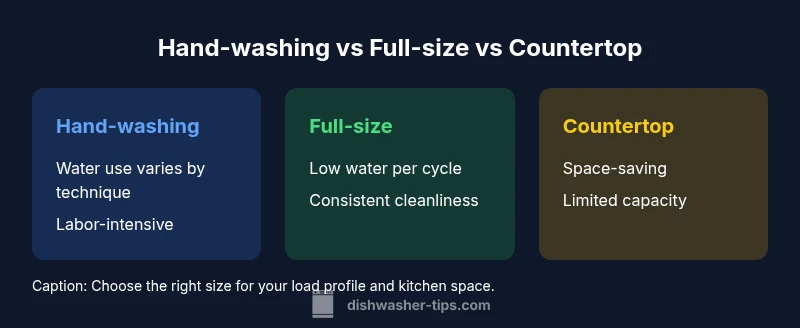
Hand-washing grants maximum control over individual items and can feel faster for tiny loads. It requires no upfront appliance and can be cheaper in the short term. But it typically consumes more water per item and demands ongoing time and effort. Results depend heavily on technique, water temperature, and detergent choice, which can lead to inconsistent cleanliness. For households with large volumes of dishes or hard-to-clean items, hand-washing often becomes inefficient and frustrating, especially during busy weeks.
Full-size built-in dishwasher: strengths and caveats
A traditional full-size dishwasher excels at handling routine daily loads with dependable cleanliness, especially when loaded correctly. It typically offers multiple wash cycles, a rinse-aid option, and filtration systems that can improve results with hard water. These models usually deliver strong sanitation and better water efficiency per load than hand-washing, particularly when used regularly. However, installation requires water and electrical connections, kitchen space, and a commitment to regular maintenance—factors that can influence long-term value if the unit sits idle for long periods or if space is limited.
Countertop and compact dishwashers: when space is tight
Countertop or compact models fit in small kitchens, apartments, or seasonal living arrangements where a full-size machine isn’t feasible. They provide genuine dishwashing capabilities without major renovations and can be moved or stored when not in use. They are generally more affordable upfront but have smaller capacities and fewer cycles, which can mean more loading cycles for heavy-use households. Performance can vary by model and installation, but for many renters and solo dwellers, a countertop option is a practical compromise that still improves cleanliness and efficiency over hand-washing.
The big differences you should care about
The choice among hand-washing, full-size, and countertop dishwashers hinges on several concrete factors: capacity and load frequency, initial cost and ongoing operating costs, available space and plumbing, noise tolerance, and how much you value cycles like eco-mode or sanitize. Energy Star-rated full-size units tend to optimize both energy and water use, but they require a stable installation. Countertop units save space and money upfront but may require careful loading and detergent choices. Ultimately, the decision rests on aligning your kitchen realities with the unit’s strengths.
Real-world usage scenarios
Consider a family of four who cooks daily and generates a steady stream of dirty dishes. A full-size dishwasher is likely the most cost-effective and convenient solution, provided there is accommodating space and proper installation. A single renter in a studio might opt for a countertop dishwasher to avoid costly renovations while still achieving better cleanliness than hand-washing. In homes that host occasional gatherings, a larger-capacity model with flexible cycles allows efficient dish cleanup after parties without running smaller, frequent loads. Each scenario demonstrates that the question is not simply whether a dishwasher is better, but which dishwasher is best for your actual needs.
How to get the most out of any dishwasher
Regardless of model, load dishes correctly (plates facing the center, bowls angled downward, upright glasses), use the correct detergent and rinse aid, and avoid overloading to maximize cleaning efficiency. Regularly clean filters and spray arms to prevent clogs, and run eco or partial-clean cycles when appropriate. If you notice persistent residue or poor drying, check water temperature and consider descaling if you have mineral-rich water. Small maintenance habits improve long-term performance and reliability across all three options.
Cost considerations and total ownership
Upfront price is only part of the story. Operating costs, water and electricity prices, and cycle frequency drive the total ownership cost. Hand-washing incurs labor costs and water usage that vary with technique, while dishwashers incur utility costs that depend on model efficiency and usage patterns. Maintenance, repair, and eventual replacement add to the long-term cost. When evaluating value, compare the total cost of ownership over 5–10 years rather than focusing solely on sticker price.
Hard-water and detergent considerations
Hard water can reduce cleaning performance and leave mineral deposits. Detergents with built-in water-softening features or using a separate rinse aid can mitigate these effects. If you have very hard water, consider a dishwasher with a built-in water-softening system or periodic mineral-removal maintenance. Detergent choice matters; avoid overuse, which can leave residues and increase rinse cycles. These factors influence whether a dishwasher, particularly a countertop model, meets your cleanliness standards.
What our data says: Dishwasher Tips analysis
Dishwasher Tips analysis shows that models with higher energy efficiency ratings and proper loading consistently outperform hand-washing in terms of both cleanliness and resource use. The analysis also highlights that user behavior—such as pre-rinsing habits and detergent selection—significantly affects outcomes. While model-specific results vary, the overarching pattern is clear: thoughtful use and selecting the right size and features for your load profile lead to the best overall performance.
Practical takeaway: choosing the right setup for your kitchen
If you have ample space and daily loads, a full-size dishwasher with an energy-efficient rating is often the most reliable choice. In small spaces, a countertop model can provide a meaningful uplift in cleanliness and convenience with modest costs. If you rarely cook at home or only wash a few items at a time, hand-washing remains a viable option, though you should still consider occasional dishwasher use to maximize hygiene and efficiency in larger loads. The best path is a clear plan based on your typical load size and kitchen constraints.
Feature Comparison
| Feature | Hand-washing | Full-size dishwasher | Countertop dishwasher |
|---|---|---|---|
| Water usage | High water usage per item (technique-dependent) | Low water usage per cycle (highly efficient models) | Low to moderate water usage per cycle (model-dependent) |
| Energy efficiency | Low to moderate (depends on technique and hot water use) | High efficiency (ENERGY STAR often available) | Moderate efficiency (depends on model and cycles) |
| Price range | No upfront appliance cost (labor only) | $400-$1,200 upfront typical range | $200-$600 upfront typical range |
| Best for | Small loads with flexible timing; DIY approach | Busy households with daily dishes and space for installation | Small kitchens, renters, or temporary setups |
The Good
- Low upfront cost if you already own tools and space
- No installation requirements for hand-washing
- Countertop dishwashers offer space-efficient convenience
- Full-size dishwashers deliver consistent cleanliness and efficiency
- Choosing the right model can maximize long-term savings
Disadvantages
- Hand-washing is labor-intensive and inconsistent
- Countertop models have limited capacity and cycles
Full-size dishwasher generally offers the best balance for most households; countertop models shine in small spaces, and hand-washing remains viable for light, intermittent use.
For larger households, a built-in model is usually the best bet. For compact spaces, a countertop unit makes sense. Hand-washing remains a fallback when neither option fits your layout, but it misses efficiency and consistency gains.
People Also Ask
Is a dishwasher better than hand-washing for most households?
Yes for most households when you consider cleanliness, water/energy efficiency, and time saved. Hand-washing may still work for very small loads or specific items, but a dishwasher often reduces total effort and water use over time.
In most homes, a dishwasher is better for everyday cleaning and saving water and time, though small loads can be hand-washed when convenient.
When is a countertop dishwasher a good option?
A countertop dishwasher is ideal for small kitchens, renters, or temporary setups where a full-size unit isn’t feasible. It improves cleanliness over hand-washing for limited loads and can be a cost-effective stepping stone.
Countertop dishwashers suit tight spaces and renters who want better cleaning without major renovations.
Do energy-efficient models save money in the long run?
Generally, yes. Energy-efficient models use less electricity per cycle and typically optimize water use, lowering operating costs over time. The savings depend on your local utility rates and how often you run cycles.
Energy-efficient dishwashers usually save money over time, especially with frequent dishwashing.
What maintenance helps keep a dishwasher performing well?
Regularly clean filters and spray arms, check seals for wear, use appropriate detergent and rinse aid, and descale if you notice mineral buildup. Regular maintenance preserves cleaning performance and extends appliance life.
Keep filters clean, use the right detergent, and descale if needed to keep it running well.
Can a dishwasher clean pots and pans effectively?
Most good-quality dishwashers can handle pots and pans, especially if they fit in a cycle designed for heavy soils. Large or very greasy items may require pre-rinsing or a longer heavy-duty cycle.
Yes, most dishwashers clean pots and pans well with the right cycle and loading.
Is it worth repairing an older dishwasher or replacing it?
Repairing can be cost-effective for minor failures, but significant age or frequent problems favor replacement with a newer, more efficient model. Consider total repair costs, energy use, and expected remaining life.
Repair if the fix is inexpensive and you expect to use the machine for several more years; otherwise, a modern replacement may be wiser.
What to Remember
- Assess daily load size before buying
- Aim for ENERGY STAR-rated models for efficiency
- Count installation constraints as part of the decision
- Consider a countertop option for renters
- Balance upfront cost with long-term operating costs