What Dishwasher Uses the Most Water: A 2026 Guide to Compare and Save
Discover which dishwasher uses the most water and how to compare models. This 2026 Dishwasher Tips guide explains water-per-cycle ranges, label insights, and tips to cut usage.


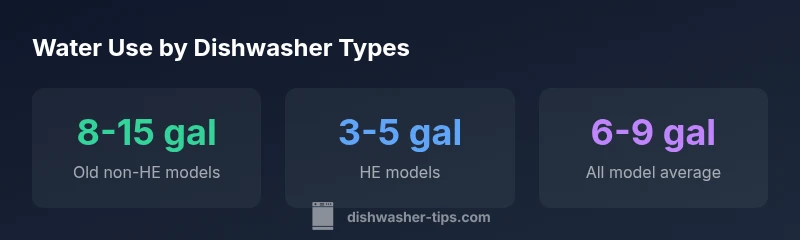
When you ask what dishwasher uses the most water, the answer isn’t a single model but a class. Older, non‑HE dishwashers typically use the most water per cycle—roughly 8-15 gallons—while modern high-efficiency (HE) models strive to cap usage around 3-5 gallons per cycle. Among common layouts, traditional non-HE top-load units historically drain more water than compact HE front-loader designs. In short, the biggest water wasters are older, non-HE machines, with significant savings possible by upgrading to HE models and selecting eco modes.
Water-use fundamentals: why some dishwashers drink more water
Understanding what determines water use starts with the basics: the design of the cycle and the efficiency standards that shape it. When you ask what dishwasher uses the most water, the answer isn’t a single model but a class. Older, non‑HE dishwashers tend to use more water per cycle than modern, energy‑efficient variants. According to Dishwasher Tips, the most water-intensive units are typically older standard-depth machines that rely on longer wash cycles and more rinse water. In practical terms, if you compare a traditional 8-15 gallon per cycle model to a current 3-5 gallon HE model, the difference is substantial, especially for households with frequent loads. The goal is to identify where your own dishwasher sits on this spectrum. If you’re shopping, look for energy‑efficiency ratings and consider the cycle options that minimize water for heavily soiled loads, such as half-load or eco modes.
Beyond labeled efficiency, real-world usage depends on user behavior and measurement methods. A cycle’s water draw can vary with soil level, load size, and rinse aid settings. Manufacturers often publish typical water-use ranges; homeowners can gain accuracy by checking the energy guide label and comparing the per-cycle water figure across models. For homeowners seeking to minimize waste, it’s wise to map out a few realistic scenarios—weekday dishes versus weekend gatherings—to estimate monthly water impact more accurately.
How model types differ in water use
Dishwashers come in several design families that influence water consumption. In broad terms, high-efficiency (HE) models are designed to cap water usage per cycle, often using sophisticated spray patterns, soil-sensing technology, and pressure regulation to optimize each rinse. Traditional non-HE models historically relied on larger volumes of water to achieve cleanliness, which means they can consume notably more per cycle. Front-loading, compact, and tall-tub configurations each bring their own water dynamics, but the core difference remains: HE designs target a significant reduction in water per cycle while maintaining cleaning performance. When comparing models, always note stated gallons per cycle and the presence of eco or half-load options. For a household with light everyday loads, an HE model can dramatically reduce water use without sacrificing results, especially if you enable appropriate cycle selections.
The role of age and maintenance on water efficiency
Age matters for water use in two main ways: wear and seal integrity, and outdated cycle engineering. As dishwashers age, seals can degrade and spray arms may become less efficient, causing longer cycles and wasted water. Conversely, older machines that lack modern sensors and variable pumps may continuously run the same water-intensive pattern regardless of load size. Regular maintenance—cleaning filters, checking spray arms, and ensuring latches seal properly—helps preserve efficiency. If you’ve inherited an aging unit, consider a targeted maintenance check and weigh the cost of repair against upgrading to a modern HE model. The Dishwasher Tips team notes that even modest maintenance can yield meaningful water savings over time.
How to compare water usage across models: what to look for on labels
When evaluating water use, the energy‑efficiency label is your best friend. Look for the gallons-per-cycle metric, which directly indicates water drawn per wash. Also examine cycle-specific consumption data: eco-certified programs typically use the least water, and half-load options can further reduce usage. Keep in mind that some models publish “typical” cycles that assume a normal soil level and average load; your actual usage may differ. If you live in a water-scarce area, prioritize models with strong eco cycles and soil-sensing technology that adjusts the water draw to fit the load. Reading reviews can help verify whether published figures align with real-world performance.
Real-world scenarios: typical households and cycle choices
In many households, the biggest water savings come from shifting cycle choices rather than simply upgrading equipment. For light to moderate loads, using eco or quick cycles can dramatically reduce water use while still delivering clean dishes. Heavy pots and pans typically require more water; in those cases, pre-scraping and proper loading can optimize water efficiency, but the water draw will still be higher per cycle. If your household runs multiple cycles per day, the cumulative impact is substantial, especially with older machines. Understanding your actual usage pattern—weekday dinners, weekend hosting, and the frequency of plastic containers—helps tailor a plan that minimizes water without sacrificing hygiene.
Practical tips to reduce water use without sacrificing cleaning
Reducing water usage starts with model selection and everyday habits. Upgrade to an HE dishwasher if you’re still using an older unit, and choose eco or half-load programs for smaller loads. Pre-rinsing is generally unnecessary for modern machines—let the wash cycle do the heavy lifting. Load dishes properly to maximize spray efficiency and avoid blocking spray arms. Regular maintenance, including cleaning filters and checking seals, helps maintain peak performance. Finally, consider a water- or energy-efficient detergent, which can improve rinsing efficiency and reduce the need for extra cycles. A thoughtful combo of hardware upgrade and mindful usage yields the best long-term savings.
Debunking myths about dishwasher water consumption
A common myth is that all dishwashers waste water regardless of model. In reality, modern HE models are designed to minimize water draw while delivering clean dishes. Another misconception is that larger machines always wash better; many compact or mid-sized HE models outperform older, larger units on water efficiency due to improved spray and sensor technologies. Finally, some users believe that pre-rinsing is necessary; however, modern detergents and optimized cycles often render pre-rinsing unnecessary, which saves both water and time.
Water use by common dishwasher types
| Model Type | Water per cycle | Notes |
|---|---|---|
| Old non-HE model | 8-15 gallons | Higher baseline water use |
| HE model | 3-5 gallons | Most efficient per cycle |
| Average across all models | 6-9 gallons | Depends on cycle choice |
People Also Ask
Which dishwasher uses the most water per cycle?
Older, non‑HE dishwashers typically use the most water per cycle. Upgrading to a high-efficiency model and using eco modes can lower water use significantly while maintaining cleaning performance.
Older non-HE models use the most water per cycle; upgrading helps you cut usage while keeping dishes clean.
Do front-load or top-load dishwashers use more water?
Most front-load, HE dishwashers are designed to use less water per cycle than older top-load configurations. Check the labeled gallons-per-cycle to compare accurately.
Front-load HE models generally use less water per cycle than older top-load units.
Can eco or half-load modes really save water?
Yes. Eco or half-load modes are designed to minimize water use on smaller loads. They can result in substantial savings across a week or month.
Eco modes save water on smaller loads, and they’re worth using regularly.
Should I pre-rinse dishes to save water?
Modern dishwashers are designed to handle food residues. Pre-rinsing can waste water and isn’t necessary for most loads.
Most loads don’t need pre-rinsing with today's dishwashers.
How can I estimate my home’s monthly water savings after upgrading?
Track a few typical loads, then apply the HE-per-cycle reduction to your current usage to estimate monthly savings. Real-world testing shows meaningful reductions when cycles are optimized.
Keep a simple log of cycles and apply the estimated reduction to see monthly savings.
Are all energy labels reliable for water use?
Energy labels provide a baseline for comparing water use, but real-world results depend on your load size, soil level, and cycle selection.
Labels help you compare, but real results depend on how you use the machine.
“Efficient dishwashers deliver clean results with dramatically less water per cycle when paired with the right cycle choices.”
What to Remember
- Identify if your dishwasher is an older non-HE model
- Choose high-efficiency models to lower water use
- Use eco/half-load cycles to cut per-cycle consumption
- Maintain seals and filters to preserve efficiency