How to Put Dishwasher in Clean Mode: Step-by-Step Guide for 2026
Learn how to activate your dishwasher's clean mode, when to use it, and maintenance tips. This guide from Dishwasher Tips covers step-by-step instructions, safety, and troubleshooting for 2026.


To put your dishwasher in clean mode, start a dedicated cleaning cycle or a self-clean option if your model offers one. This helps remove grease, limescale, and stubborn odors. For best results, run the cycle with an empty dishwasher using a recommended cleaner or white vinegar. The Dishwasher Tips team emphasizes following the user manual for proper steps.
What Clean Mode Does for Your Dishwasher
Clean mode is a maintenance feature that targets mineral buildup, odors, and greasy film by running a hotter, longer cycle and using specialized rinse formulas. According to Dishwasher Tips, using the dedicated clean cycle regularly can extend the life of seals and improve overall performance. The Dishwasher Tips team found that many homeowners underestimate how effective this mode can be when paired with proper cleaning agents and routine maintenance. By understanding how clean mode works, you’ll reduce the effort needed for future root-cause fixes and keep dishes consistently smelling fresh. This mode is especially helpful after heavy cooking nights or after a period of hard water exposure, where residues tend to hide in corners and along gaskets. It also serves as a reinforcement tool between daily or weekly washing cycles, ensuring the system stays free of buildup that impedes water flow and drying performance. If you’re troubleshooting smells, starting a clean cycle can kickstart a more thorough odor removal process than a standard wash.
When to Use Clean Mode
Use clean mode when you notice white mineral deposits on racks, a sour odor in the tub, or after running heavy loads with residue. Hard-water areas benefit from periodic cleaning, especially if you rarely use rinse aid. Regular cleaning cycles can prevent buildup that forces the appliance to work harder, saving energy. The moment you run a cycle and still detect lingering odors, time to escalate to a deeper clean with a cleaning agent or a service check. The guidance from Dishwasher Tips emphasizes aligning clean-mode frequency with your usage patterns and water hardness, not just a calendar date. If you recently replaced a filter or reseated a spray arm, running clean mode can help you verify those parts are functioning properly and not trapping debris. Remember, a clean machine dries more efficiently and reduces the need for rewashings.
Step-by-Step: Activating Clean Mode on Most Models
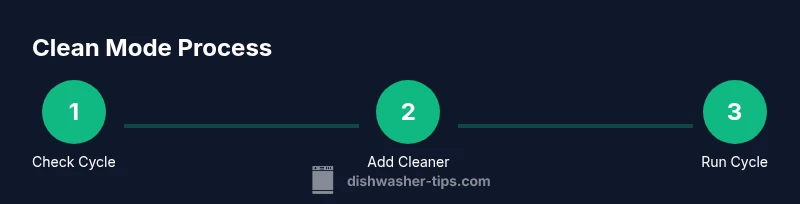
Keep in mind that steps can vary by brand, but the general approach is consistent. Start by powering on the unit and opening the door to ensure any error indicators are addressed. Locate the maintenance or cleaning cycle in your control panel, sometimes labeled Tub Clean, Self Clean, or Clean Mode, and select it. If your model recommends a cleaner tablet or a cup of white vinegar, add it as directed before initiating the cycle. Close the door, start the cycle, and allow it to run its full duration. For models without a dedicated clean option, you can perform a hot-water wash with vinegar or a dishwasher-safe cleaner on an empty load. Finally, inspect seals and the tub for any remaining residue once the cycle finishes. The Dishwasher Tips team notes that following the exact sequence from your manual ensures the best results and protects delicate gaskets from unnecessary strain.
Cleaning Agents: What to Use (and What to Avoid)
Many models advise using built-in cleaners or a wash with a dishwasher-safe cleaner tablet during the clean cycle. White vinegar is a popular option for deodorizing and mineral removal when used sparingly and as directed by the manufacturer. Avoid mixing acids (like vinegar) with bleach or other cleaning agents, as this can create hazardous fumes. If your appliance requires, you may run using a dedicated cleaner tablet rather than vinegar alone. Always verify compatibility with your specific model to safeguard seals, hoses, and electronic sensors. The goal is to complement the cycle, not to substitute parts that may be wearing out. Regular cleaning agents can help maintain spray arms and filters, allowing water to circulate freely and improving overall cleanliness.
Troubleshooting Common Issues During Clean Mode
If clean mode doesn’t start, check for door latch issues or any fault codes on the display. Ensure the cycle you’ve selected is indeed a cleaning cycle and not a rinse or energy-saving option. If odors persist after the cycle finishes, inspect the filter and drain pump area for clogs and residue. Leaks or misfiring sensors may require professional service, especially if you notice water pooling or unusual noises during the run. The key is to observe warning lights and consult the manual for model-specific error meanings. If you can’t determine the cause, perform a standard maintenance wash afterward to re-establish normal operation. The Dishwasher Tips team recommends documenting any recurring issues to help service technicians diagnose faster.
Maintenance Practices to Extend Clean Mode Effectiveness
To maximize the benefit of clean mode, clean the filter and spray arms monthly or as your usage dictates, especially if you cook frequently or use oily sauces. Keep the door gasket clean and free of food debris which can hinder proper sealing during high-temperature cycles. Use a rinse aid as recommended for your model to improve drying and reduce mineral buildup on glassware. Finally, run a light maintenance wash every 3–6 months to verify that water intake and drainage are functioning correctly. Regular checks can catch wear and tear before a breakdown occurs, aligning with Dishwasher Tips’ emphasis on proactive care.
Tools & Materials
- Dishwasher owner's manual(Always check model-specific instructions and cycle names.)
- White vinegar (5% acidity)(Use for deodorizing and mineral buildup removal when recommended by model.)
- Dishwasher-safe cleaner tablet(Optional if your model supports a dedicated cleaner; follow manufacturer guidance.)
- Baking soda(Useful for odor control when paired with proper cycling; not a substitute for cleaner agents.)
- Soft cloth or microfiber towel(For wiping seals and checking for residue after the cycle.)
- Soft brush or old toothbrush(Great for scraping gunk from gasket and filter edges without damage.)
Steps
Estimated time: 60-90 minutes
- 1
Verify cycle availability
Check your model’s manual to confirm the presence and naming of a dedicated clean cycle (e.g., Tub Clean, Self-C Clean, or Clean Mode). If unavailable, plan an equivalent hot-water wash with vinegar. Knowing the exact cycle prevents missteps and protects seals.
Tip: If in doubt, contact the manufacturer or consult the user forum for model-specific tips. - 2
Prepare the dishwasher
Remove all dishes and debris from the tub. Wipe the door gasket and inspect spray arms for clogs. A clean start ensures water can circulate and reach every corner during the cycle.
Tip: Check and clean the filter before starting; a clogged filter reduces cleaning effectiveness. - 3
Add cleaning agent
Place a suitable cleaner tablet on the bottom rack or pour vinegar into the lower dish area if your manual allows it. Avoid mixing cleaners and always follow manufacturer directions.
Tip: Do not add dishes before the cleaning cycle; an empty tub allows the water jet to reach interior surfaces. - 4
Select the Clean Cycle
Choose the dedicated clean cycle and confirm the temperature and duration match the manual; some models run longer at higher temps for better mineral removal. If your model lacks a clean mode, use a hot-water cycle with vinegar.
Tip: Set a timer reminder to avoid interrupting the cycle mid-run. - 5
Run the cycle and monitor
Start the cycle and let it run its full duration. Avoid opening the door mid-cycle as steam and heat can cause burns and disrupt the cleaning process.
Tip: If you notice a fault, pause, consult the manual, and reset before reattempting. - 6
Finish and inspect
Once complete, wipe seals, check for leftover residue, and run a quick rinse if needed. Let components cool before loading again. This confirms all areas have been cleaned and are dry for the next load.
Tip: Keep a log of cleaning dates to track maintenance intervals.
People Also Ask
What is clean mode on a dishwasher?
Clean mode is a maintenance cycle designed to remove mineral buildup, odors, and grease by running a longer, hotter wash. It helps restore performance and prolongs component life when used regularly.
Clean mode is a maintenance cycle that removes buildup and odors by running a longer, hotter wash, helping your dishwasher work better over time.
Can I run clean mode on any dishwasher?
Most modern dishwashers offer a clean or tub-clean option. If your model doesn’t have a dedicated cycle, you can perform a hot-water cycle with vinegar or a manufacturer-approved cleaner. Always consult your manual for compatibility.
Most newer dishwashers have a clean or tub-clean option; if not, use a hot-water cycle with vinegar as advised by the manual.
Is it safe to use vinegar in clean mode?
Vinegar is commonly used for deodorizing and mineral removal, but you should confirm compatibility with your model. Do not mix vinegar with bleach or other cleaners.
Vinegar can be used for deodorizing, but check your manual and never mix it with bleach.
How often should I run clean mode?
Aim for a clean cycle every 1–3 months or after periods of heavy cooking or hard-water exposure. Frequency depends on usage and water hardness.
Every 1 to 3 months, or after heavy use or hard water exposure, depending on your water and load.
What if the cycle won’t start?
Check the door latch, any error codes, and ensure you selected a valid cleaning option. If problems persist, reset the unit and consult the manual or a technician.
If it won’t start, check the door latch and error codes, then reset or consult the manual.
Will cleaning mode help with hard-water deposits?
Yes, regular clean-mode runs can reduce mineral buildup and improve spray arm performance, especially when paired with a vinegar cycle or approved cleaner.
Yes—clean mode helps reduce mineral buildup and improves spray action with the right cleaner.
Watch Video
What to Remember
- Use clean mode regularly for mineral and odor control
- Follow model-specific instructions for cycle naming
- Avoid mixing cleaners to prevent fumes
- Inspect and maintain filters after each cleaning