How Big Is a Dishwasher Drain Hose? A Practical Size Guide
Discover the typical drain hose sizes for dishwashers, how to measure yours, and what affects compatibility with air gaps, disposers, and sink fittings. A thorough, data-driven guide by Dishwasher Tips.


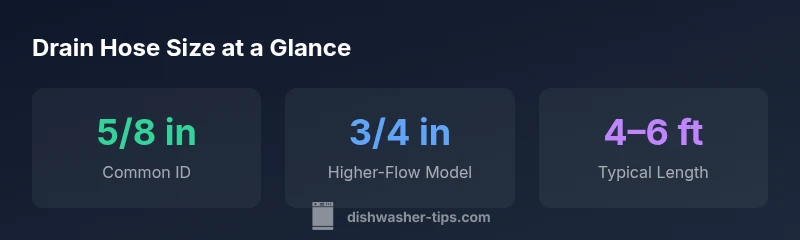
Typical dishwasher drain hoses use a 5/8 inch inner diameter (16 mm), though a smaller 1/2 inch is occasionally seen on older units. Some models adopt a 3/4 inch ID for higher flow. Most hoses run 4–6 feet long and must descend toward the sink with at least 1/4 inch of slope per foot to prevent backflow. Check your model’s specs to confirm ID and fittings.
Why drain hose size matters
Understanding how big is a dishwasher drain hose matters for reliable drainage, preventing leaks, and ensuring compatibility with air gaps, disposers, and sink fittings. The ID (inner diameter) determines flow rate, trap risk, and the ability to clear debris. In practical terms, the ID controls how quickly wastewater can travel from the dishwasher to the drain without creating a backup. The most common ID is 5/8 inch (16 mm), but older or higher-flow setups may use larger diameters. When sizing, homeowners should also consider clamp sizes, fittings, and whether an air gap is required by code. The keyword here is: how big is a dishwasher drain hose; the answer depends on model, age, and installation constraints, but standard residential hoses cluster around 5/8 inches while allowances up to 3/4 inch exist for specific installations.
Typical sizes and why they vary
Dishwasher drain hoses come in a few standard inner diameters (ID). The vast majority of modern units use a 5/8 inch ID (16 mm), a size that balances adequate flow with compatible fittings for most sink configurations. Some older or high-flow setups may use 3/4 inch ID (19 mm) to move more volume, particularly in homes with larger waste lines or when paired with powerful disposers. A smaller 1/2 inch ID (12–13 mm) can be found on legacy equipment or compact models, but it’s less common today and may cause slower drainage or higher risk of clogs if used with nonstandard drains. Always verify the ID printed on the hose itself and cross-check the model’s installation guide for acceptable range of diameters and compatible clamps.
How to measure your dishwasher drain hose
Measuring the drain hose correctly starts with identifying the ID, not just the OD. Remove the hose from the dishwasher and connector and lay it flat. Use a caliper or a precise ruler to measure the inner diameter across the opening. If you don’t have calipers, you can gently push a thin probe or a straw into the opening and measure the space it occupies. Record the measurement in millimeters or inches, then compare against the manufacturer’s specs. Also measure the hose length to ensure it reaches the sink with a safe slope, and inspect the end fittings and clamp sizes to confirm you can secure a proper seal with your chosen drain setup.
Compatibility with air gaps, disposers, and sink fittings
A key factor in drain hose sizing is how you connect to your drain system. Some setups require an air gap, while others connect directly to a disposer inlet or sink tailpiece. The hose ID must fit the connection, and clamps must be sized accordingly. If you’re installing an air gap, you may encounter a different inlet requirement on the gap body itself, which can influence your hose diameter choice. In any case, ensure that the hose’s ID matches the inlet, and use high-quality, corrosion-resistant clamps to prevent leaks. If you’re replacing an old hose, bring the old hose to the hardware store to compare IDs and adapters.
Sizing considerations for different homes and setups
Your home’s plumbing layout influences the ideal hose size. Higher-volume loads, long runs to the sink, or installations with garbage disposals can justify a larger ID (3/4 inch) for better drainage. Conversely, standard apartments or compact kitchens often settle for 5/8 inch. A critical consideration is elevation: the hose must slope downward toward the drain at a safe gradient to avoid standing water or siphoning. As a rule of thumb, aim for a minimum of 1/4 inch of slope per foot of vertical rise from the dishwasher outlet to the drain connection, and avoid any sharp bends that could trap debris or create kinks in the hose.
Installation tips to ensure proper drainage
During installation, route the hose so it drops toward the sink and avoids loops that could trap waste. Use stainless-steel or plastic clamps that resist corrosion, and secure all connections firmly. If you install an air gap, ensure the air gap is mounted per local code and is accessible for cleaning. Do not run the hose directly into a garbage disposal without any air gap if local code requires one. Finally, test the system by running a short cycle and observing for leaks around clamps and fittings.
Common mistakes and how to avoid them
Common mistakes include using the wrong ID, forcing a larger-diameter hose into a smaller fitting, and neglecting to secure clamps. Over-tightening clamps can damage the hose, while under-tightening leads to leaks. Another frequent issue is running the hose with kinks or sharp bends, which slows drainage and increases sediment buildup. Always verify compatibility with your model, use the correct connection type, and perform a leak test after installation.
When to replace the drain hose
Drain hoses wear out from heat, chemical exposure, and frequent flexing. If you notice cracks, soft spots, leaks, or persistent clogs despite cleaning, it’s time to replace the hose. Replacing the hose with the manufacturer-recommended ID ensures proper flow and compatibility with your dishwasher, sink, and any required air gaps. Keep spare hose clamps on hand and follow the manufacturer’s guidelines for a secure, leak-free connection.
Comparison of common drain hose sizes and connections
| Aspect | Inside Diameter (ID) | Outer Diameter (OD) | Typical Connection | Notes |
|---|---|---|---|---|
| Standard residential drain hose | 5/8 inch | 1-1/4 inch | Sink tailpiece or disposer inlet | Most common in homes |
| High-flow models | 3/4 inch | 1-1/2 inch | Air gap or larger disposer inlet | Used for higher throughput |
| Older units | 1/2 inch | 1 inch | Direct to drain or disposer | Less common today |
| Compact/drawer-style units | Varies | Varies | Manufacturer-specific | Check specs for compatibility |
People Also Ask
What is the standard inner diameter for most dishwasher drain hoses?
Most dishwasher drain hoses use a 5/8 inch ID (16 mm). Some older models may use 1/2 inch. Always verify your model's specs.
Most hoses are 5/8 inch ID, with some older units using 1/2 inch. Check your model's specs to be sure.
Can I replace a 5/8 inch hose with a 3/4 inch hose?
Yes, if the fittings and clamps match and the drain connection can accommodate the larger ID. Always confirm with the manufacturer specs.
Yes, you can upgrade to 3/4 inch ID if the fittings allow it and you follow the manufacturer’s specs.
What should I do if the hose leaks at the connection?
Tighten clamps securely, inspect for cracks, and replace the hose if wear is evident. Use new clamps and ensure a clean, dry surface before reseating.
Tighten the clamps and check for wear; replace if necessary and reseal.
Is an air gap required by code?
Code requirements vary by locale. Many homes require an air gap, while others do not. Check local plumbing codes and appliance manuals.
Local rules vary; many places require an air gap, others don’t. Verify with your local code.
How do I measure the ID of my hose?
Use calipers or a precise ruler to measure the inner diameter of the hose opening. Compare with the model’s specs.
Measure the inner diameter with calipers and compare to your model’s specs.
Will a longer hose cause drainage problems?
Length alone isn’t fatal if the diameter and slope are correct. Keep the run short enough to avoid sagging and ensure proper slope.
Length isn’t the only issue—keep proper slope and avoid sagging.
“Drain hose sizing is not just a plumbing detail—it directly affects leaks, clogs, and overall drainage performance. Getting the ID right saves time and headaches.”
What to Remember
- Know your IDC: most dishwashers use 5/8 inch ID hoses.
- Measure ID accurately before buying replacements.
- Ensure fittings and clamps match your drain setup.
- Allow proper slope and avoid kinks for optimal drainage.