How to tell if dishwasher is leaking: an urgent troubleshooting guide
Urgent guide to identify, diagnose, and fix dishwasher leaks. Learn common causes, safe checks, step-by-step fixes, and prevention tips to protect your home.


Water pooling around the base, door, or hoses is usually a leak. Start with the door gasket, inlet hose, and spray arm seals, then run a short cycle with the door open and observe. If you see water escaping, power off and inspect seals and connections before proceeding. Quick checks can save future flood damage.
What counts as a leak, and what isn't
A leak means water escapes the dishwasher where it shouldn’t and ends up on the floor, in the cabinet, or around electrical components. When you want to know how to tell if dishwasher is leaking, distinguish between actual leaks and normal drainage. According to Dishwasher Tips, small damp patches near the kickplate after a cycle can indicate a seal issue, not a catastrophic flood. Real leaks appear during operation or linger after the cycle ends, and they often produce visible drips or puddles. Look for water pooling under the unit, moisture on hoses, or dampness around the door seams. This section helps you perform quick, safe checks to confirm a leak and identify the most likely source. Remember: even minor leaks can cause mold or structural damage over time, so address them promptly. Dishwasher Tips analysis emphasizes that early detection saves costly repairs later.
Common leak sources in dishwashers
Dishwashers have several potential leak points. Common culprits include a worn door gasket, loose or damaged inlet hose, and a cracked tub or spray arm seals. The pump housing and drain hose can also leak if clamps have corroded or loosened. Misaligned or damaged detergent cups can overflow, creating evidence of a leak near the bottom of the door. If water is leaking during fill, the inlet valve or supply line may be the source. In older models, a crack in the tub or a failed seal around the tub can allow water to seep into the base or even into nearby cabinetry. This section equips you to narrow down the most likely sources using visual inspection and basic checks.
Quick checks you can do right now
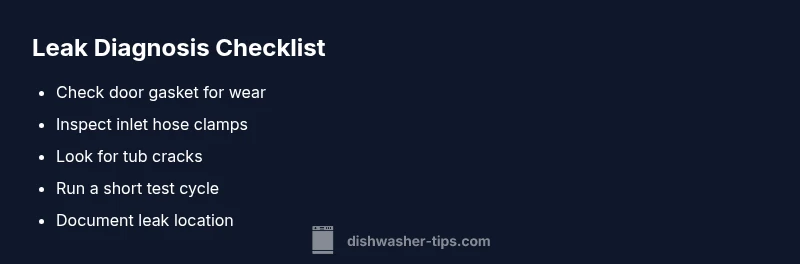
Before you start pulling panels, take these quick steps:
- Unplug the unit and shut off the water supply to prevent more leaking.
- Inspect the door gasket for cracks, hardening, or tears. A damaged gasket is a frequent leak source and can often be replaced easily.
- Check the supply hose and clamps at the inlet valve for tightness and signs of staining or wetness.
- Look for water trails along the bottom edge of the door and any pooling under the kickplate.
- Run a short empty cycle with the door closed and observe closely where water appears. Note if leaks happen during fill, wash, or drain phases.
- If you notice water accumulating on the floor after a cycle completes, it may indicate a drain issue or a tub crack. Keep towels handy and document the location of any damp areas.
Remember, if the leak persists after these checks, you should contact a professional. The goal is to isolate the source without causing further damage, and Dishwasher Tips recommends documenting all observations for fast service.
How to test for leaks safely
Testing for leaks requires a calm, methodical approach:
- Power off and disconnect power before handling any panels.
- Place a dry towel or shallow tray to catch drips as you test. This helps you quantify the leak rate and identify the exact location.
- Run a 5–10 minute cycle to observe for leaks. Use a flashlight to follow a water trail from the door gasket, hoses, or tub seams.
- Inspect every seam after cycle completion; if water remains on the floor, check the tub base, pump housing, and drain assembly for cracks or loosened clamps.
- If you suspect an inlet valve leak, you’ll usually see water around the point where the supply line attaches. Tighten connections if safe to do so, otherwise replace faulty components.
- Document the findings with photos. This gives you a clear record when you call a technician. If the leak appears in multiple cycles, a major component (gate valve, tub, or pump) might be failing.
Safety, warnings, and common mistakes
Safety first: always unplug and shut off water before inspecting or disassembling. Do not operate the dishwasher with panels removed if you lack training. Common mistakes include over-tightening hose clamps (which can crack fittings), using the wrong detergent that creates extra suds and misleads leak symptoms, and ignoring small signs of corrosion. Wear eye protection if you’re inspecting the interior and avoid contact with sharp metal edges. If you find a crack in the tub or a severely corroded component, do not attempt a DIY repair—this should be handled by a professional.
Prevention tips to avoid future leaks
Preventing leaks starts with regular maintenance:
- Clean the door gasket and spray arms every few months to remove mineral buildup.
- Inspect hoses for cracks and replace damaged hoses every 5–7 years, depending on usage.
- Use manufacturer-approved detergents and avoid overfilling the detergent cup which can cause overflow.
- Check clamps and connections after moving the appliance for any shifts that may loosen fittings.
- Schedule annual inspections if you live in hard water areas where mineral buildup is common. Keeping up with these tasks reduces the likelihood of leaking and extends the life of your dishwasher.
Troubleshooting flow at a glance
- Symptom: Water on floor after cycle
- Likely sources: door gasket, inlet hose, tub seal, drain hose
- Immediate checks: gasket condition, hose clamps, visible leaks
- Quick fix attempts: tighten clamps, replace worn gaskets, inspect for cracks
- When to escalate: persistent leaks after basic checks
- Safety note: unplug and shut off water before any disassembly
Steps
Estimated time: 60-90 minutes
- 1
Power off and unplug
Disconnect power and shut off the water supply to prevent any accidental starts while inspecting. Move the dishwasher carefully if needed to access hoses and seals. Gather towels and a flashlight for visibility.
Tip: Take a photo of connections before removing any parts. - 2
Inspect the door gasket
Visually inspect the entire gasket for cracks, tears, or stiff spots. Gently run a finger along the seal to feel for gaps. Replace if worn or deformed to restore a watertight seal.
Tip: Clean the gasket with a mild soap solution before testing after replacement. - 3
Check inlet hoses and clamps
Look for moisture at hose connections and inspect clamps for corrosion or looseness. Tighten clamps carefully and replace any damaged hoses or fittings to stop leaks from the supply line.
Tip: Do not overtighten plastic fittings; they can crack. - 4
Examine the tub and spray arms
Remove the lower rack to inspect the tub base for cracks. Check spray arm seals and fittings for wear or misalignment. Replace cracked seals or damaged components.
Tip: If you need to replace the tub, confirm compatibility with your model. - 5
Run a test cycle
Seal panels temporarily and run a short cycle with the dishwasher empty. Watch for new leaks and note where water appears.
Tip: Use a flashlight to trace leaks quickly. - 6
Document and plan next steps
Record the leak location, take photos, and decide if you can perform the repair or need a technician. If replaced parts didn’t resolve the leak, escalate promptly.
Tip: Keep receipts and warranty information handy.
Diagnosis: Water pooling around the base or door after dishwasher operation
Possible Causes
- highWorn or damaged door gasket
- highLoose, cracked, or leaking inlet hose
- mediumCrack in tub or spray arm seal
- lowDrain pump backflow or clogged drain line
Fixes
- easyReplace the door gasket and reseal the door edge; ensure proper seating during closure
- mediumTighten clamps on the inlet hose or replace the supply hose if leaking
- hardInspect tub seal or replace tub if cracked; replace spray arm seals as needed
- mediumClear drain line or replace drain pump components; verify no backflow during test
People Also Ask
What is the most common source of a dishwasher leak?
The most common leak source is a worn door gasket. Replacing the gasket is often enough to stop the leak. If the door gasket looks intact but water appears, inspect hoses and drain connections for other issues.
The most common leak source is the door gasket. Replacing it usually stops the leak; if leaks persist, check hoses and drain connections.
Can a leaking dishwasher be dangerous?
Water near electrical components can pose a shock risk. Avoid using the dishwasher until leaks are fixed and always unplug before inspection. If you see persistent active leaks, contact a professional promptly.
Yes, leaks near electrical parts can be dangerous. Unplug first and call a pro if the leak continues.
Should I try DIY repairs or call a technician?
For simple fixes like gasket or hose replacements, DIY can be feasible if you have the right tools. More complex issues like tub cracks or pump failures should be handled by a technician to prevent further damage.
DIY is okay for gasket or hose changes if you’re careful; for tub or pump problems, call a pro.
How do I prevent leaks from happening again?
Regularly inspect seals and hoses, avoid overfilling detergent cups, and use manufacturer-approved parts. Hard water can accelerate wear, so consider water-softening if your area requires it.
Inspect seals and hoses regularly, use approved parts, and consider water softening if water quality is an issue.
What should I do if I see water on the floor after a cycle?
Shut off power, check hoses, and inspect door seals. If water persists after basic checks, you likely have a more serious seal or tub issue that needs a pro.
If water pools after a cycle, unplug, check hoses and door seals. If it keeps leaking, call a pro.
Is it safe to operate the dishwasher while leaking?
No. Operating while leaking risks water damage and electrical hazards. Address the leak first, then test after repairs.
No—do not run it while leaking. Fix it first and test again afterward.
Watch Video
What to Remember
- Identify the exact leak source before repair
- Prioritize door gasket and hose inspections first
- Do not attempt risky tub or pump repairs without a professional
- Document findings to speed up service and prevent reoccurrence